Ressources
National Treasure
National treasure: the reinforced status of movable assets classified as of national interest in Portuguese cultural heritage law.
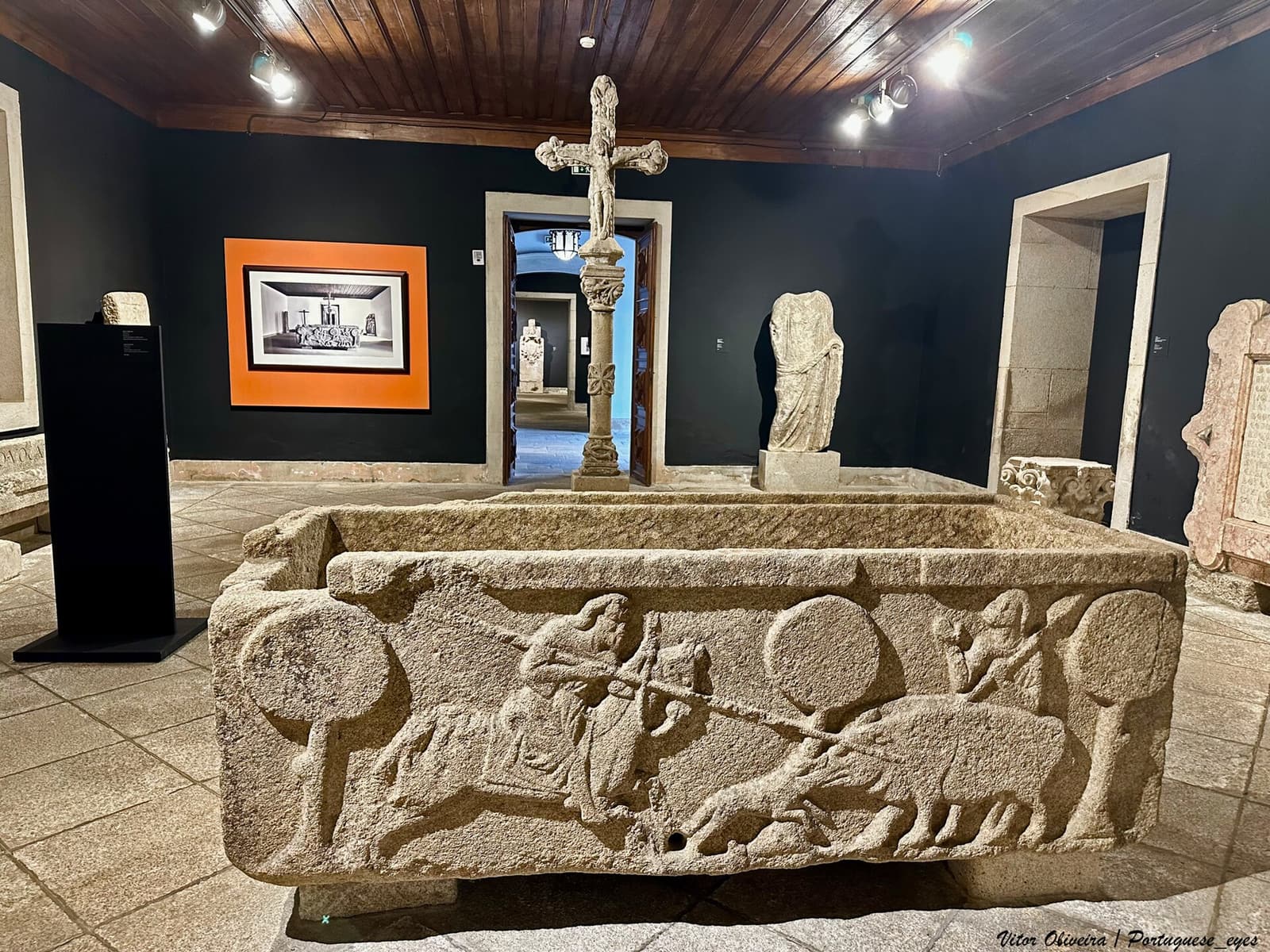
A national treasure in Portuguese law is the designation reserved for movable assets granted the highest level of heritage protection. It does not refer to a specific object, building, or collection but to a legal status: that of a movable asset classified as of national interest. This designation was created by the Cultural Heritage Framework Law, approved by Law No. 107/2001 of September 8, whose Article 15, Section 3, establishes that “for movable assets classified as of national interest, the designation ‘national treasure’ is created.”
Framework for the Classification of Movable Heritage
The legal protection of movable cultural assets is based on classification and inventory. As with immovable heritage, the law provides for three classification levels, depending on the recognized cultural significance:
- National interest, when the defense and enhancement of the asset represent cultural value of significance to the Nation—the category corresponding to the designation of national treasure;
- Public interest, when the cultural value is of national importance, but the stricter protection regime of national interest would be disproportionate;
- Municipal interest, when the cultural value is primarily significant for a specific municipality.
The detailed framework was established by Decree-Law No. 148/2015 of August 4, which sets the rules for the classification and inventory of movable cultural assets, as well as the norms applicable to their export, dispatch, import, and admission. Classification always results from an administrative procedure that concludes with a final act, subject to the opinion of the National Culture Council.
Effects of the Status
Recognizing an asset as a national treasure entails the most stringent protection regime under the law. The most distinctive effect is the restriction on circulation: the removal of assets classified as of national interest from national territory is, in principle, prohibited. The law only permits temporary removal for cultural or scientific purposes, subject to authorization by the government member responsible for culture; for state-owned assets, permanent removal can only exceptionally be authorized by the Council of Ministers, in the context of an exchange for foreign cultural assets of exceptional interest.
Additional safeguards include the impossibility of acquiring classified assets of national or public interest through adverse possession and reinforced rules for conservation and market circulation. Private assets can only attain this status if their degradation or loss would constitute irreparable damage to cultural heritage, giving the category an exceptional character.
The status also aligns with international instruments combating the illicit trafficking of cultural assets, as classification as a national treasure supports restitution claims for illegally exported assets and justifies export controls required by European Union law and UNESCO conventions.
Questions fréquentes
- What is a national treasure in Portugal?
- It is the legal designation assigned to movable assets classified as of national interest, the highest category of protection for movable cultural heritage, established by Article 15 of Law No. 107/2001.
- Can a national treasure leave the country?
- Permanent removal from national territory is generally prohibited. Only temporary removal for cultural or scientific purposes is permitted, subject to government authorization; the permanent removal of state-owned assets depends on a Council of Ministers decision.
- Who decides if an asset is a national treasure?
- The classification results from an administrative procedure conducted by the cultural heritage administration, with input from the National Culture Council, culminating in a final classification act that generates a heritage registry.
Sources
Ressources pour la recherche
Trouvez les sources. Approfondissez l’histoire.
Des guides pour étudier les édifices, explorer les collections et comprendre la protection du patrimoine.
SIPA
Découvrez l’inventaire architectural, les fiches des édifices et les archives documentaires.
Lire le guideCollections des muséesMatrizNet
Explorez le catalogue muséologique et les notices sur les œuvres, leurs matériaux, auteurs et provenances.
Lire le guideProtection du patrimoineClassement du patrimoine
Comprenez les catégories de biens culturels et les niveaux d’intérêt national, public et municipal.
Lire le guide