Resources
SIPA — Information System for Architectural Heritage
Explore SIPA, Portugal’s architectural heritage inventory: find building records, consult archive guidance and discover the collections at Fort of Sacavém.
SIPA — Information System for Architectural Heritage is simultaneously one of the largest databases and most complete documentary archives dedicated to Portugal’s architectural, urban and landscape heritage. Established in 1992, it brings together in a single system the technical-scientific knowledge accumulated over nearly a century about buildings and complexes across Portuguese territory, constituting an essential reference tool for researchers, architects, heritage professionals and any citizen interested in the country’s built history.
How to consult SIPA
For inventory records, use the SIPA link on the official search page. For documents and appointments, consult the Archives service.
Access checked on 2 October 2026: the official notice from August 2026 states that consultation of DGEMN/SIPA documentation is temporarily unavailable because of IT difficulties. The same notice permits appointment-based consultation of personal collections held at the fort, documentation from IHRU and DGPC, and the library. Confirm which documents are available with the archive before travelling.
Origins and institutional oversight
SIPA emerged as the direct heir to a long tradition of heritage inventorying and intervention. Most of its documentary collection comes from the Direção-Geral dos Edifícios e Monumentos Nacionais, the organisation that between 1929 and its dissolution in 2007 directed state works on monuments and public buildings. With the 2007 reorganisation of heritage administration, these holdings and SIPA’s management were transferred to the Instituto da Habitação e da Reabilitação Urbana (IHRU). In 2015, the system and its archive joined the Direção-Geral do Património Cultural. SIPA is now managed by Património Cultural, I.P., which began operating in 2024.
This institutional trajectory reflects well the complexity of the history of heritage institutions in Portugal, marked by successive mergers, dissolutions and transfers of responsibilities between organisations.
The Fort of Sacavém archive
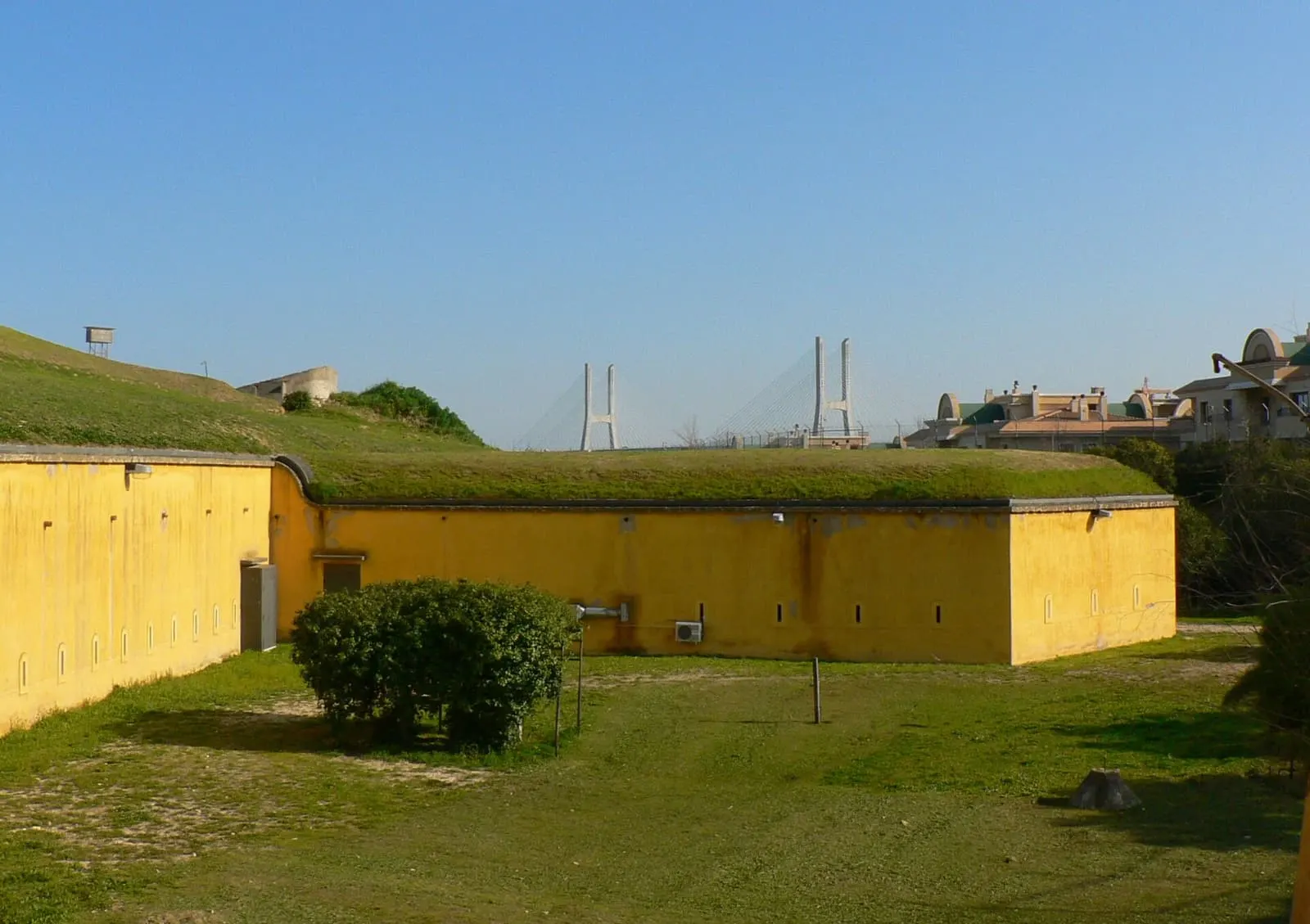
The Architectural Heritage Archive occupies the Fort of Sacavém, also called Reduto do Monte Cintra, in Loures municipality. The fort is a nineteenth-century military building; SIPA is the information system associated with the documentary collections. According to Património Cultural, I.P., the DGEMN archive has occupied the premises since 5 January 1999, following adaptation work. Its address is Forte de Sacavém, Rua Reduto do Monte Cintra, 2685-141 Lisboa-Sacavém.
The holdings include records of DGEMN’s work and collections from architects and designers. Files, plans, drawings and photographs help trace interventions and changes to buildings. When requesting documents, identify the building and any inventory or archive reference you already have.
The Architectural Heritage Inventory (IPA)
The most consulted component of SIPA is the Architectural Heritage Inventory (IPA), a database that standardises descriptions of each property: historical context, chronology, architectural description, legal protection status and bibliographic references. Available online through the monumentos.gov.pt portal, the IPA allows searching tens of thousands of records, from major classified monuments to examples of vernacular or industrial architecture often absent from other catalogues.
SIPA connects with other cultural heritage inventory tools and museum collection platforms such as RAIZ, the successor to MatrizNet, together forming the digital infrastructure underpinning much of heritage research and management in Portugal today. Its purpose is not merely documentary: by making knowledge about each building accessible, the system supports classification, restoration and land-use planning decisions, actively contributing to safeguarding the built legacy.
Photograph of Fort of Sacavém, home to the Architectural Heritage Archive associated with SIPA: Juntas, 1 March 2006, Wikimedia Commons, public domain. Image resized for display.

Frequently asked questions
- What is SIPA?
- SIPA is the Information System for Architectural Heritage, a database and archive documenting Portuguese architectural, urban and landscape heritage, managed by Património Cultural, I.P.
- Where is SIPA based?
- The SIPA archive and services are housed at the Fort of Sacavém, also known as the Reduto do Monte Cintra, in Sacavém, Loures municipality, Lisbon district.
- How can SIPA be consulted?
- Follow the SIPA link on Património Cultural, I.P.’s search page for inventory records. Check the Archives page for documentary research and current access conditions.
Sources
- Arquivos — Património Cultural, I.P.
- Pesquisar — Património Cultural, I.P.
- Consulta de documentação da DGEMN/SIPA temporariamente indisponível
- Plano de Atividades 2026 — Património Cultural, I.P.
- Património Cultural, I.P. a partir de 1 de janeiro de 2024
- SIPA — Wikidata Q18706905
- Património Cultural em Portugal: Avaliação do Valor Económico e Social (2020), p. 34
- RAIZ — Apresentação, Museus e Monumentos de Portugal
Resources for research
Find the sources. Follow the story.
Guides to researching buildings, exploring museum collections and understanding heritage protection.
MatrizNet
Explore the museum catalogue and records of works, materials, authorship and provenance.
Read the guideHeritage protectionHeritage classification
Understand cultural property categories and the levels of national, public and municipal interest.
Read the guideInstitutional historyIGESPAR
Learn about IGESPAR’s role in managing architectural and archaeological heritage.
Read the guide