Resources
National Printing Museum
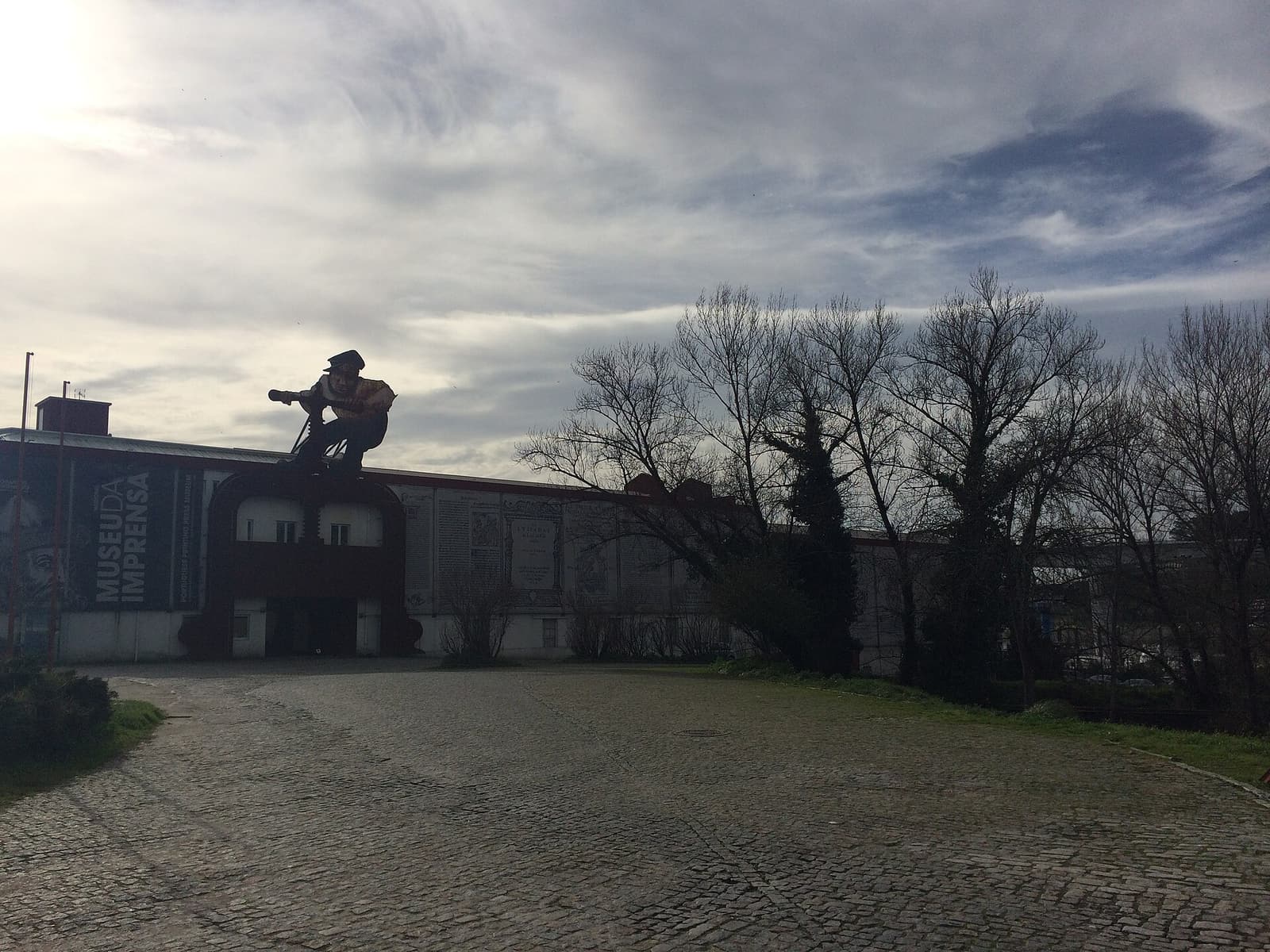
The National Printing Museum in Porto preserves Portugal's typographic, newspaper and graphic arts heritage, with operational presses and machinery.
- Location
- Porto, Porto
- Built
- 1997 (fundação)
The National Printing Museum (MNI), officially named National Printing, Newspaper and Graphic Arts Museum, is an institution dedicated to preserving the memory of printing, newspaper publishing and graphic arts in Portugal. Founded in 1997, it is located on the right bank of the Douro River in eastern Porto, near Freixo Bridge in the parish of Campanhã. It presents itself as a living museum, housing an extensive collection of machines and equipment that in many cases remain fully operational.
A living museum of typographic techniques
The MNI’s originality lies in the operational nature of its collection. Unlike museums that display machines as static pieces, here many devices remain active and can be handled by visitors, who experience various stages of graphic work: typesetting with movable type, printing and bookbinding. Among the most notable pieces is a wooden press recalling the early days of printing before 19th-century mechanization.
The exhibition traces the technical evolution of typography from lead movable type to industrial composition machines like the linotype. It also gathers historical newspapers and publications, matrices, typefaces and workshop tools documenting the typographer’s craft and the material culture of Portuguese periodical printing.
Industrial heritage and print culture
Given the nature of its collections, the MNI stands at the intersection of printed culture history and industrial heritage, preserving machines, tools and technical knowledge that would otherwise be lost. For centuries, typography was one of the main urban industries, linked to book, newspaper and poster production, and the museum safeguards this technological legacy at a time when digital printing has rendered many traditional processes obsolete.
Beyond the permanent exhibition, the institution runs an intensive educational program with printing and typesetting workshops for schools and visitors, plus temporary exhibitions on cartoons, caricatures and graphic design. It also regularly promotes literary and writing outreach initiatives.
Place in the museum network
Despite its “national” designation, the National Printing Museum is an association-managed institution, distinct from Portugal’s national museums directly overseen by the state. This status reflects the diversity of models characterizing the history of heritage institutions in Portugal, where private or associative initiatives have safeguarded specialized collections.
Located in a city area away from central tourist circuits, the museum represents a unique reference in the Iberian Peninsula for graphic arts, combining conservation of rare holdings with their active demonstration. By keeping obsolete techniques alive, the MNI ensures the transmission of know-how that is itself a form of heritage.
Frequently asked questions
- When was the National Printing Museum founded?
- It was founded in 1997, located on the right bank of the Douro River in eastern Porto, near Freixo Bridge in the parish of Campanhã.
- What distinguishes this museum from other printing museums?
- It's a living museum: many of the typographic machines remain operational and visitors can experience traditional typesetting and printing by handling presses, type cases and other collection pieces.
- What can be seen in the permanent exhibition?
- The display includes presses, linotypes, printing and typesetting machines, historical newspapers and bookbinding objects, including a rare wooden press illustrating pre-industrial printing techniques.
Sources
Keep exploring
Heritage nearby
More places to discover from here. Approximate straight-line distances, within 50 km.
Resources for research
Find the sources. Follow the story.
Guides to researching buildings, exploring museum collections and understanding heritage protection.
SIPA
Get to know the architectural inventory, building records and documentary archive.
Read the guideMuseum collectionsMatrizNet
Explore the museum catalogue and records of works, materials, authorship and provenance.
Read the guideHeritage protectionHeritage classification
Understand cultural property categories and the levels of national, public and municipal interest.
Read the guide