Resources
National Costume Museum
National Costume Museum, at the Angeja-Palmela Palace in Lumiar, Lisbon: Portugal's principal collection of civil clothing and fashion, located at the…
- Location
- Lisboa, Lisboa
- Built
- 1976 (criação); inaugurado em 1977
- Style
- Arquitetura setecentista de inspiração pombalina
The National Costume Museum is Portugal’s principal museum dedicated to clothing and fashion. Housed in the Angeja-Palmela Palace in Lumiar, Lisbon, it collects and studies Portuguese and foreign civil costume from the 18th century to the present, with a collection encompassing garments, accessories, textile fragments, and equipment related to their production. The museum is situated in the former Monteiro-Mor estate, acquired by the Portuguese state in 1975, and extends to the surrounding Monteiro-Mor Botanical Park.
Origin and creation
The institution resulted from a project initiated in 1969 and developed throughout the first half of the 1970s. A decisive milestone was the exhibition «Civil Costume in Portugal», presented in 1974 at the National Museum of Ancient Art, which demonstrated the feasibility of an autonomous museum dedicated to clothing. This entire process was led by Natália Correia Guedes, who would become the museum’s first director.
The National Costume Museum was formally established by decree in December 1976, a document that simultaneously created the museum and the Monteiro-Mor Botanical Park. It opened to the public in 1977. The choice of the Monteiro-Mor estate allowed the association of a highly fragile museum collection with an exceptional green space of outstanding landscape value, a rare situation among Portuguese museums.
The Angeja-Palmela Palace
The building that houses the museum is an 18th-century palace, commissioned by D. Pedro José de Noronha, 3rd Marquis of Angeja. In 1840, the property was acquired by D. Pedro de Sousa Holstein, Marquis of Palmela, who carried out restoration works. The palace’s architecture reflects the style of the second half of the 18th century, with Pombaline influences, featuring sober and organized facades and an integrated chapel. Before its acquisition by the state, the palace once functioned as a school that hosted Belgian refugees during World War II.
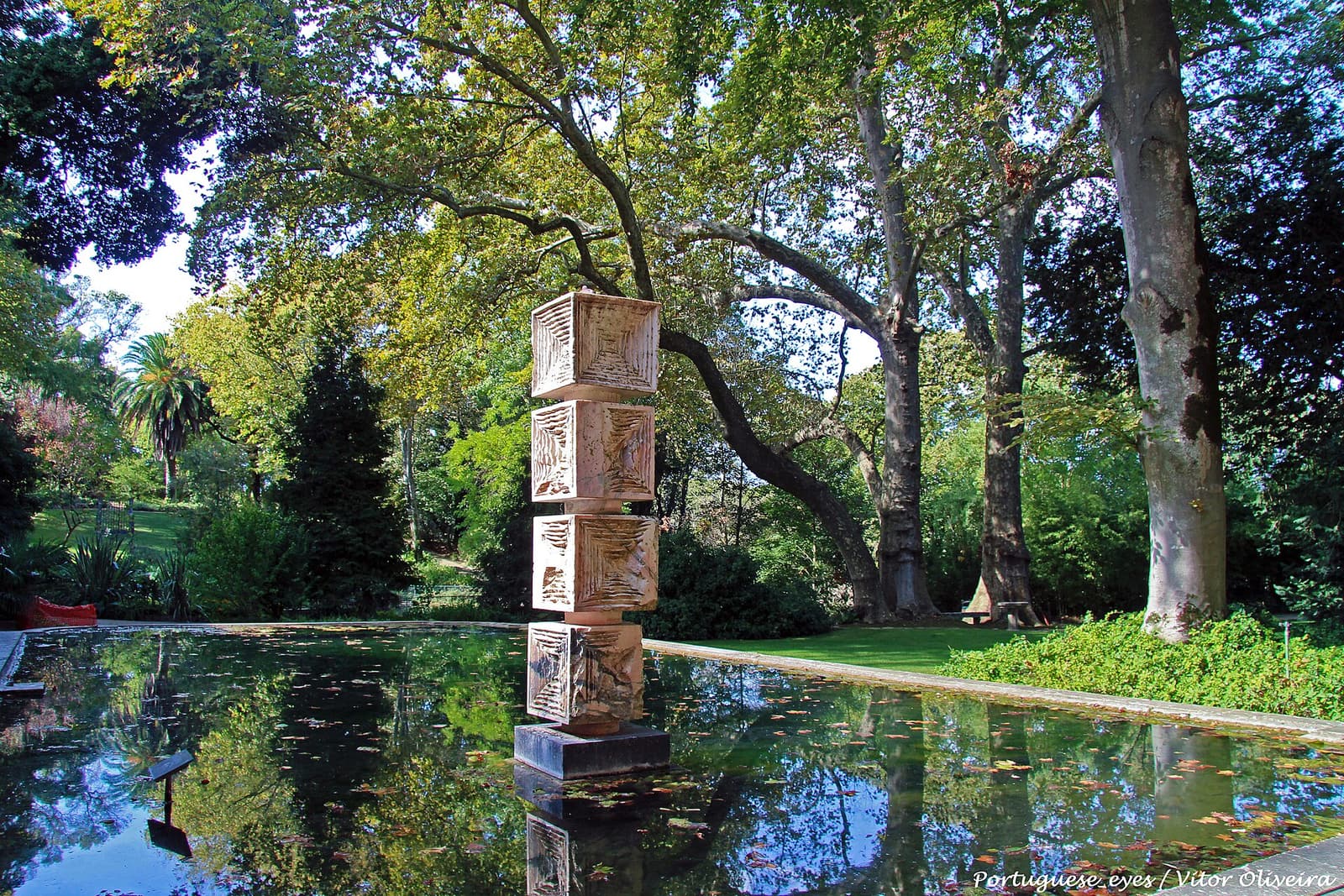
Surrounding the palace is the Monteiro-Mor Botanical Park, one of the most notable examples of traditional Portuguese recreational estates, with lakes, staircases, and a remarkable diversity of plant species. The space is historically associated with the naturalist Domingos Vandelli and is now an integral part of the visit.
Collection and role in the museum network
The National Costume Museum’s collection documents the evolution of civil clothing over more than two centuries, allowing for an understanding of changes in taste, technique, and social status through textiles and fashion. The collection dialogues with other areas of Portuguese decorative arts and with the study of material traditions at the National Museum of Ethnology.
As a national museum, it is part of the group of reference institutions overseen by the state, alongside others such as the National Tile Museum. Its history illustrates the consolidation of specialized Portuguese museology in the second half of the 20th century, a process that aligns with the broader affirmation of Portugal’s national museums as guardians of specific domains of cultural heritage.
Frequently asked questions
- Where is the National Costume Museum located?
- It is located at Largo Júlio de Castilho in Lumiar, Lisbon, housed in the Angeja-Palmela Palace within the former Monteiro-Mor estate.
- What can be seen at the museum?
- It is the main museum dedicated to Portuguese and foreign civil costume from the 18th century to the present, including accessories, textiles, and production equipment. It also includes the Monteiro-Mor Botanical Park.
- When was the museum established?
- It was created by decree in December 1976 and inaugurated in 1977, with Natália Correia Guedes as its first director.
Sources
Keep exploring
Heritage nearby
More places to discover from here. Approximate straight-line distances, within 50 km.
Resources for research
Find the sources. Follow the story.
Guides to researching buildings, exploring museum collections and understanding heritage protection.
SIPA
Get to know the architectural inventory, building records and documentary archive.
Read the guideMuseum collectionsMatrizNet
Explore the museum catalogue and records of works, materials, authorship and provenance.
Read the guideHeritage protectionHeritage classification
Understand cultural property categories and the levels of national, public and municipal interest.
Read the guide