Resources
National Museum of Ethnology
National Museum of Ethnology in Lisbon: history, collections of Portuguese and non-European material culture, and the legacy of Jorge Dias in ethnographic studies.
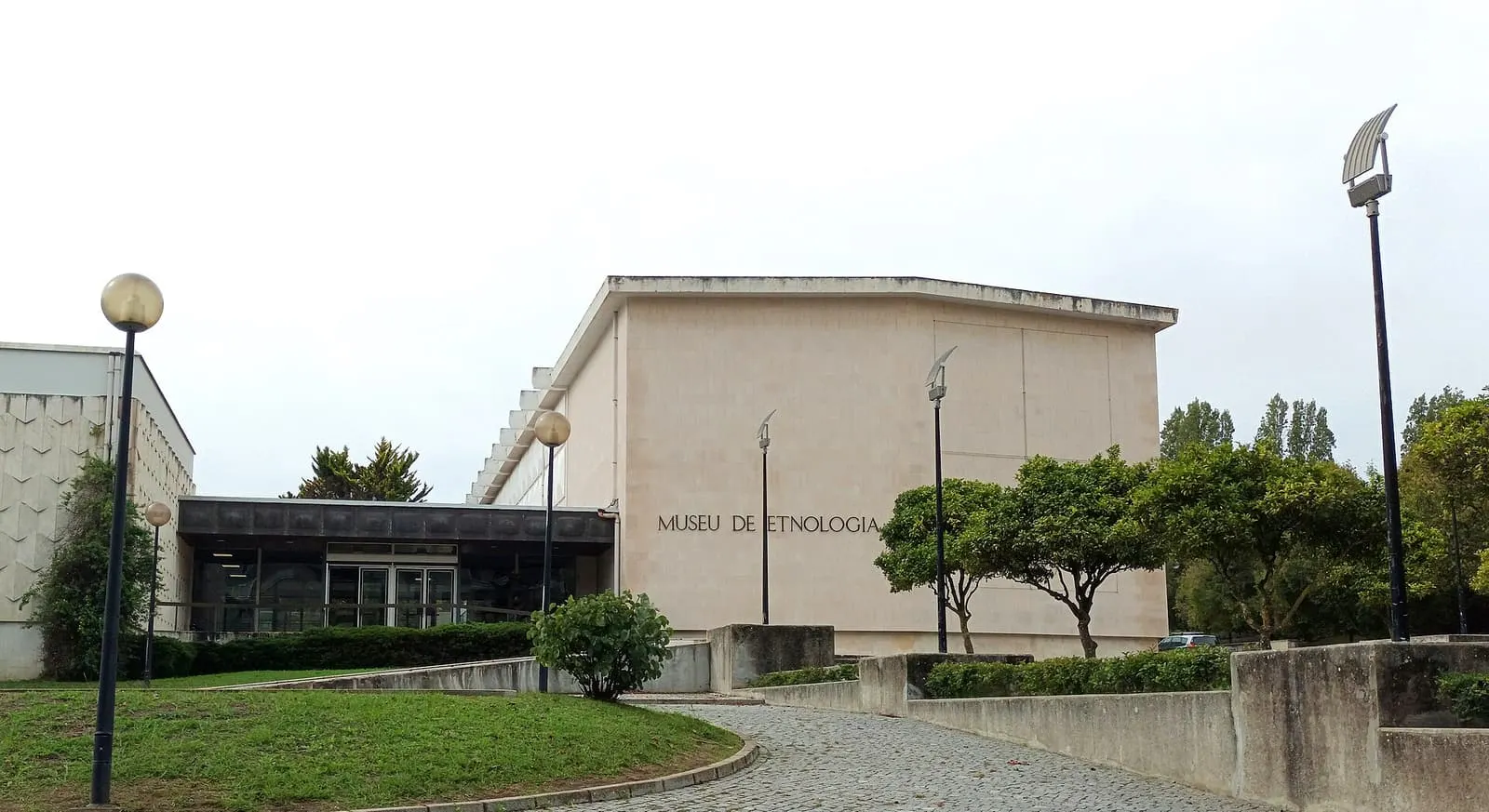
- Location
- Lisboa, Lisboa
- Built
- 1976
- Style
- Modernista
The National Museum of Ethnology (MNE) in Lisbon is Portugal’s foremost institution dedicated to the study, collection, and exhibition of material culture and folk traditions, both from the national territory and non-European peoples. It is an essential reference for anthropology and ethnography in Portugal, with a collection encompassing tens of thousands of objects from Africa, Asia, the Americas, and Europe.
Origins and the Legacy of Jorge Dias
The museum’s roots trace back to the Centre for Ethnological Studies, led from 1947 by ethnologist Jorge Dias. With collaborators such as Margot Dias, Ernesto Veiga de Oliveira, Fernando Galhano, and Benjamim Pereira, Dias conducted extensive research campaigns on Portuguese material culture and later on communities from former overseas territories. In 1959, the exhibition “Life and Art of the Maconde People” showcased part of this fieldwork.
The institution was formally established in 1965 under the name Museum of Overseas Ethnology, reflecting the political and colonial context of the time. After several changes, in 1990 it became part of the state museum network and adopted its current designation as the National Museum of Ethnology, now under the supervision of the Directorate-General for Cultural Heritage.
The Building and Collections
Initially housed in temporary facilities, the museum moved in 1975 to a purpose-built structure on Avenida da Ilha da Madeira in Restelo, opening to the public in 1976. The modernist building was designed by architect António Saragga Seabra and conceived to meet the conservation and storage needs of a growing ethnographic collection.
The collections include thousands of items of Portuguese material culture—agricultural tools, textiles, ceramics, furniture, and rural everyday objects—alongside assemblages from non-European cultures gathered across dozens of countries. In 2007, the museum incorporated the significant holdings of the former Museum of Popular Art, strengthening its role in documenting national traditions. This collection directly engages with intangible heritage, preserving material evidence of knowledge, crafts, and festivities.
Role in the Museological Landscape
As a national museum, the MNE stands out for its integration of academic research and exhibition practice, maintaining open storage programs that provide unusually broad access to its reserves. It is part of the national museums of Portugal network and maintains a distinct profile compared to related institutions, such as the nearby National Costume Museum, with which it shares a focus on the material culture and traditions of the Portuguese people. Its ongoing inventory and research work make it a cornerstone of ethnological study in the country.
Frequently asked questions
- When was the National Museum of Ethnology founded?
- It was established in 1965, initially named the Museum of Overseas Ethnology, under the direction of ethnologist Jorge Dias. The current building in Restelo opened to the public in 1976.
- Where is the National Museum of Ethnology located?
- It is situated on Avenida da Ilha da Madeira in the Restelo district of Lisbon, in a building designed by architect António Saragga Seabra.
- What can visitors see at the museum?
- The collection comprises tens of thousands of objects from Portuguese material culture and non-European cultures of Africa, Asia, and the Americas, alongside the holdings of the former Museum of Popular Art.
Sources
Keep exploring
Heritage nearby
More places to discover from here. Approximate straight-line distances, within 50 km.
Resources for research
Find the sources. Follow the story.
Guides to researching buildings, exploring museum collections and understanding heritage protection.
SIPA
Get to know the architectural inventory, building records and documentary archive.
Read the guideMuseum collectionsMatrizNet
Explore the museum catalogue and records of works, materials, authorship and provenance.
Read the guideHeritage protectionHeritage classification
Understand cultural property categories and the levels of national, public and municipal interest.
Read the guide