Resources
National Tile Museum
National Tile Museum in Lisbon: the largest collection of Portuguese tiles, housed in the Convent of Madre de Deus, founded in 1509.
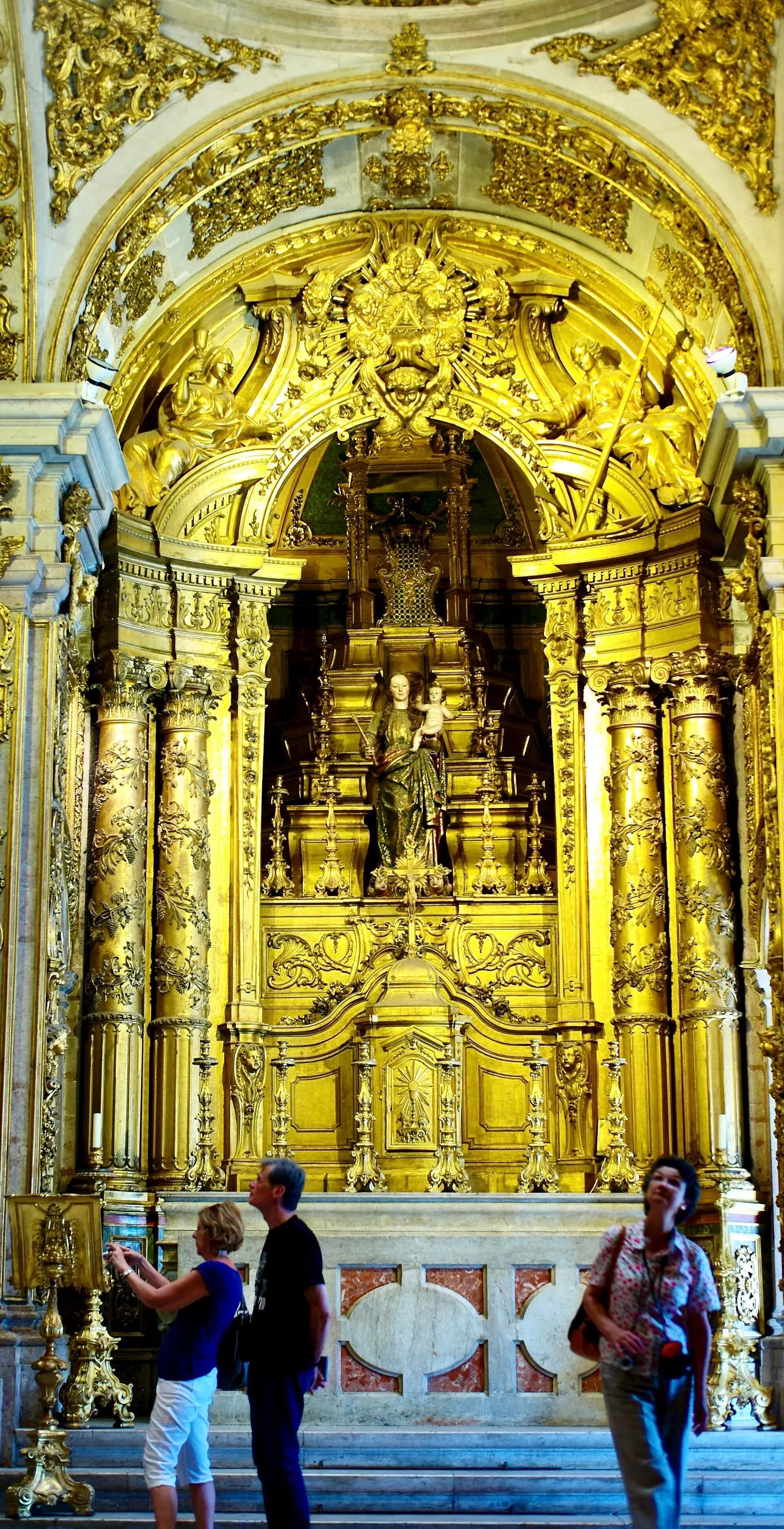
- Location
- Lisboa, Lisboa
- Built
- 1509
- Style
- Manuelino, Renascentista e Barroco
The National Tile Museum is the reference institution for the study and preservation of one of the most unique expressions of Portuguese material culture. It houses the world’s largest collection of azulejo, spanning five centuries of production, from Hispano-Moresque examples of the 15th century to contemporary creations. Its importance lies not only in its holdings: the museum occupies a historic monument of the first order, the former Convent of Madre de Deus, giving the visit a rare unity between container and content.
A convent as the museum’s home
The Convent of Madre de Deus was founded in 1509 on the initiative of Queen Leonor, widow of King João II, to house a community of Poor Clares. The building underwent successive campaigns of works that are still superimposed in its architectural reading: the initial Manueline structure, the Renaissance renovation promoted by King João III — associated with the name of architect Diogo de Torralva — and the profuse Baroque decoration of the 17th and 18th centuries, sponsored by King Pedro II and King João V.
The highlight of this journey is the church, one of the most opulent Baroque interiors in Lisbon. Here, gilded woodcarving, ceilings painted by masters such as Bento Coelho da Silveira, and panels of early 18th-century Dutch tiles coexist. The chancel and the high choir alone constitute a compendium of the art of gilded woodcarving and blue and white tiles at their Joanine peak.
The collection and the Great Panorama of Lisbon
The exhibition route is organized chronologically and allows visitors to follow the technical and aesthetic evolution of ceramic cladding: from 16th-century cord-seca and aresta patterns, to Mannerist figuration, the virtuosity of large Baroque narrative panels, to 19th-century industrial tiles and modern reinterpretations.
The most famous piece is the Great Panorama of Lisbon, a blue and white tile panel approximately 23 meters long, dating from around 1700 and attributed to the painter Gabriel del Barco. It depicts the city’s riverside front, from Algés to Xabregas, as it existed before the 1755 earthquake.
Today, the Great Panorama is the most faithful visual testimony of pre-Pombaline Lisbon: a document preserved in ceramics where stone has disappeared.
Institutional mission and framework
Although the collection began to become independent in 1965, the National Tile Museum was formally established as a national museum by Decree-Law No. 404/80. It is part of the state museum network, now under the supervision of the central heritage administration — a trajectory that can be read in conjunction with the history of the Directorate-General for Cultural Heritage and the structuring of the Portuguese Museum Network.
In addition to the permanent exhibition, the museum performs inventory, conservation, and specialized research functions, being an essential hub for the documentation of tiles as heritage. Its thematic proximity to the painting and decorative arts collection of the National Museum of Ancient Art reflects Lisbon’s centrality in the history of Portuguese museology. More than a repository, the National Tile Museum asserts itself as the guardian of an art that defines, in an almost identitary way, the built landscape of the country.
Frequently asked questions
- Where is the National Tile Museum located?
- It is located at Rua da Madre de Deus, No. 4, in the eastern area of Lisbon (Xabregas), housed in the former Convent of Madre de Deus.
- What is the most famous piece in the museum?
- The Great Panorama of Lisbon, a blue and white tile panel approximately 23 meters long, dating from around 1700, depicting the city before the 1755 earthquake.
- When was the museum established?
- The collection became independent from 1965 onwards, and the National Tile Museum was established as an autonomous national museum by Decree-Law No. 404/80 in 1980.
Sources
Keep exploring
Heritage nearby
More places to discover from here. Approximate straight-line distances, within 50 km.
Resources for research
Find the sources. Follow the story.
Guides to researching buildings, exploring museum collections and understanding heritage protection.
SIPA
Get to know the architectural inventory, building records and documentary archive.
Read the guideMuseum collectionsMatrizNet
Explore the museum catalogue and records of works, materials, authorship and provenance.
Read the guideHeritage protectionHeritage classification
Understand cultural property categories and the levels of national, public and municipal interest.
Read the guide