Resources
National Museum Grão Vasco
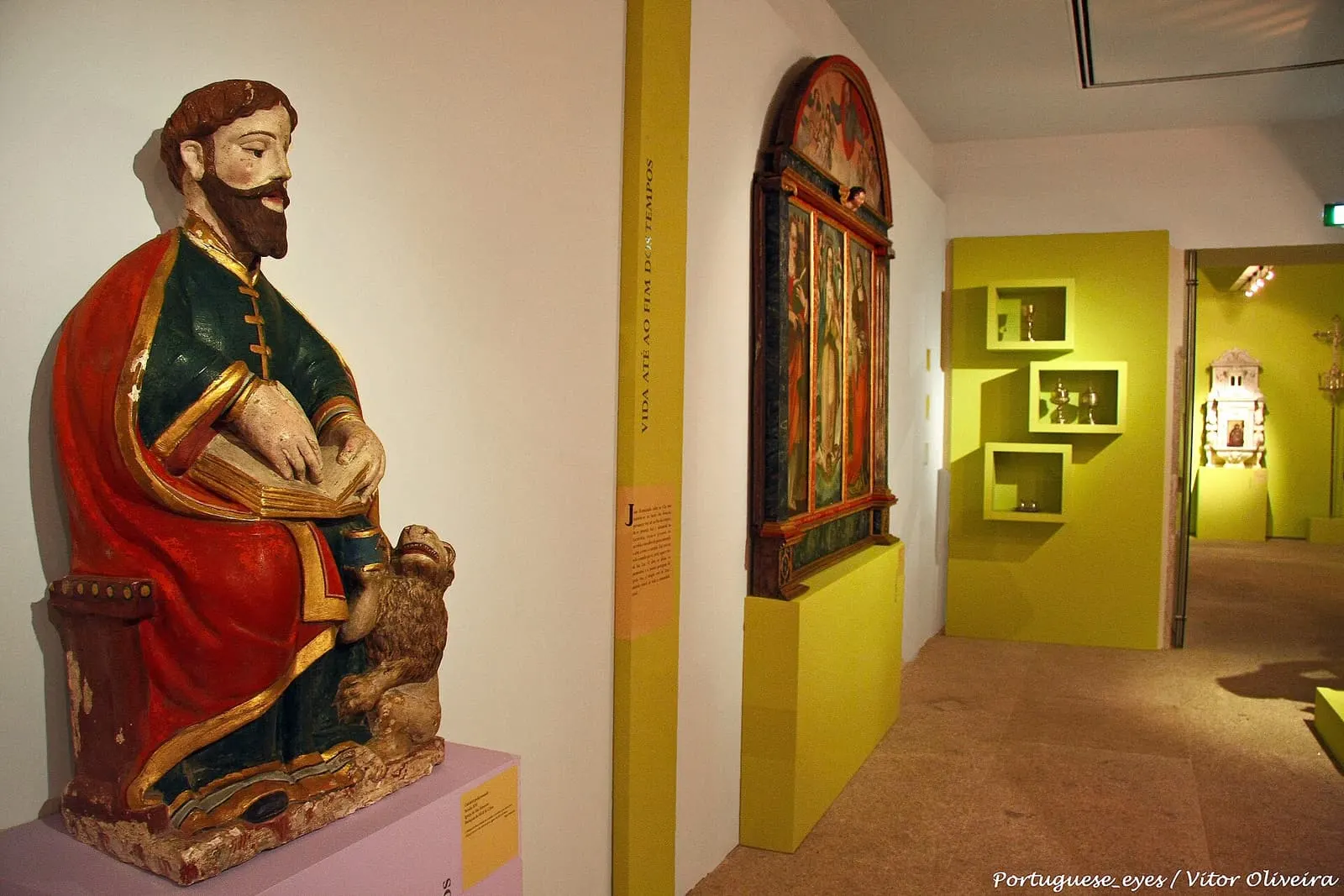
National Museum Grão Vasco in Viseu: the museum at Paço dos Três Escalões dedicated to the paintings of Vasco Fernandes and the 16th-century Viseu school.
- Location
- Viseu, Viseu
- Built
- 1916 (fundação)
The National Museum Grão Vasco is an art museum located in the historic center of Viseu, in the district of the same name. Housed in the Paço dos Três Escalões, a building adjacent to Viseu Cathedral, it preserves and displays one of the most important collections of 16th-century Portuguese painting, centered around the figure of Vasco Fernandes, renowned by the epithet Grão Vasco. Today, it is one of the leading institutions for the study of Portuguese Renaissance painting.
The Building: Paço dos Três Escalões
The museum occupies the Paço dos Três Escalões, built on the site of the former episcopal residence and originally intended as a seminary or college for clergy training. A commemorative plaque indicates that construction began on June 6, 1593, continuing into the first half of the 17th century. The building, with its sober layout organized around a courtyard, adjoins the cathedral and forms part of Adro da Sé, a monumental ensemble that includes, in the same square, the Cathedral, the Church of Misericórdia, and the museum itself.
The choice of this building as the museum’s headquarters was not accidental: its proximity to the Cathedral allowed for the collection and protection of the chapter’s artistic heritage, particularly the altarpiece paintings created for the cathedral during the Renaissance.
Foundation and Collection
The National Museum Grão Vasco was founded on March 16, 1916, with the purpose of preserving and showcasing the paintings in Viseu Cathedral, the chapter’s treasury, and other objects of artistic or historical value. Its creator and first director was Francisco de Almeida Moreira, who was responsible for the gradual expansion of the collections and the progressive acquisition of the galleries in Paço dos Três Escalões.
The museum’s core collection consists of altarpiece paintings from the first half of the 16th century, by Grão Vasco, his collaborators, and contemporaries. Among the most emblematic works is the set created for Viseu Cathedral, including the main altarpiece—in which the young Vasco Fernandes participated—and paintings from the master’s mature period, such as the famous Saint Peter. Alongside Vasco Fernandes, the collection documents the work of other painters from the so-called Viseu school, including Gaspar Vaz, highlighting the vitality of the artistic centers in the Beira region within the context of the Renaissance in Portugal.
Significance and Classification
Due to the quality and coherence of its holdings, the National Museum Grão Vasco is one of the national museums overseen by the Portuguese state and is part of the Portuguese Museum Network. Its collection of 16th-century painting is often mentioned alongside that of the National Museum of Ancient Art in Lisbon, together forming one of the pillars for understanding Portuguese Renaissance painting.
More than a repository of works, the museum serves as a key to interpreting the entire historical fabric of Viseu: its existence is inextricably linked to the Cathedral and the square surrounding it, making a visit to the museum also a journey through the city’s religious and artistic memory. The institution also maintains regular activities in research, conservation, and temporary exhibitions, affirming Grão Vasco’s legacy as a major reference for the cultural identity of Beira.
Frequently asked questions
- Where is the National Museum Grão Vasco located?
- It is located in the historic center of Viseu, at Paço dos Três Escalões, next to the Cathedral, in Adro da Sé.
- Who was Grão Vasco?
- Grão Vasco is the epithet by which Vasco Fernandes became known, a 16th-century painter who had a workshop in Viseu and is the museum's greatest reference.
- When was the museum founded?
- It was founded on March 16, 1916, on the initiative of Francisco de Almeida Moreira, who was its first director.
Sources
Keep exploring
Heritage nearby
More places to discover from here. Approximate straight-line distances, within 50 km.
Resources for research
Find the sources. Follow the story.
Guides to researching buildings, exploring museum collections and understanding heritage protection.
SIPA
Get to know the architectural inventory, building records and documentary archive.
Read the guideMuseum collectionsMatrizNet
Explore the museum catalogue and records of works, materials, authorship and provenance.
Read the guideHeritage protectionHeritage classification
Understand cultural property categories and the levels of national, public and municipal interest.
Read the guide