Resources
National Museum of Ancient Art
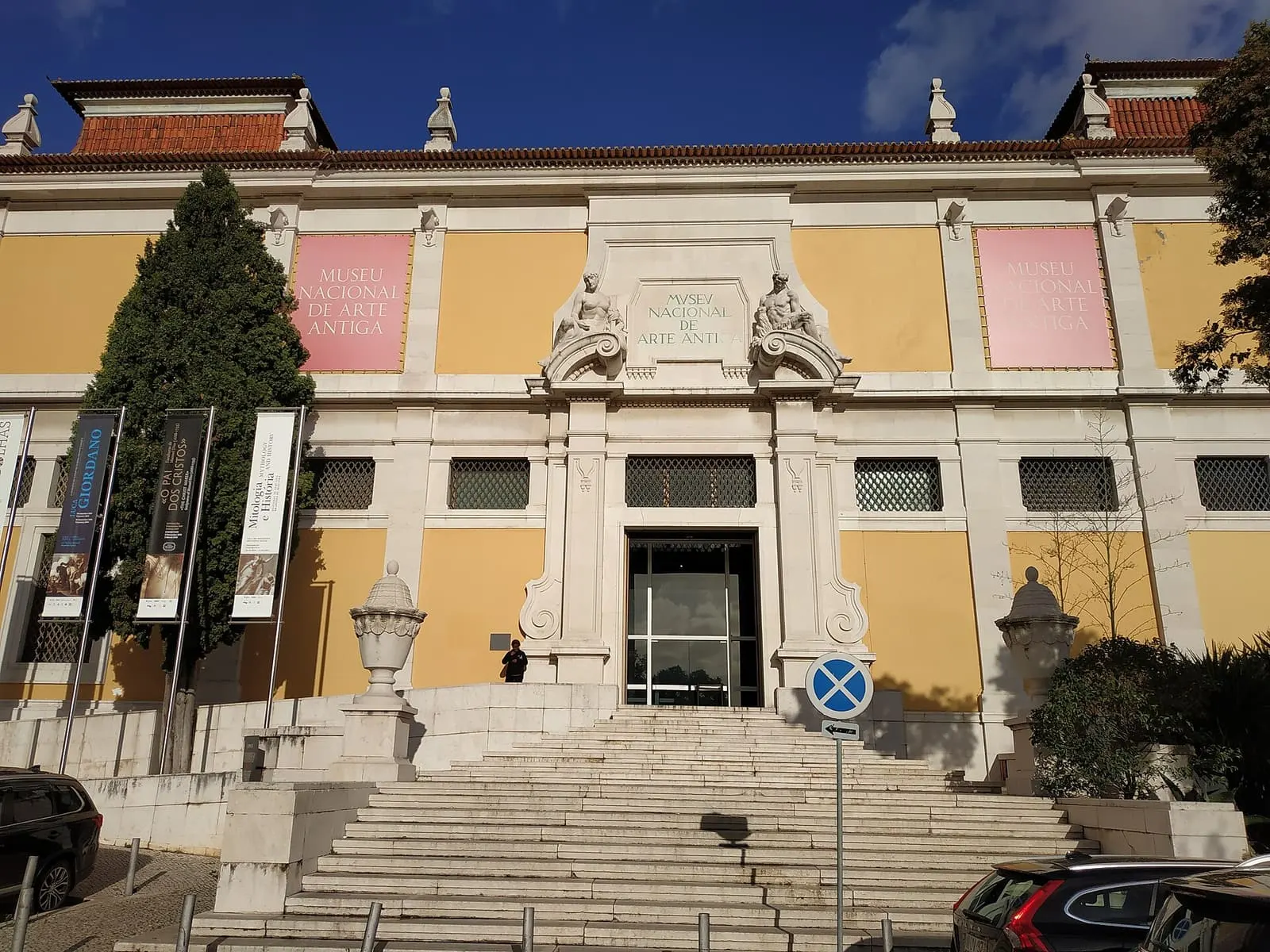
The National Museum of Ancient Art in Lisbon is Portugal's first museum (1884) and houses the country's largest collection of national treasures.
- Location
- Lisboa, Lisboa
- Built
- 1884
The National Museum of Ancient Art (MNAA) in Lisbon is Portugal’s most important museum institution dedicated to the fine and decorative arts from the 12th to the 19th centuries. It houses the largest collection of works classified by the State as national treasures and holds a foundational place in the history of heritage institutions, having been the first public museum created in Portugal.
Origins and foundation
The roots of the MNAA date back to 1834, when the dissolution of religious orders and the consequent confiscation of their assets led to the gathering of thousands of paintings, goldsmith works, and liturgical objects, entrusted to the care of the Lisbon National Academy of Fine Arts. It was from this core, combined with collections from the Royal Household, that the initial holdings were formed.
The museum opened its doors on 11 May 1884, under the name National Museum of Fine Arts and Archaeology, housed in the Palácio de Alvor-Pombal, a 17th-century residence that had belonged to the 1st Marquis of Pombal. In 1911, the republican reform separated the collections: archaeology was transferred to what would become the National Museum of Archaeology, while the fine arts nucleus became autonomous with its current designation. The directorship of José de Figueiredo, between 1911 and 1937, marked the scientific and museological modernisation of the institution.
The building and its location
The Palácio de Alvor-Pombal, facing the Tagus River on Rua das Janelas Verdes — hence the popular nickname Museum of the Green Windows — was successively expanded. In 1940, the west wing was built on the site of the former Convent of Santo Alberto, from which the remarkable Baroque chapel was preserved and is now integrated into the exhibition route. The articulation between the old palace and the new buildings well summarises the museum’s vocation: preserving the past while adapting it to new functions.
More than a repository of works, the MNAA is the place where, over a century and a half, the very idea of Portugal’s national artistic heritage was forged.
The collections
The collection, comprising around 40,000 pieces, includes painting, sculpture, goldsmithing, ceramics, textiles, and furniture, of European, African, and Oriental origin. Among the masterpieces are the Panels of Saint Vincent, attributed to Nuno Gonçalves (c. 1470) and the greatest icon of Portuguese Renaissance painting; The Temptations of Saint Anthony by Hieronymus Bosch; Saint Jerome by Albrecht Dürer; and, in the field of goldsmithing and sacred art and treasures, the Belém Monstrance, commissioned by King Manuel I with gold from the first tribute brought from the East.
The collection also includes rare Namban screens, documenting the encounter between Portugal and Japan in the 16th century, and a vast collection of tiles and faience that illustrates the circulation of artistic models in the Atlantic and Asian spheres.
Guardianship and mission
As a state museum, the MNAA is part of the network under the guardianship of the Directorate-General for Cultural Heritage, responsible not only for exhibition but also for the study, conservation, and dissemination of the heritage in its care. Its history is intertwined with that of Portuguese heritage policy itself, from the 19th-century confiscations to contemporary museology, making it an essential reference for anyone seeking to understand the art and memory of Portugal.
Frequently asked questions
- When was the National Museum of Ancient Art founded?
- It was inaugurated on 11 May 1884, initially designated as the National Museum of Fine Arts and Archaeology, being considered Portugal's first public museum.
- Why is it also known as the Museum of the Green Windows?
- Due to its location on Rua das Janelas Verdes (Street of Green Windows) in Lisbon, near the Tagus River, a popular name that endures as an alternative designation for the institution.
- What masterpieces can be seen in the museum?
- Highlights include the Panels of Saint Vincent attributed to Nuno Gonçalves, The Temptations of Saint Anthony by Hieronymus Bosch, Saint Jerome by Albrecht Dürer, and the Belém Monstrance.
Sources
Keep exploring
Heritage nearby
More places to discover from here. Approximate straight-line distances, within 50 km.

Resources for research
Find the sources. Follow the story.
Guides to researching buildings, exploring museum collections and understanding heritage protection.
SIPA
Get to know the architectural inventory, building records and documentary archive.
Read the guideMuseum collectionsMatrizNet
Explore the museum catalogue and records of works, materials, authorship and provenance.
Read the guideHeritage protectionHeritage classification
Understand cultural property categories and the levels of national, public and municipal interest.
Read the guide