Monuments
Viseu Cathedral
Viseu Cathedral in Beira Alta combines Manueline knot vaulting and a Renaissance cloister in one of the most remarkable religious complexes in Central Portugal.
- Location
- Viseu, Viseu
- Built
- século XII–XVIII
- Style
- Românico, Gótico, Manuelino, Maneirista e Barroco
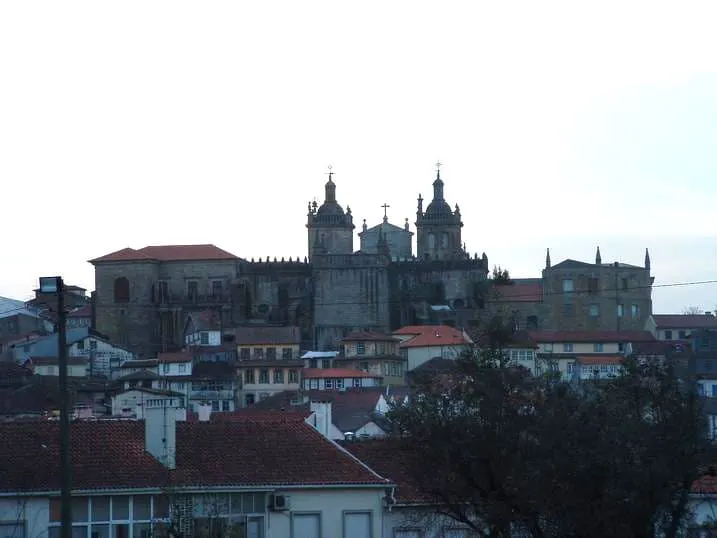
The Cathedral of Santa Maria de Viseu dominates the highest point of the city’s historic center at Adro da Sé, forming with the neighboring Church of Misericórdia one of the most scenographic urban ensembles in Beira Alta. The seat of the Diocese of Viseu since the Middle Ages, this temple is a palimpsest where nearly nine centuries of Portuguese architecture overlap — from foundational Romanesque to Baroque. Classified as a National Monument in 1910, it stands among the most unique of Portugal’s cathedrals.
From Romanesque foundations to the great medieval cathedral
The first church erected on this site dates to the early 12th century, during the reorganization of the diocese after the Christian reconquest. Elements from this Romanesque phase remain, particularly the robust walls and three-aisle floor plan. Between the 13th and 14th centuries, under renewed construction efforts, a new cathedral body and the first Gothic cloister were built, giving the structure the monumental scale that still impresses visitors ascending to the square today.
Like other cathedrals in Beira, the building grew through accumulation without ever completely erasing earlier phases. This continuity links Viseu to nearby Guarda Cathedral, similarly marked by the transition between Gothic and Manueline styles at the edge of Beira.
The knot vault and Manueline zenith
The greatest construction period occurred between the 15th and 16th centuries. Its most celebrated feature is the knot vault of the central nave, completed in 1513 under Bishop D. Diogo Ortiz de Vilhegas. Its intersecting ribs were carved to resemble thick ropes tied in knots — one of the most recognizable decorative motifs of the Manueline style, here unusually applied across the entire ceiling.
Few spaces translate the nautical imagination of King Manuel I’s reign so literally: looking upward in Viseu’s nave is to see the sea transposed into stone.
A Manueline façade from the same period has since disappeared. The current Mannerist frontage resulted from reconstruction necessitated by the collapse of one tower in 1635.
The Renaissance cloister and cathedral treasury
Under the patronage of Bishop D. Miguel da Silva, a humanist prelate with Roman connections, a new Italian-inspired cloister was built in the 16th century. Its lower level ranks among Portugal’s earliest manifestations of Italian Renaissance, with arcades of elegant classical regularity; the 18th-century upper floor was later clad in azulejos. This dialogue between erudite Renaissance and Baroque connects Viseu to other great monastic complexes of the interior, like Santa Cruz Monastery in Coimbra.
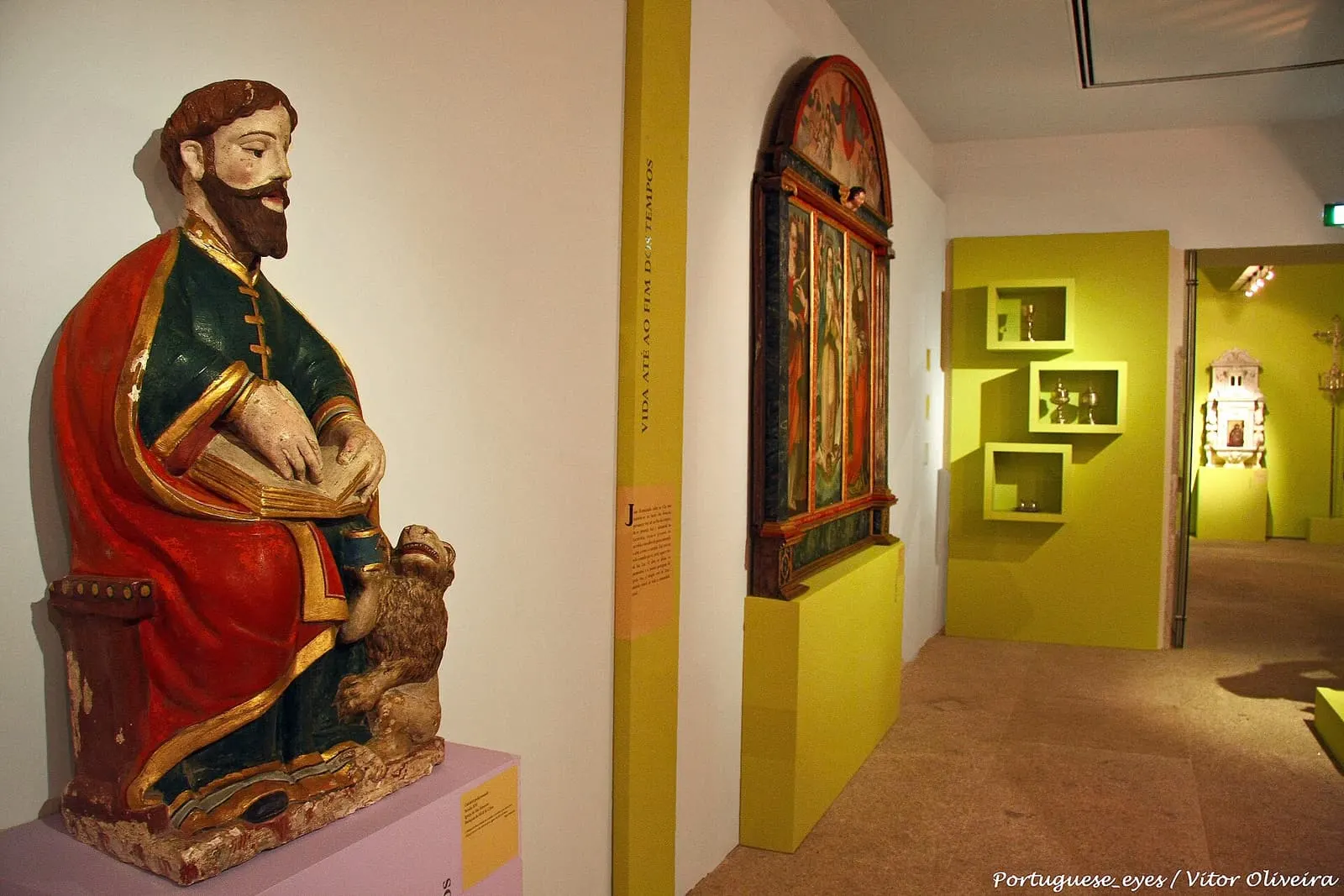
Inside, highlights include the choir stalls, gilded woodwork, and Baroque main altarpiece. The cathedral’s movable heritage now forms the Treasury Museum housed in the cloister, displaying goldsmithing, sculpture, and liturgical textiles spanning the 12th to 20th centuries. Part of the temple’s original pictorial collection — including works by Vasco Fernandes (Grão Vasco) — is held at the adjacent Grão Vasco National Museum in the former episcopal palace.
Visiting Viseu Cathedral thus means traversing Portuguese art history within a few meters, a journey naturally complemented by monuments of Central Portugal and comparative study of other medieval cathedrals like Coimbra’s Old Cathedral.
Frequently asked questions
- What makes the vault of Viseu Cathedral so distinctive?
- The vault of the central nave, completed in 1513, is covered with sculpted ribs shaped like thick ropes tied in knots — one of the most emblematic nautical motifs of the Manueline style, rarely applied to an entire ceiling.
- Can the cathedral cloister be visited?
- Yes. The Renaissance cloister, dating from the 16th century, is open to the public and now forms part of the Treasury Museum route. Its upper floor, from the 18th century, is covered with azulejo tiles.
- Where is Viseu Cathedral located?
- It stands on Adro da Sé, the highest point of Viseu's historic center, facing the Church of Misericórdia and adjacent to the Grão Vasco National Museum.
Sources
Keep exploring
Heritage nearby
More places to discover from here. Approximate straight-line distances, within 50 km.