Periods & Styles
Portuguese Soft Style (Estado Novo)
The Portuguese Soft Style: the nationalist and monumental architecture of the Estado Novo between the 1930s and 1950s, in Lisbon, Porto and throughout the country.
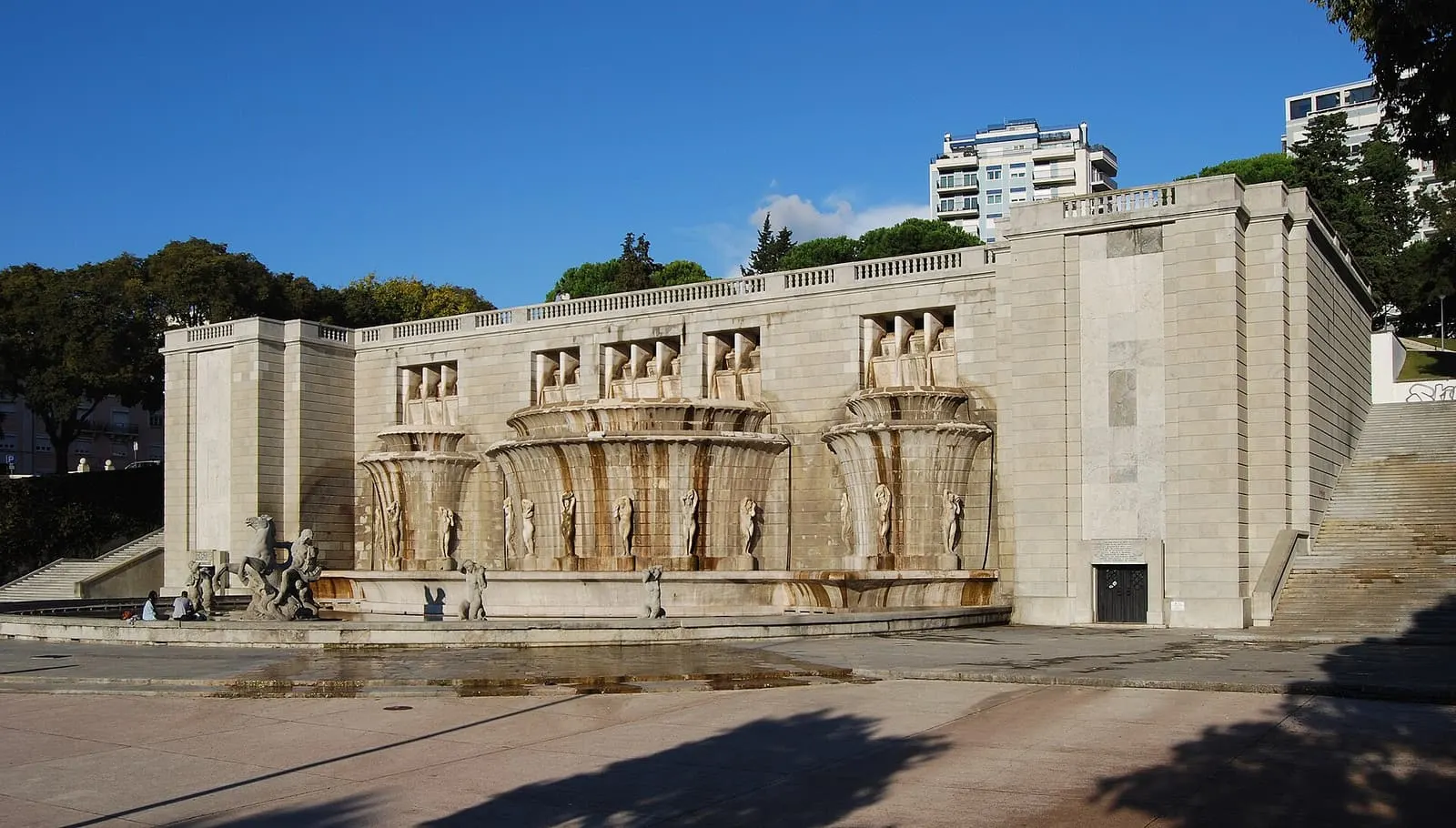
- Built
- c. 1933–1955
- Style
- Português Suave
The Portuguese Soft Style is the common designation for the nationalist and neo-traditionalist architecture promoted by the Estado Novo regime, particularly between the 1930s and 1950s. More than a coherent school, it was an aesthetic orientation serving a regime that sought to translate its vision of Portugal into stone and concrete: a country of ancient roots, sober people and “gentle customs”, resigned to its destiny yet proud of its historical past. The expression itself, popularized with ironic undertones, encapsulates this ambition of architecture that was simultaneously modern in construction yet traditional in appearance.
Origins and political context
The consolidation of the Estado Novo following the May 28, 1926 coup and under Oliveira Salazar’s leadership was accompanied by extensive public works policies from the mid-1930s. This initial phase still featured monumentalizing modernism with Art Deco influences. The turning point was the Portuguese World Exhibition, held in Belém in 1940 under architect José Cottinelli Telmo’s direction: this major propaganda operation commemorating the centenaries of Portugal’s foundation (1140) and restoration (1640) established a nationalist vocabulary that the state subsequently favored in public buildings. Minister Duarte Pacheco was also pivotal, driving public works programs and urban growth discipline, particularly in Lisbon.
Language and characteristics
Technically, Portuguese Soft Style buildings were modern—using reinforced concrete and pillar-beam systems—but dressed with decorative elements drawn from 17th-18th century Portuguese architecture and regional traditions. Hence the preference for quoins and stone bases, cornices and eaves, porticos and colonnades, towers topped with pyramidal pinnacles, and often armillary spheres. Forms tended toward austere, classicizing monumentality, particularly expressive in state power-associated buildings.
The Portuguese Soft Style wasn’t a style from the past, but a reinvented past: it used contemporary engineering to stage an idealized national memory.
The typological scope was enormous. The style was applied from modest rural primary schools—the so-called “Centenary Schools”—to high schools and university buildings, barracks, courthouses, hospitals, town halls and post offices. In Lisbon, it marked planned neighborhoods like Alvito, Areeiro and Alvalade, part of the city’s expansion planning; in Porto and nationwide, courthouses and public facilities followed the same grammar. This production fits within the broader framework of Estado Novo architecture, representing its most explicitly traditionalist strand.
Decline and critical reassessment
The First National Architecture Congress in 1948 delivered the major blow against the style: a generation of architects there demanded full adherence to Modern Movement principles, challenging imposed historicism. Subsequently, the Portuguese Soft Style was gradually abandoned as the state returned to modern language in public works, paving the way for modernism in Portugal and later contemporary architecture. Today, these buildings undergo heritage reassessment: no longer viewed solely as ideological instruments but as witnesses to a dense period in Portuguese urban history worth studying and preserving alongside other periods and styles of national architecture.
Frequently asked questions
- What is the Portuguese Soft Style?
- It refers to the nationalist and neo-traditionalist architecture promoted by the Estado Novo regime, particularly between the 1930s and 1950s, which combined modern construction techniques with decorative elements from ancient and regional Portuguese architecture.
- Why is it called 'Portuguese Soft'?
- The expression, often used today with ironic undertones, evokes the regime's cultivated image of a Portugal of peaceful people with 'gentle customs', intended to be reflected in sober, restrained architecture rooted in tradition.
- When did the Portuguese Soft Style decline?
- The First National Architecture Congress in 1948 marked the critical turning point against the style, which was gradually abandoned in subsequent decades in favor of modern architectural language.