Intangible Heritage
Port Wine
Port Wine, the fortified wine from the Douro: history, production methods, types, and the know-how of the world's first demarcated wine region.
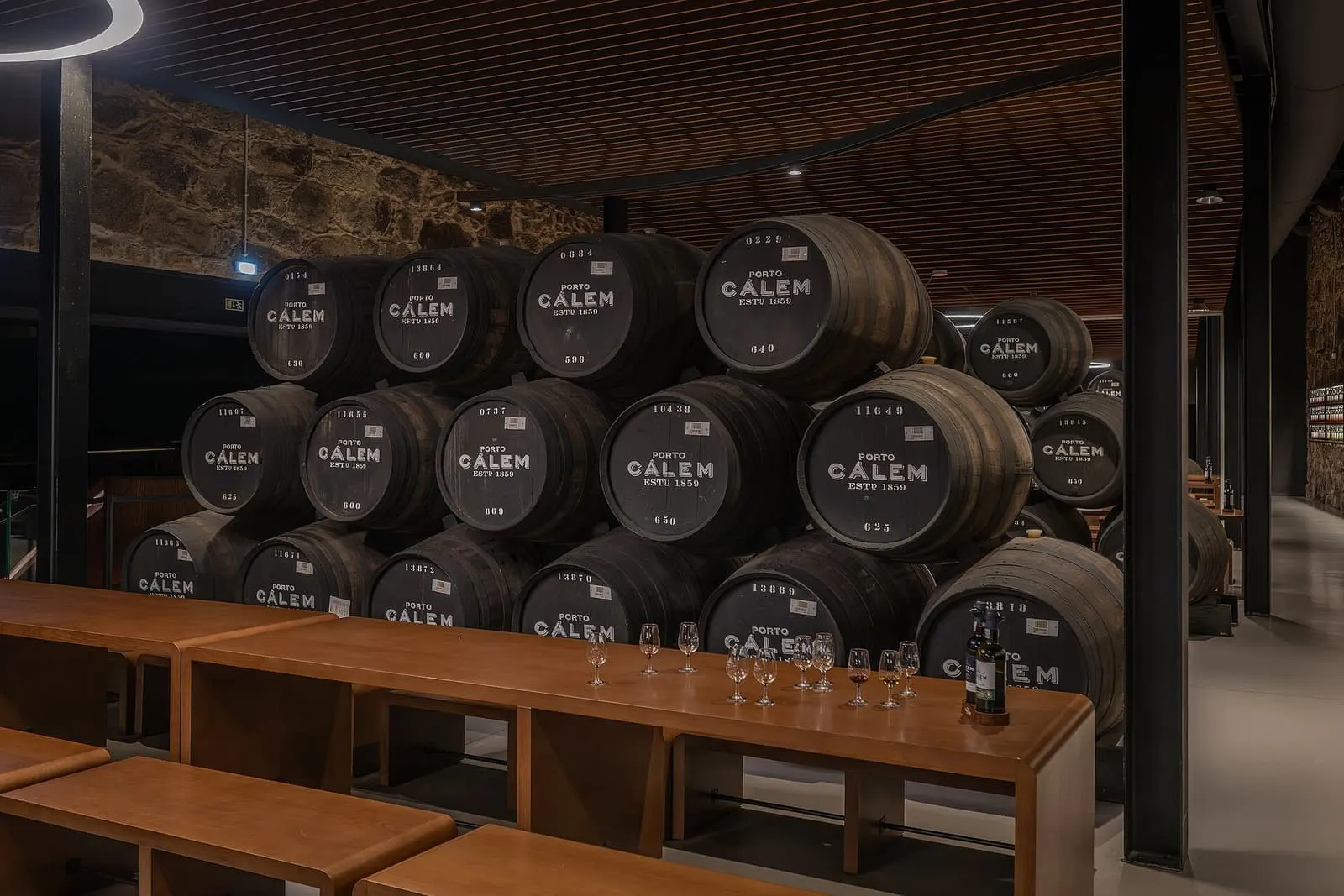
Port Wine is a fortified wine produced exclusively from grapes grown in the Douro Demarcated Region in inland northern Portugal. Sweet or semi-dry, red, white or rosé, it is one of the most recognizable symbols of Portuguese winemaking identity and the result of centuries-old know-how cultivated in the terraced landscape of Alto Douro Vinhateiro.
Its uniqueness stems from a technical step: during fermentation, when the must still retains some of the grapes’ sugar, neutral grape spirit is added. The alcohol halts yeast activity, preserving sweetness and raising the alcohol content to about 19 to 22 percent. From this common principle emerge diverse styles, shaped mainly by the type and duration of aging.
Origin and history
The origin of Port Wine is debated. The most widespread version attributes its creation to 17th-century British merchants who added brandy to Douro wine to prevent spoilage during long sea voyages to England. However, the practice of fortifying wines for preservation likely predates this and was more widespread. What is certain is that during the 1600s, Douro wine gained international fame and became one of the kingdom’s main exports.
The decisive moment for its establishment was institutional. In 1756, the Marquis of Pombal founded the Companhia Geral da Agricultura das Vinhas do Alto Douro to regulate wine production and trade. The following year saw the demarcation of the region, marked by granite boundary stones — the famous “Pombaline markers.” This made the Douro the world’s first demarcated and regulated wine region, predating European appellations of origin by over a century.
The Pombaline demarcation didn’t invent Douro wine but invented the idea that a wine belongs to a defined territory with public regulations — a principle at the root of all modern appellation concepts.
Methods and styles
Production begins in steep, schistous terraced vineyards where harvesting and much of the work still rely on manual labor. Traditional fermentation involves foot-treading in granite lagares, a technique many estates still preserve alongside mechanical methods.
After fortification, the wine undergoes aging, which defines its final style. Tawny ages for long periods in wooden casks, developing a golden hue and oxidative notes of dried fruits; age-indicated categories (10, 20, 30, or over 40 years) result from carefully balanced blends. Ruby, aged for shorter periods, retains vibrant color and intense fruit, culminating in Vintage, bottled unfiltered after bottle maturation. There’s also White, made from white grapes, and the newer Rosé.
Heritage and recognition
Port Wine is now a protected designation of origin, overseen by the Instituto dos Vinhos do Douro e do Porto, which controls production, certifies wines, and issues guarantee seals. Its landscape — the terraces, estates, and villages of the Douro — was designated a UNESCO World Heritage Site in 2001 as Alto Douro Vinhateiro.
More than a product, Port Wine embodies practices, knowledge, and rituals — from pruning to treading, blending to aging — forming genuine intangible winemaking heritage. Its story intertwines with other Portuguese fortified wines like Madeira Wine and extends along discovery routes like the Port Wine Route, linking Douro estates to historic cellars near Porto. To know this wine is, in part, to recognize a way of inhabiting and working the landscape, inseparable from Portugal’s intangible cultural heritage.
Frequently asked questions
- Why is it called Port Wine if it's produced in the Douro?
- The grapes and wine come from the Douro Demarcated Region in inland northern Portugal, but the wine was traditionally transported downriver and aged in the cellars of Vila Nova de Gaia near the river mouth, being exported through the port of the city of Porto, which gave it its name.
- What distinguishes Port Wine from regular wine?
- It is a fortified wine: during fermentation, grape spirit is added, halting the process. This preserves some of the grapes' natural sugar and results in an alcohol content of around 19 to 22 percent.
- What are the main types of Port Wine?
- The major styles are Ruby, fruity and briefly bottle-aged; Tawny, oxidative and wood-aged in casks; and White, made from white grape varieties. These are joined by special categories like Vintage and Late Bottled Vintage.