Orte
Palmela
Palmela, town in the Setúbal district in the Arrábida mountains, with a castle and convent of the Order of Santiago, Moscatel wines, and a medieval historic center.
- Lage
- Palmela, Setúbal
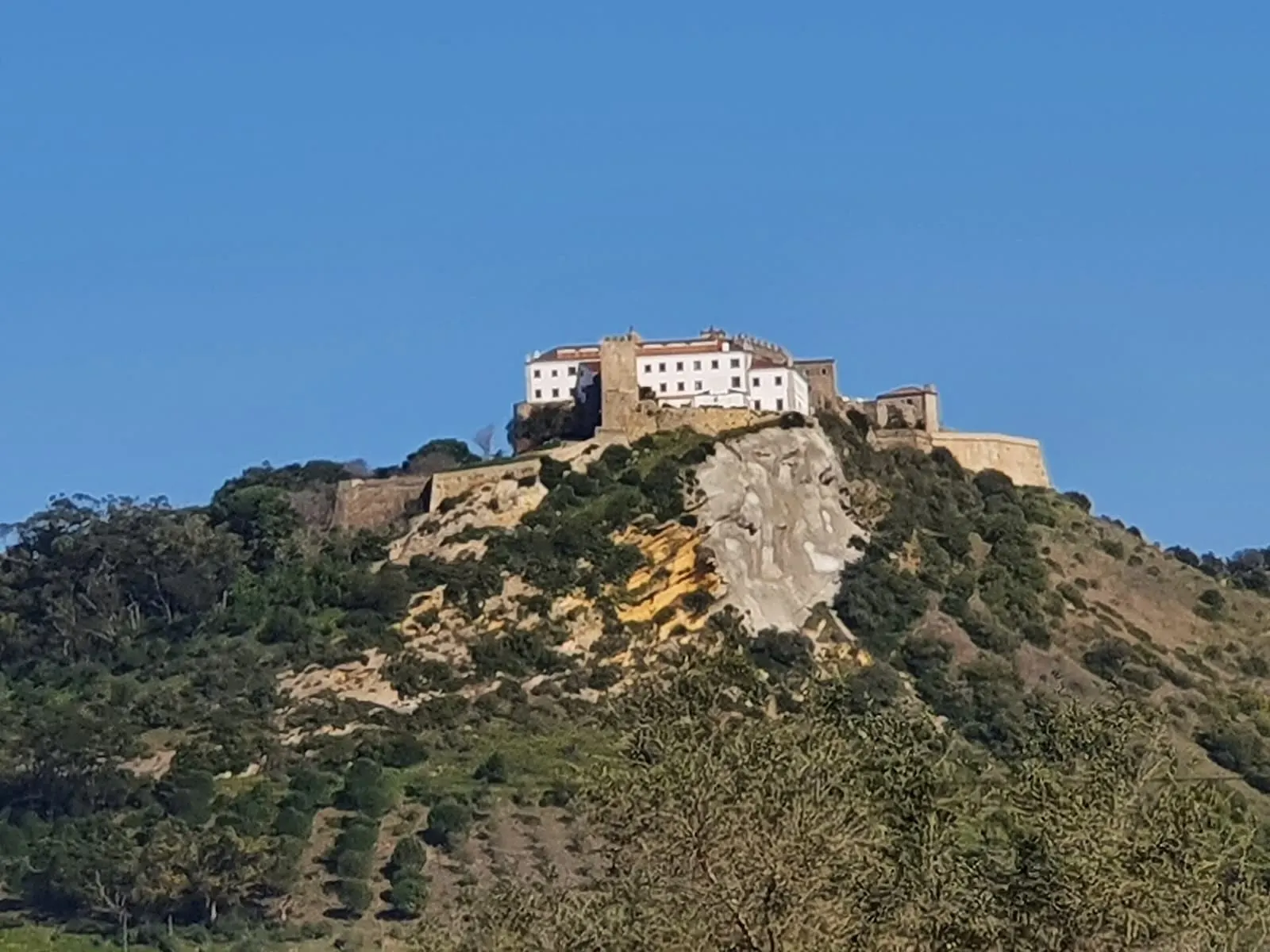
Perched on a spur of the Arrábida mountains at about 240 meters above sea level, Palmela stands out in the Setúbal Peninsula landscape with the silhouette of its castle, visible for dozens of kilometers. The town grew under the fortress’s protection, at a strategic crossroads between Lisbon, the Sado estuary, and the Atlantic coast, and retains a historic center of narrow streets and whitewashed houses that still reflect its long military and religious vocation.
From the Reconquista to the Headquarters of the Order of Santiago
Palmela’s dominant position explains the centuries-long struggle for the town during the Reconquista. Conquered by D. Afonso Henriques in 1147, lost and retaken more than once, it received a charter in 1185 and soon passed into the hands of the Order of Santiago, which established its headquarters in Portuguese territory here. The Santiago knights made the fortress the center of a vast territorial administration that extended across much of the South, and it was under D. João I, in the early 15th century, that the walls were expanded and the convent that still crowns the site was built.
Palmela’s fate is intertwined with that of the Order of Santiago: while the Order ruled from these walls, the town was the capital of a territory; with the dissolution of the military orders in 1834, the castle remained as a stone memory of that power.
The fortified complex, now classified as a National Monument, brings together traces of different eras: Palmela Castle itself, with its tower and cisterns, the Romanesque church of Santa Maria—ruined by an earthquake in the 18th century—and the Gothic church of Santiago, from the 15th century. The old convent of the Order was adapted into an inn, a practice that has allowed these buildings to be preserved and used without distorting their historical significance.
A Territory Between the Mountains and the Sea
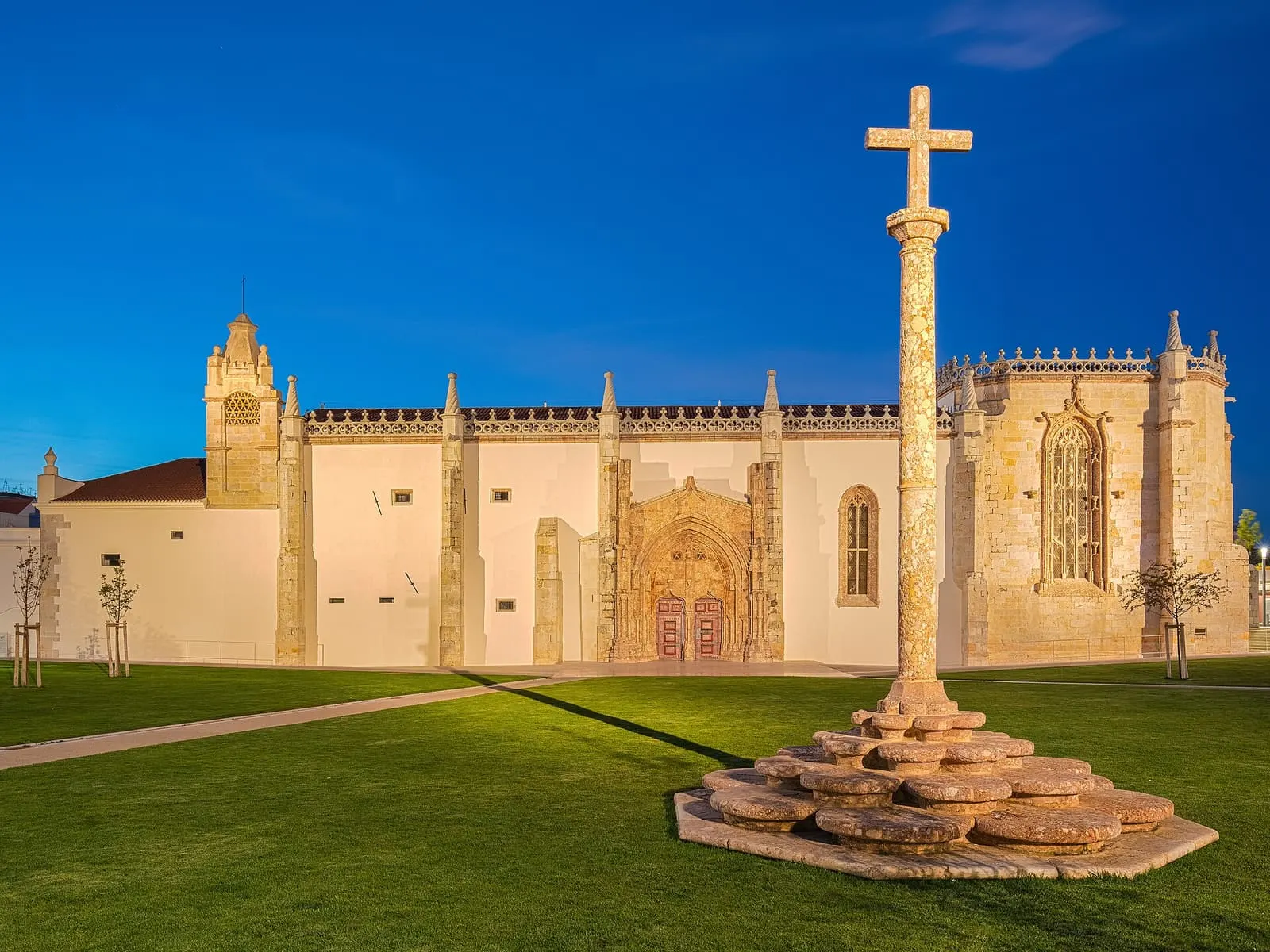
The municipality of Palmela stretches from the wooded mountains to the vineyard plains and inland sands. A few kilometers away, the southern slope of Arrábida is home to the Arrábida Convent, a 16th-century Franciscan retreat of extraordinary landscape, while nearby Setúbal concentrates the port, the canning industry, and monuments like the Church of Jesus. To the west, the rugged coast of Sesimbra completes a heritage and natural arc that makes this region one of the most cohesive areas south of the Tagus.
Palmela’s identity is also rural and gastronomic. The sands and clays of the Setúbal Peninsula produce the famous Moscatel de Setúbal and the red and white wines of the Palmela denomination, alongside Azeitão cheese, with its buttery texture, and the protected local variety of apples, ‘maçã riscadinha.’ This agricultural vocation coexists with scattered settlements in villages and the town of Pinhal Novo, which emerged around the railway in the 19th century and is now the largest urban area in the municipality.
Older Memories
Human occupation of these hills long predates the medieval town. Nearby, fortified settlements from prehistory and the Iron Age have been identified, such as the Castro de Chibanes, and the region is the origin of the so-called Vaso de Palmela, a vessel associated with the transition to copper metallurgy that gave its name to a type of Chalcolithic arrowhead recognized across Western Europe. Roman, Islamic, and Christian layers make Palmela a palimpsest where every wall and church records a layer of history—a reason why its candidacy for the valorization of the fortified complex continues to attract archaeological research and visitors.
Häufige Fragen
- Where is Palmela located?
- Palmela is a town and municipality in the Setúbal district, on the eastern slopes of the Arrábida mountains, south of Lisbon, and part of the Lisbon Metropolitan Area.
- What is Palmela's connection to the Order of Santiago?
- Donated to the Order of Santiago in the last quarter of the 12th century, Palmela Castle became the Order's headquarters in Portugal, where it remained until the dissolution of the military orders in 1834.
- What wines are produced in Palmela?
- The region is famous for Moscatel de Setúbal and Palmela denomination wines, produced in the sandy and clay soils of the Setúbal Peninsula.
Quellen
Weiter entdecken
Kulturerbe in der Nähe
Weitere Orte in der Umgebung entdecken. Ungefähre Entfernungen als Luftlinie, im Umkreis von 50 km.