Intangible Heritage
Rabelo Boat
The rabelo boat, the traditional vessel of the Douro River that carried casks of Port wine from the Alto Douro down to Vila Nova de Gaia.
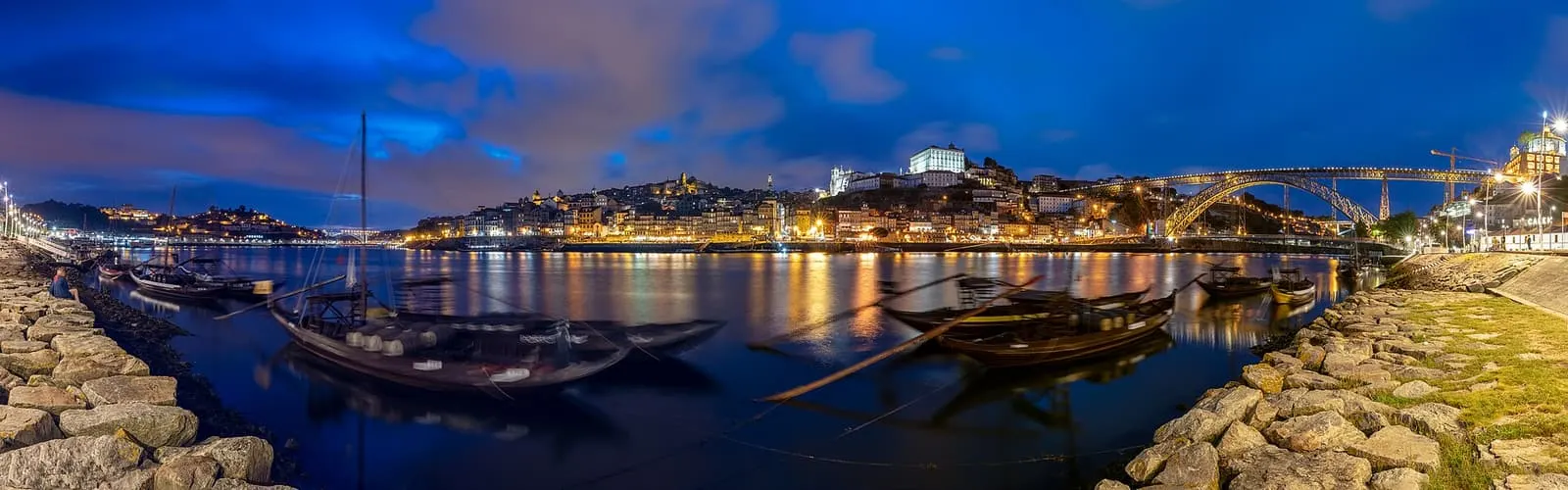
The rabelo boat is the traditional vessel of the Douro River, inseparable from the history of Port wine. For centuries it ensured the connection between the wine-growing slopes of the Alto Douro, where the wine was born, and the warehouses of Vila Nova de Gaia, where it aged before setting out into the world. Its silhouette—flat-bottomed, with a square sail and a long steering oar at the stern—became one of the most recognisable emblems of the Portuguese riverscape.
A vessel built for the river
The rabelo was designed to meet the demands of a difficult river, with fast waters, shallows and tight bends. For this reason it has no keel and presents a flat bottom, features that allowed it to navigate in shallow depths and bear the weight of the casks. The vessels typically ranged between 19 and 23 metres in length and about 4.5 metres in beam. Its construction, in overlapping planks—the so-called clinker planking—links it to Nordic naval traditions, setting it apart from vessels of Mediterranean origin.
On board sailed a crew of six or seven men. The boat was steered with an espadela, a long oar handled from a raised platform at the stern, a piece that demanded strength and skill to overcome the currents. When sail and oars were not enough, especially when going upriver, the rabelo was hauled from the bank by men or by yokes of oxen along the towpaths.
The rabelo is not merely a boat: it is the floating memory of an entire economy, that of the fortified wine which made the Douro one of the oldest and most admired wine-growing landscapes in Europe.
From the Pombaline Company to decline
The identity of the rabelo boat became firmly defined from 1792, when the Companhia Geral da Agricultura das Vinhas do Alto Douro published the charters and regulations known as the “Laws of the Company”. These documents laid down rules concerning the vessels, their crews and the traffic they were intended for, at a time when hundreds of rabelos descended the river laden with casks.
The end of this system came with the modernisation of transport. The completion of the Douro railway line in 1887, and later the development of the roads, deprived the rabelo of its reason for being. Even so, the boats endured for decades, and it is estimated that the last commercial voyage of a rabelo laden with wine took place around 1964. The building of dams along the river, by altering the regime of the waters, definitively closed the era of traditional navigation.
A living symbol of the Douro
Far from disappearing, the rabelo reinvented itself as a cultural icon. The great Port wine houses keep examples moored in front of their warehouses in Vila Nova de Gaia, bearing the names of the brands at the stern. Since 1983, on Saint John’s Day, the Regatta of Rabelo Boats has been held, sending up the river, from the mouth to the Luís I Bridge, vessels that evoke the crossings of old. It is a spectacle that gathers thousands of people on the banks and perpetuates the memory of the craft.
The rabelo boat is part of the body of traditional Portuguese boats and of the know-how of traditional naval craftsmanship, a testimony to a riverside culture in which the vessel, the wine and the landscape formed a whole. Today, as it glides between the terraced slopes of the Alto Douro Vinhateiro, the rabelo continues to tell that story to those who watch it from the historic centre of Porto.
Frequently asked questions
- What was the rabelo boat used for?
- It carried the casks of Port wine from the estates of the Alto Douro, where the wine was produced, down to the warehouses of Vila Nova de Gaia, where it aged and was traded.
- When did it stop being used to transport wine?
- The decline began with the opening of the Douro railway line in 1887, but it is believed that the last commercial voyage of a rabelo laden with wine took place around 1964.
- Do rabelo boats still sail on the Douro?
- Yes. Today they serve mainly tourism and take part each year in the Regatta of Rabelo Boats, held on Saint John's Day, 24 June, between the mouth of the Douro and the Luís I Bridge.