Intangible Heritage
Black Clay and Black Pottery of the North
Black clay and black pottery of northern Portugal: from Bisalhães, in Vila Real, to Gondar and Vilar de Nantes, a pottery tradition recognised by UNESCO.
- Location
- Bisalhães, Mondrões, Vila Real
- Built
- séc. XVI (origens documentadas)
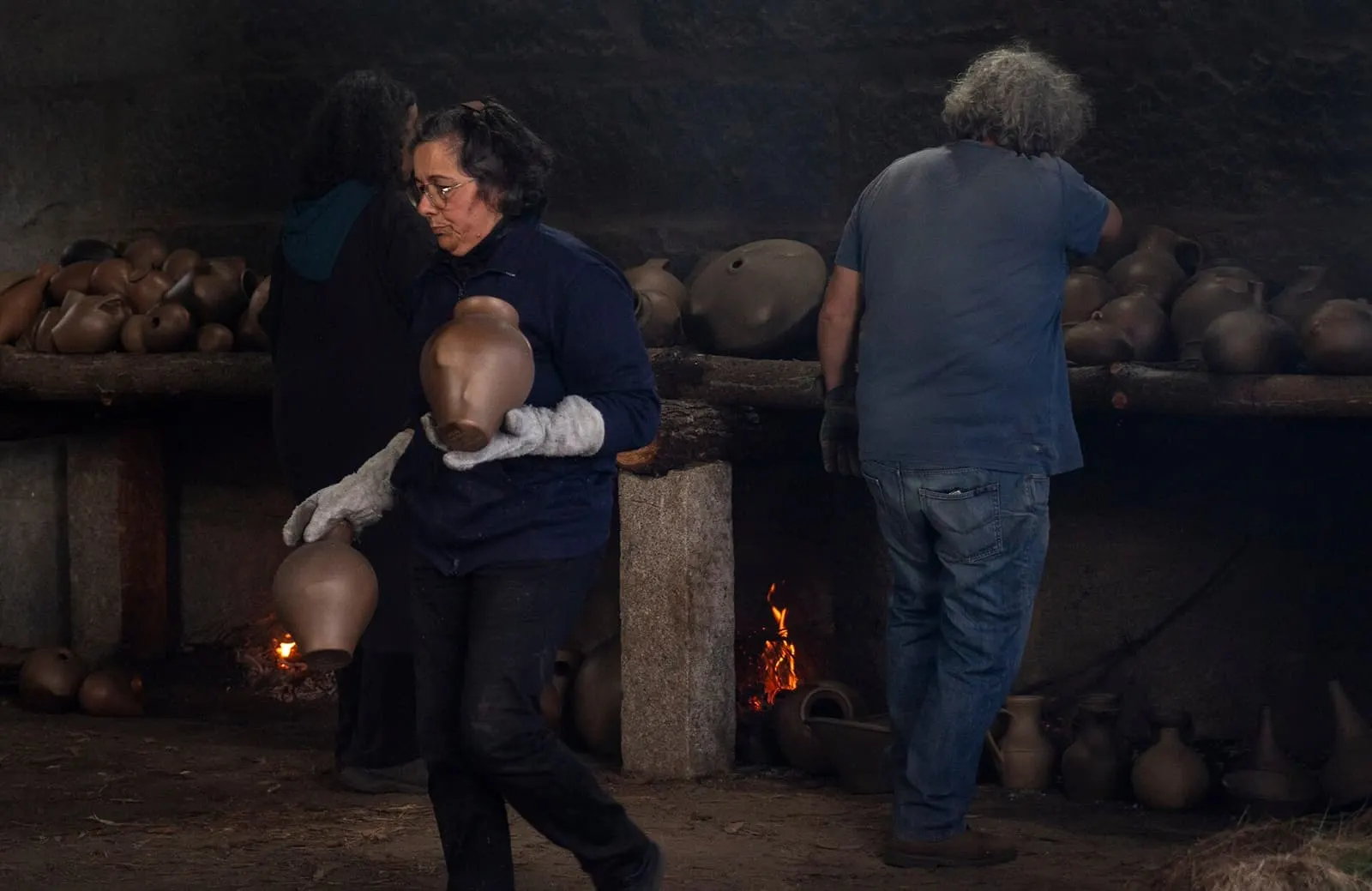
Black clay, or black pottery, is one of the oldest pottery traditions of northern Portugal. It is distinguished by the dark colour of its pieces, achieved not through glaze or pigment but through a firing process in a reducing atmosphere that impregnates the clay with smoke. This technique, shared by several centres in Trás-os-Montes and the Douro, finds in Bisalhães, in the municipality of Vila Real, its most celebrated example and the only one recognised by UNESCO.
Bisalhães, the heart of black pottery
Bisalhães is a small village in the parish of Mondrões, on the southern slope of the municipality of Vila Real. The production of black ware here is documented at least from the sixteenth century and became so much a part of local identity that it appears on the village’s coat of arms. Traditional pieces include jugs, braziers, roasting dishes and the famous fair ware, both utilitarian and decorative, closely associated with the Feira de São Pedro.
The process is demanding. The local clay is worked on low wheels and the pieces are fired in soenga kilns, dug into the ground, where broom, gorse and pine needles are burned. At the end, the pieces are covered with dark earth, cutting off the oxygen: it is this airless combustion, in an enclosed setting, that fixes the characteristic black. More can be read about this specific production in Black Ware of Bisalhães and in the technical description of the Black Pottery of Bisalhães.
Recognition and safeguarding
On 29 November 2016, the manufacturing process of the black pottery of Bisalhães was inscribed on the UNESCO List of Intangible Cultural Heritage in Need of Urgent Safeguarding. It was the first Portuguese expression to join this list, the result of a nomination promoted by the municipality of Vila Real. Inscription on the urgent safeguarding list reflects precisely the fragility of the tradition: the number of active potters has dwindled to a handful of elderly artisans, against a backdrop of declining demand and lack of interest among younger generations.
Other centres in the North
Although Bisalhães is the best-known case, black pottery is not unique to this village. In northern Portugal, other centres that share reduction firing have survived, such as Gondar, in the municipality of Amarante, and Vilar de Nantes, in Chaves. Each developed its own forms and repertoires, but all rest on the same technical principle of firing without oxygen. Together, these centres belong to the broad family of traditional Portuguese pottery and form part of the world of intangible heritage recognised by UNESCO in Portugal, where the transmission of know-how is the chief guarantee of continuity.
Frequently asked questions
- Why does the clay from Bisalhães turn black?
- The black colour results from firing in soenga kilns, dug into the ground, in which the pieces are covered with earth and plant matter at the end of the burn. Combustion without oxygen (a reducing atmosphere) and the smoke impregnate the clay, giving it its characteristic dark tone.
- Is the black pottery of Bisalhães listed by UNESCO?
- Yes. The manufacturing process of the black pottery of Bisalhães was inscribed in 2016 on the UNESCO List of Intangible Cultural Heritage in Need of Urgent Safeguarding, making it the first Portuguese expression on this list.
- Where is black clay produced in northern Portugal?
- The best-known centre is Bisalhães, in Vila Real. Other centres of black pottery exist or once existed in the North, such as Gondar, in Amarante, and Vilar de Nantes, in Chaves, sharing techniques of reduction firing.