Intangible Heritage
Estremoz Figurines
The Bonecos de Estremoz, Alentejo clay figurines: typologies, iconic figures and the tradition of the boniqueiras, Intangible Cultural Heritage of Humanity.
- Location
- Estremoz, Évora
- Built
- séc. XVIII–presente
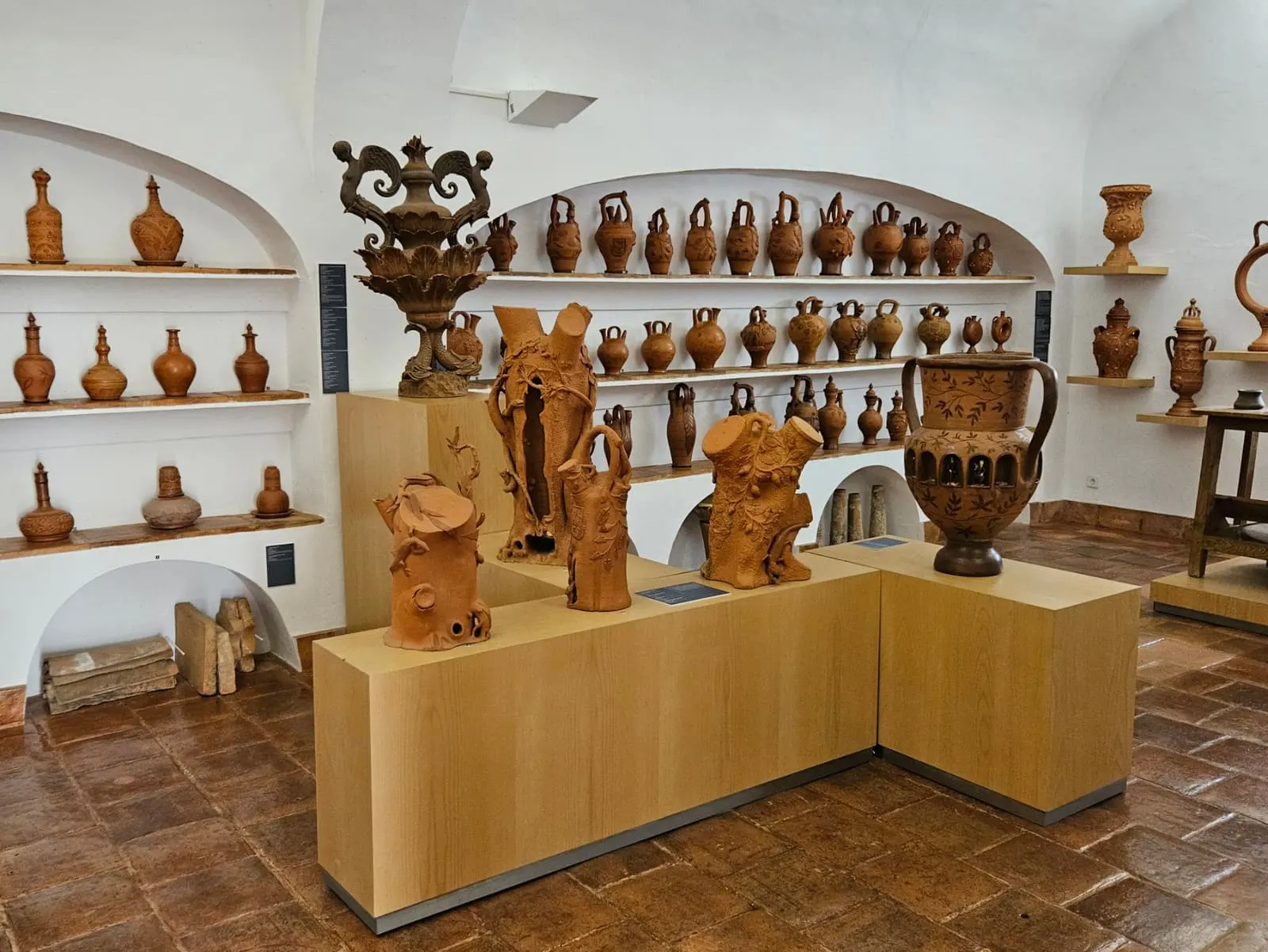
The Bonecos de Estremoz are small clay figures modelled by hand and polychromed, produced in the town of Estremoz, in the district of Évora, in the heart of the Alentejo. More than a decorative object, they constitute a visual language of their own, with a grammar of forms, colours and themes that has been recognisable for generations, and whose know-how earned, in 2017, inscription on the Representative List of the Intangible Cultural Heritage of Humanity.
A repertoire of more than a hundred figures
The body of traditional models exceeds a hundred catalogued types, to which new inventions inspired by Alentejo life are continually added. The figures are organised into broad thematic families: the scenes of everyday life, which portray trades and the rural labour of the countryside and the town; the nativity scenes and the Christmas cycle; the devotional figures and saints, linked to popular religiosity; and the allegorical figures, heirs to a tradition that took hold in the nineteenth century.
It is from this last group that the most famous figurines come. The Primavera (Spring), a young woman crowned with flowers, and the Amor é Cego (Love is Blind), a blindfolded pair of lovers, became recognisable icons from the eighteen-hundreds onwards. To them are added the Fidalgos and Fidalguinhos, with their gaudy costumes, and, in more recent creations, Queen Saint Isabel, evoking the region’s medieval memory. More ambitious works, such as the Procissão do Senhor dos Passos by José Moreira, show how the figurine can grow from the isolated piece into a narrative composition.
What distinguishes the Estremoz figurine is not realistic perfection, but expressiveness: rounded contours, synthetic gestures and an intense palette that transforms humble clay into a small allegory of the Alentejo.
The tradition of the boniqueiras
For a long time the origin of the figurines was attributed to local potters, but the municipal documentation contradicts that reading. As early as 1770 the records mention the boniqueiras — women who modelled and sold clay figures at fairs and pilgrimages, even though their art was not then recognised as a trade. They were the true creators and transmitters of the tradition.
In the early twentieth century the practice almost died out, surviving in the memory of craftswomen such as Ti Ana das Peles. Its continuity was owed above all to Mariano da Conceição and his sister Sabina Santos, who passed the technique on to new generations; later, names such as the Irmãs Flores ensured the vitality of the figurines into our own time. On the technical gesture and international recognition, see the page devoted to the Estremoz clay figurines.
A place in Alentejo culture
The figurines are a mirror of the world that surrounds them. Their themes — the shepherd, the reaper, the water-carrier, the procession — make them an affective archive of the rural Alentejo, in dialogue with other expressions of the same matrix, such as the cante alentejano, likewise honoured by UNESCO. As polychrome folk ceramics, they also engage with the long history of Portuguese decorative arts and with the neighbouring tradition of Estremoz religious imagery, of devotional function.
Today, only a small number of craftswomen and craftsmen keep production alive, which makes the transmission of knowledge as important as creation itself. The Centro Interpretativo do Boneco de Estremoz and the exhibitions regularly devoted to them confirm that, far from being a curiosity of the past, the figurines continue to reinvent themselves — faithful to an unmistakable aesthetic and to the hands that, for three centuries, have given them form.
Frequently asked questions
- What are the Bonecos de Estremoz?
- They are clay figures modelled by hand and painted in vivid colours, produced in the Alentejo town of Estremoz. They depict scenes of everyday life, allegorical figures, nativity scenes and popular devotions, in a repertoire with more than a hundred catalogued models.
- What are the most iconic figures among the Bonecos de Estremoz?
- Among the most recognisable are the Primavera (Spring), the Amor é Cego (Love is Blind), the Fidalgos and Fidalguinhos (Noblemen and Little Noblemen), the nativity scenes and, more recently, Queen Saint Isabel, in addition to the numerous scenes of Alentejo rural labour.
- Who were the boniqueiras?
- They were the women who, at least since 1770, modelled and sold the Estremoz figurines. Contrary to what was long believed, the tradition did not arise from the potters, but above all from these craftswomen.