Intangible Heritage
Cante Alentejano, polyphonic singing from the Alentejo
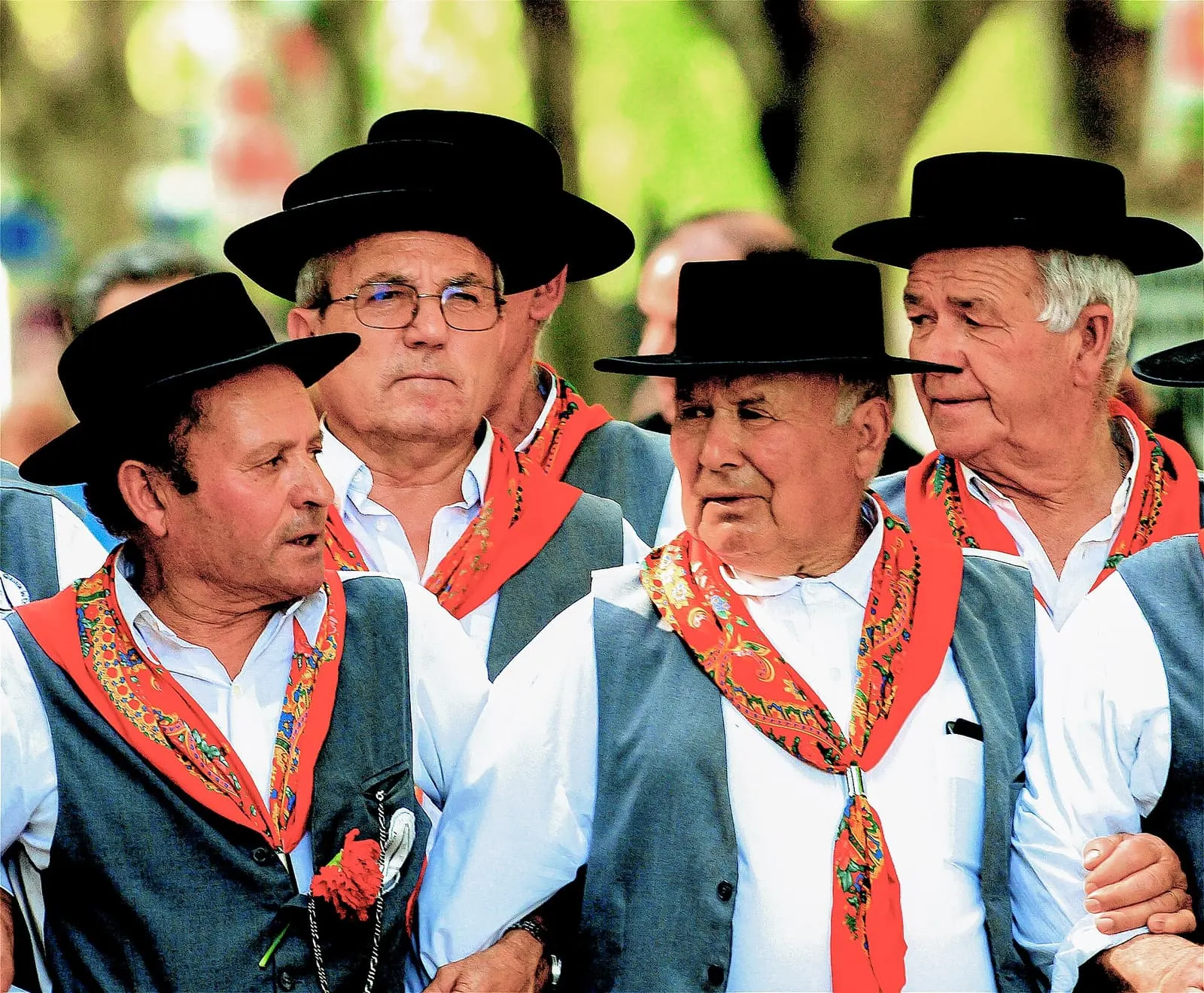
Cante Alentejano, the unaccompanied polyphonic choral singing of the Alentejo, was inscribed on UNESCO's List of Intangible Cultural Heritage in 2014.
- UNESCO
- Intangible Heritage · since 2014
Cante Alentejano is a form of polyphonic choral singing, without instrumental accompaniment, deeply rooted in the plains of the Alentejo, in southern Portugal. Sung by groups of amateurs that may number as many as thirty voices, it is distinguished by its slow, low melodies, by poetic texts on rural life and by the total absence of instruments: the harmony arises exclusively from the interweaving of the voices. On 27 November 2014 it was inscribed on UNESCO’s Representative List of the Intangible Cultural Heritage of Humanity, joining Fado and the Mediterranean Diet among the Portuguese expressions recognised worldwide.
How Cante is sung
The structure of Cante rests on a precise division of voices. The ponto, in the low register, opens the modá by stating the first verse; it is followed by the alto, the high voice that doubles the melody a third or a tenth above, often with ornaments, and that remains an audible guiding voice above the ensemble. Only then does the whole choir take up the song, extending the stanzas in parallel thirds, in a solemn and contemplative tempo.
Without a conductor and without a score, the balance of Cante depends entirely on mutual listening: each singer adjusts his voice to that of his companions, and it is from this shared attention that its sonic density results.
The repertoire draws on a vast body of traditional poetry, organised into modás dealing with work in the fields, nature, love, motherhood, religion and, more recently, social and political themes. Many melodies seem to preserve traces of ancient modes, foreign to the major and minor scales that dominate European music, which gives Cante its particular colouring.
Roots and territory
Cante took shape in the rural world of the Alentejo, associated with agricultural labour and with the gatherings of taverns and wine cellars, and was practised by men and women alike. Although it is sung throughout the Baixo Alentejo, towns such as Serpa, Cuba and Mourão are frequently cited as centres where the tradition survives in its most genuine forms. In Serpa stands the Museu do Cante, dedicated to the preservation and dissemination of this expression, and it was also from this region that the UNESCO bid set out.
The mechanisation of agriculture after the war, the spread of radio and television and rural depopulation sharply reduced the spontaneous contexts in which Cante arose. Its survival is owed above all to the organised choral groups, which keep the practice alive in rehearsals, festivals and gatherings, ensuring its transmission across generations.
A heritage that unites
More than a musical genre, Cante is described by UNESCO as a fundamental aspect of the social life of Alentejo communities, reinforcing dialogue between generations, genders and people of diverse origins and contributing to social cohesion. Today it forms part of the body of expressions of the Intangible Cultural Heritage of Portugal and figures, alongside the assets classified as World Heritage, among the most expressive testimonies of Portuguese cultural identity.
Frequently asked questions
- When was Cante Alentejano recognised by UNESCO?
- It was inscribed on the Representative List of the Intangible Cultural Heritage of Humanity on 27 November 2014, during the 9th session of the Intergovernmental Committee, held in Paris (reference 01007).
- Does Cante Alentejano use musical instruments?
- No. It is an exclusively vocal choral singing, without any instrumental accompaniment. The polyphony is built solely from the voices of the group.
- What are the ponto and the alto in Cante?
- The ponto is the low voice that begins each modá; the alto is the high voice that enters afterwards, doubling the melody a third or a tenth above and leading the group, which sings the remaining stanzas in parallel thirds.