Tentative List
Ensemble of Álvaro Siza's Architectural Work in Portugal (Tentative List)
A serial nomination of Álvaro Siza Vieira's works in Portugal, on UNESCO's Tentative List since 2017, comprising eight buildings in Porto, Lisbon and the coast…
- Location
- Leça da Palmeira, Porto
- UNESCO
- Tentative List
The Ensemble of Álvaro Siza’s Architectural Work in Portugal is a serial nomination entered on Portugal’s Tentative List for UNESCO World Heritage on 31 January 2017. It brings together buildings designed by Álvaro Siza Vieira (b. 1933, Matosinhos), the first Portuguese architect to be awarded the Pritzker Prize, in 1992, and a central figure of the so-called Porto School. The proposal seeks recognition for a body of work that spans the second half of the twentieth century and that bears witness to a critical revision of the principles of the Modern Movement, toward a more contextual and humanist approach.
A serial and selective nomination
The nomination began broadly — at one point it considered around eighteen projects — and was later refined into a coherent set of eight works, regarded as the most representative of the architect’s career. These are the building of the Faculty of Architecture of the University of Porto (FAUP), the Leça Swimming Pools and the Boa Nova Tea House, both in Leça da Palmeira, the Serralves Museum of Contemporary Art in Porto, the Bouça Housing Estate, the Church of Santa Maria in Marco de Canaveses, the Portugal Pavilion in Lisbon and the Alves Costa House in Caminha.
The choice is not territorially neutral: most of the works are concentrated in the Porto metropolitan area and along the Matosinhos coast, where Siza began his career in the 1950s and 1960s, extending to Lisbon with the Pavilion built for Expo’98. This geographical rootedness is part of the argument, for the intimate relationship between architecture and place is one of the author’s distinctive hallmarks.
The proposed universal value
The strength of Siza’s work lies in how it makes topography, light and the memory of the site the starting point of an architecture that is abstract, yet never abstracted from the place where it is born.
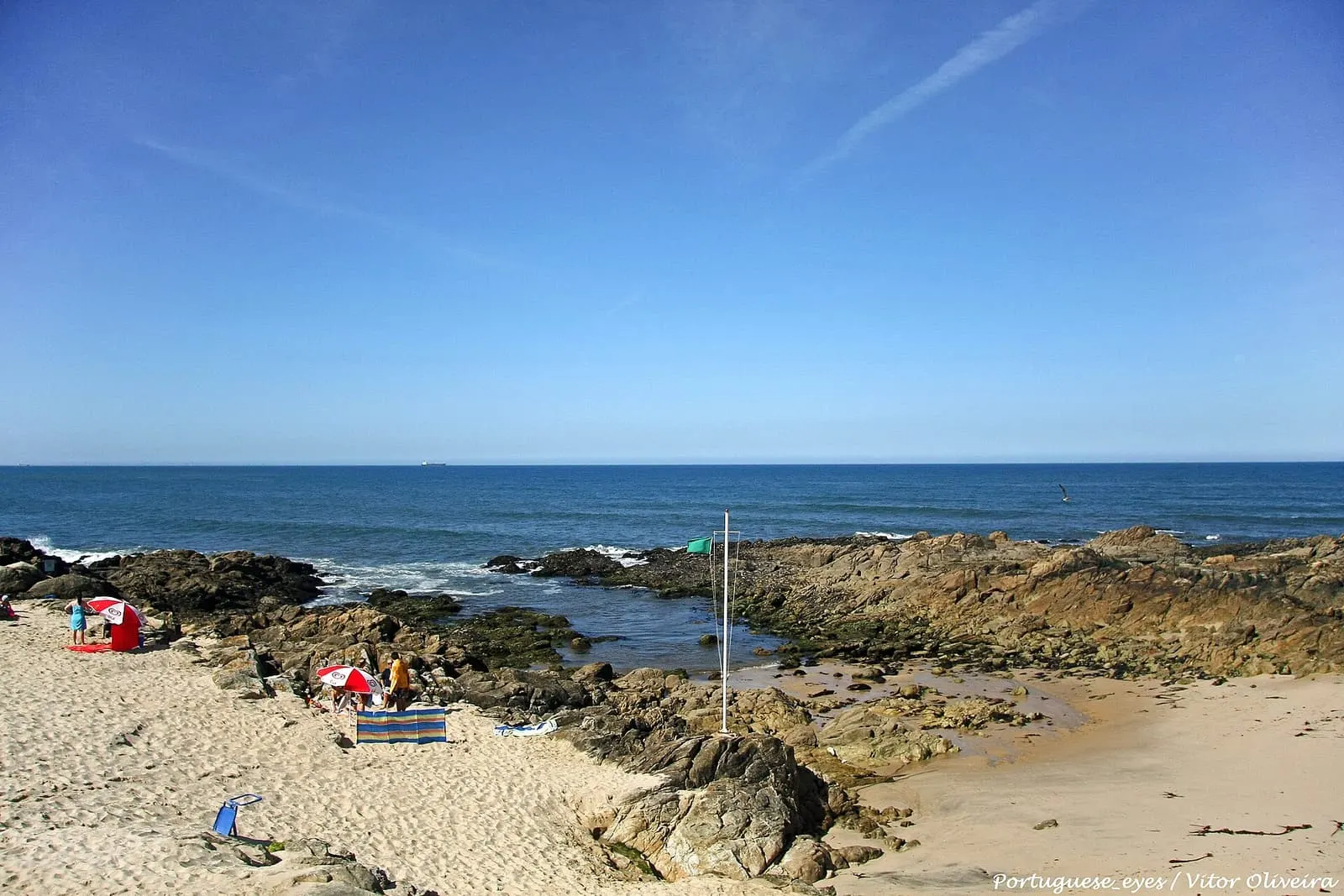
The argument for outstanding universal value rests on typological diversity — houses, social housing, cultural, religious and public facilities — handled with a recognisable and pared-down language. The Leça Swimming Pools, set between the urban fabric and the rocky shore of Leça beach, are often cited as a manifesto of this attitude: the concrete prolongs the line of the rocks and the seawater enters the pools without any apparent rupture. This work has, moreover, been classified as a National Monument since 2011.
As a nomination for World Heritage, the proposal engages with the broader reading of Portuguese architectural periods and styles, now extended into the contemporary era.
State of the process
In July 2025, the World Heritage Committee decided not to inscribe the ensemble, deferring its assessment and requesting additional studies and fieldwork — an outcome that may lead Portugal to reformulate the nomination. Siza’s work thus remains in the waiting line, alongside other national proposals such as Pombaline Lisbon and the Calouste Gulbenkian Foundation, all testimony to the fact that recognisable heritage is not exhausted in ancient monuments.
Frequently asked questions
- Are Álvaro Siza's works already a UNESCO World Heritage Site?
- No. The ensemble has been on Portugal's Tentative List since 2017, meaning it is a nomination. In 2025 the World Heritage Committee deferred its decision, requesting additional studies before any possible inscription.
- Which works are part of the nomination?
- The final version brings together eight works: the FAUP building, the Leça Swimming Pools, the Boa Nova Tea House, the Serralves Museum, the Portugal Pavilion, the Bouça Housing Estate, the Church of Marco de Canaveses and the Alves Costa House in Caminha.
- Where can these works be visited?
- They are concentrated mainly in the Greater Porto area and along the coast of Leça da Palmeira and Matosinhos, with the Portugal Pavilion in Lisbon and the Alves Costa House in Caminha. Several are open to the public, such as Serralves, the Leça Swimming Pools and Boa Nova.