Themes
The periods of Portuguese architecture
A journey through the great building languages of Portugal, from the Romanesque to iron, and through its moments of original invention.
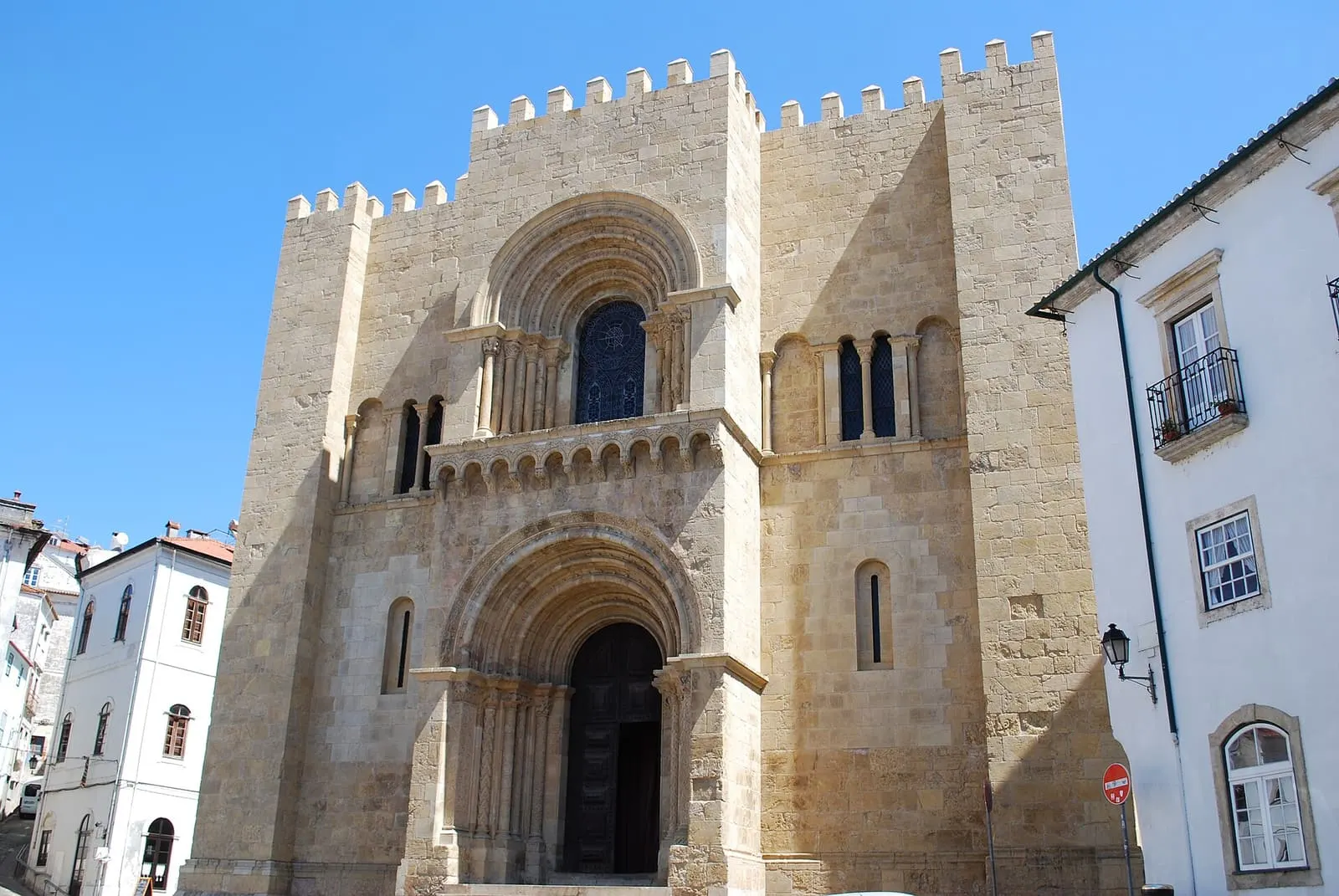
Portuguese architecture is not a succession of imported styles, but a series of local responses to problems common to Christian Europe. At some moments, Portugal receives; at others, it invents. This is a brief map of its great periods.
Romanesque (11th–13th c.)
Arriving along the roads to Santiago and through the monastic orders, the Portuguese Romanesque is sober, massive and rural. The cathedrals of Coimbra, Braga and Lisbon look like fortresses: the stone is thick, the openings scarce, the decoration concentrated on the portals. It is the architecture of a country still in the making, still at war on the frontier.
Gothic (13th–15th c.)
The Gothic enters with the mendicant orders and reaches its high point in the Batalha Monastery, raised by order of King John I after Aljubarrota. In Portugal, however, the Gothic is always more restrained in height and more sensitive to horizontal light than the cathedrals of Northern Europe.
Manueline (c. 1490–1540)
It is the first style that can be called truly Portuguese. Over a late-Gothic structure, the Manueline grafts a nautical and naturalistic ornamentation without parallel, financed by the wealth of the Expansion. Jerónimos and the Convent of Christ, in Tomar, are its masterpieces.
From Mannerism to the Baroque (16th–18th c.)
The Counter-Reformation brings the restrained classicism of the “plain style” and, later, the Baroque exuberance — the gilded carved-work, the narrative azulejo, the dynamic façades of the North, of which the Church of the Clérigos in Porto is an emblem.
The Pombaline and the nineteenth century
The 1755 earthquake imposes a rupture: the Pombaline is rational, seismic and serial. In the nineteenth century come the Neoclassical, the historicisms and, finally, the iron and glass of the stations and the markets — Portugal’s entry into industrial architecture.
Each period survives in the next. The strength of Portuguese architecture lies less in any single style than in the way it has gone on superimposing them within a single territory.