Tentative List
Headquarters and Garden of the Calouste Gulbenkian Foundation (Tentative List)
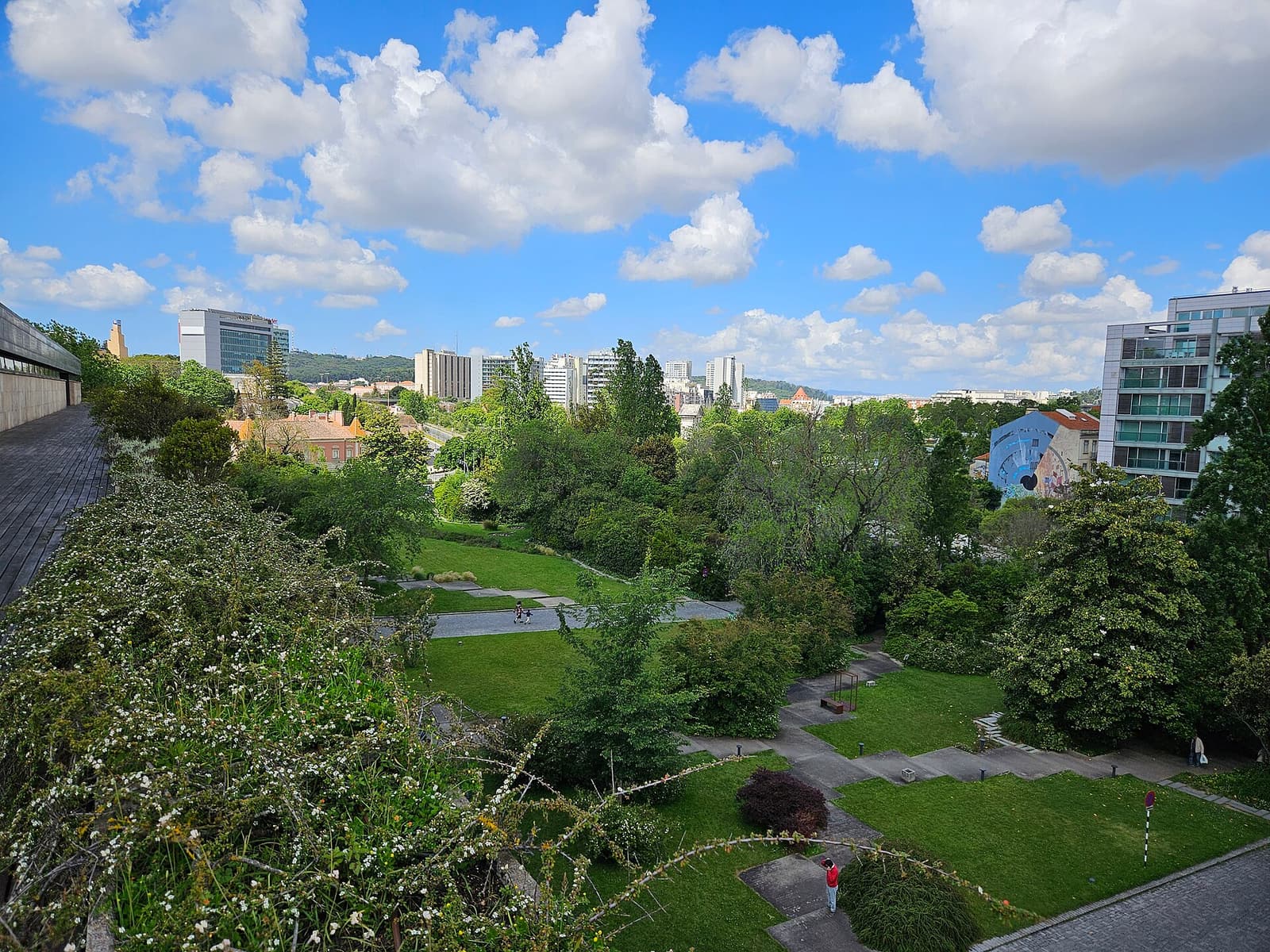
Headquarters building and garden of the Calouste Gulbenkian Foundation in Lisbon, an icon of the Portuguese modern movement and a candidate on UNESCO's…
- Location
- Lisboa, Lisboa
- Built
- 1963–1969
- Style
- Movimento moderno
- UNESCO
- Tentative List
Built between 1963 and 1969 in Lisbon’s Avenidas Novas district, the headquarters building and garden of the Calouste Gulbenkian Foundation is one of the most admired works of twentieth-century Portuguese architecture. Since 31 January 2017 it has been on Portugal’s World Heritage Tentative List, distinguished as the first work of the modern movement that the country has proposed for this international recognition.
Genesis of an exemplary project
The Foundation was established in 1956 under the will of Calouste Sarkis Gulbenkian (1869–1955), the Armenian oil magnate and art collector who made Lisbon his home in the final years of his life. To house the headquarters, the museum and its collection, an invited competition bringing together three teams of architects was launched in 1959. The winning entry was the partnership of Alberto Pessoa, Pedro Cid and Ruy Jervis d’Athouguia, whose task was to translate into stone, concrete and light a cultural programme without precedent in Portugal.
The work rose on a former plot of the Parque de Santa Gertrudes, covering some 7.5 hectares. The built complex, with its horizontal plan and pared-back lines, uses exposed reinforced and prestressed concrete, articulating low volumes with broad glazed surfaces that dissolve the boundary between interior and garden. The grand auditorium, the museum and the exhibition galleries are organised around courtyards and routes that favour a continuous relationship with the landscape.
The garden as a total work of art
Inseparable from the architecture, the park was designed by the landscape architects Gonçalo Ribeiro Telles and António Viana Barreto. Conceived as a naturalistic landscape in the heart of the city, it combines lakes, an open-air amphitheatre, native species and water features that regulate the microclimate of the complex. Today it is regarded as a major reference of Portuguese landscape architecture and a freely accessible public space.
Rare are the examples, on a global scale, in which building and garden were conceived as a single organism — a synthesis of architecture, landscape and culture that endows the ensemble with outstanding universal value.
In 1983 the park also welcomed the Modern Art Centre, designed by Leslie Martin, broadening the vocation of the space as a hub of contemporary creation.
Recognition and heritage value
The complex received the Valmor Prize in 1975 and, on 4 November 2010, was classified as a National Monument — the first work of the modern movement to attain this distinction in Portugal, a sign of a maturing concept of heritage that came to encompass the architectural legacy of the twentieth century.
Its inclusion on the Tentative List is part of the Portuguese effort to recognise recent modern architecture, alongside other nominations such as the works of Álvaro Siza. Should the formal nomination come to fruition, the Gulbenkian headquarters and garden could join the body of national properties already enshrined on the World Heritage List. For now, it remains in the preliminary phase, sharing the Tentative List with sites such as Pombaline Lisbon and the Águas Livres Aqueduct.
Frequently asked questions
- Are the headquarters of the Calouste Gulbenkian Foundation a UNESCO World Heritage Site?
- Not yet. Since 2017 they have been on Portugal's Tentative List, the preliminary and mandatory stage before any formal nomination for World Heritage status. They are therefore not inscribed on the World Heritage List.
- Who designed the headquarters building and the garden?
- The building was conceived by the architects Alberto Pessoa, Pedro Cid and Ruy Jervis d'Athouguia, winners of an invited competition in 1959. The park is the work of the landscape architects Gonçalo Ribeiro Telles and António Viana Barreto.
- Can the garden be visited?
- Yes. The Foundation's park has free and open access, functioning as one of Lisbon's main public gardens, complemented by the Calouste Gulbenkian Museum and the Modern Art Centre.