Themes
Vista Alegre Porcelain
Vista Alegre Porcelain: the factory in Ílhavo, founded in 1824 by the Aveiro Lagoon, and two centuries of Portuguese porcelain history.
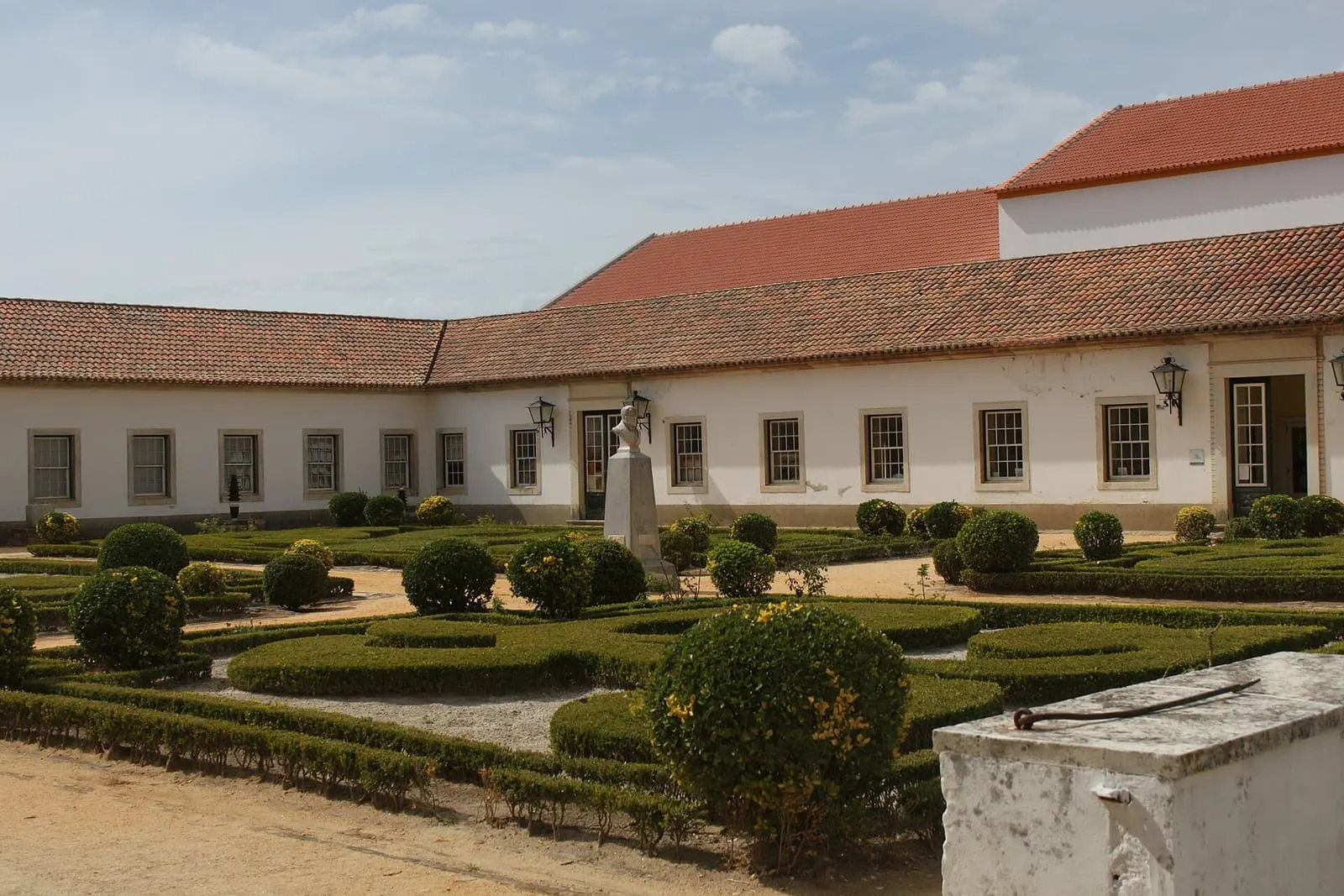
- Location
- Ílhavo, Aveiro
- Built
- 1824
Vista Alegre Porcelain is more than a brand—it’s a foundational chapter in Portugal’s industrial and artistic history. Established in 1824 on an estate by the Aveiro Lagoon in Ílhavo municipality, the factory was the nation’s first dedicated porcelain production unit and maintains, two centuries later, continuous operation that few European counterparts can claim.
The foundation and founder
The initiative came from José Ferreira Pinto Basto, a landowner and merchant who embodied 19th-century liberal ideals and became known as one of Portugal’s first entrepreneurial pioneers. After acquiring the Ermida estate in 1812 and the Vista Alegre Chapel with surrounding lands in 1816, he petitioned King João VI to establish a ceramics factory there. By royal decree on July 1, 1824, production was authorized; just five years later, in 1829, the factory received the title of Royal Factory, cementing its prestige.
The early years involved trial and error. Pinto Basto hadn’t yet mastered the paste formula or firing secrets, and only through studying clay composition—including his son Augusto Ferreira Pinto Basto’s training at the renowned Sèvres manufactory—and discovering kaolin deposits north of Ílhavo in the 1830s did true hard porcelain become established. From then on, Vista Alegre intensified production and focused on technical and decorative refinement.
Vista Alegre’s history proves that in Portugal, porcelain wasn’t imported as a finished product but conquered as knowledge: from raw material to kiln, everything had to be learned domestically.
Art, technique, and identity
Throughout the 19th and 20th centuries, the factory trained generations of painters, gilders, and modelers, many from the worker community that grew around the complex. Vista Alegre pieces—tableware, commemorative items, statuary, and decorative objects—defined Portuguese bourgeois taste and carried the country’s name to exhibitions and official tables worldwide. Mastery of hand-painting, gilding, and relief work placed the factory in dialogue with Europe’s great manufactories while maintaining a distinct style often inspired by national flora, fauna, and heraldic motifs.
This vocation situates Vista Alegre within the broader panorama of Portuguese ceramics and faience and more widely within Portuguese decorative arts, where it converses with traditions like azulejos. Porcelain distinguishes itself through its white, translucent, vitrified paste achieved at extremely high temperatures—a technical demand that in the early 1800s represented the ceramic industry’s cutting edge.
The complex and museum
Vista Alegre is also a remarkable heritage site. Beyond factory buildings, the location includes a Baroque chapel—the Chapel of Nossa Senhora da Penha de França, classified as a National Monument—housing the tomb of Bishop D. Manuel de Moura Manuel, a masterpiece by French sculptor Claude Laprade completed in 1699. Around the factory grew a worker’s neighborhood with theater and school, testament to a paternalistic industrial model characteristic of the 19th century.
The Vista Alegre Museum, housed within the complex, preserves and displays exceptional collections of porcelain, faience, glass, and technical documentation, tracing the evolution of forms, decorations, and factory marks since 1824. Open to the public in Ílhavo municipality within the Aveiro Lagoon region, it stands today as a reference destination for understanding Portuguese porcelain and Vista Alegre’s unique place in its history.
Frequently asked questions
- When was the Vista Alegre Factory founded?
- Production was authorized by royal decree of King João VI on July 1, 1824, making Vista Alegre Portugal's first industrial unit dedicated to porcelain.
- Where is Vista Alegre located?
- In the Vista Alegre area, parish of São Salvador, municipality of Ílhavo, Aveiro district, by the Aveiro Lagoon.
- When did Vista Alegre begin producing true porcelain?
- Quality hard porcelain stabilized from the 1830s onward, after discovering kaolin deposits in the region and mastering the formula and high-temperature firing.