Places
Aveiro
Aveiro, the city of the lagoon and moliceiro boats, of salt and Art Nouveau, with the Jesus Monastery and the Cathedral, is a major heritage hub in Portugal's…
- Location
- Aveiro, Aveiro
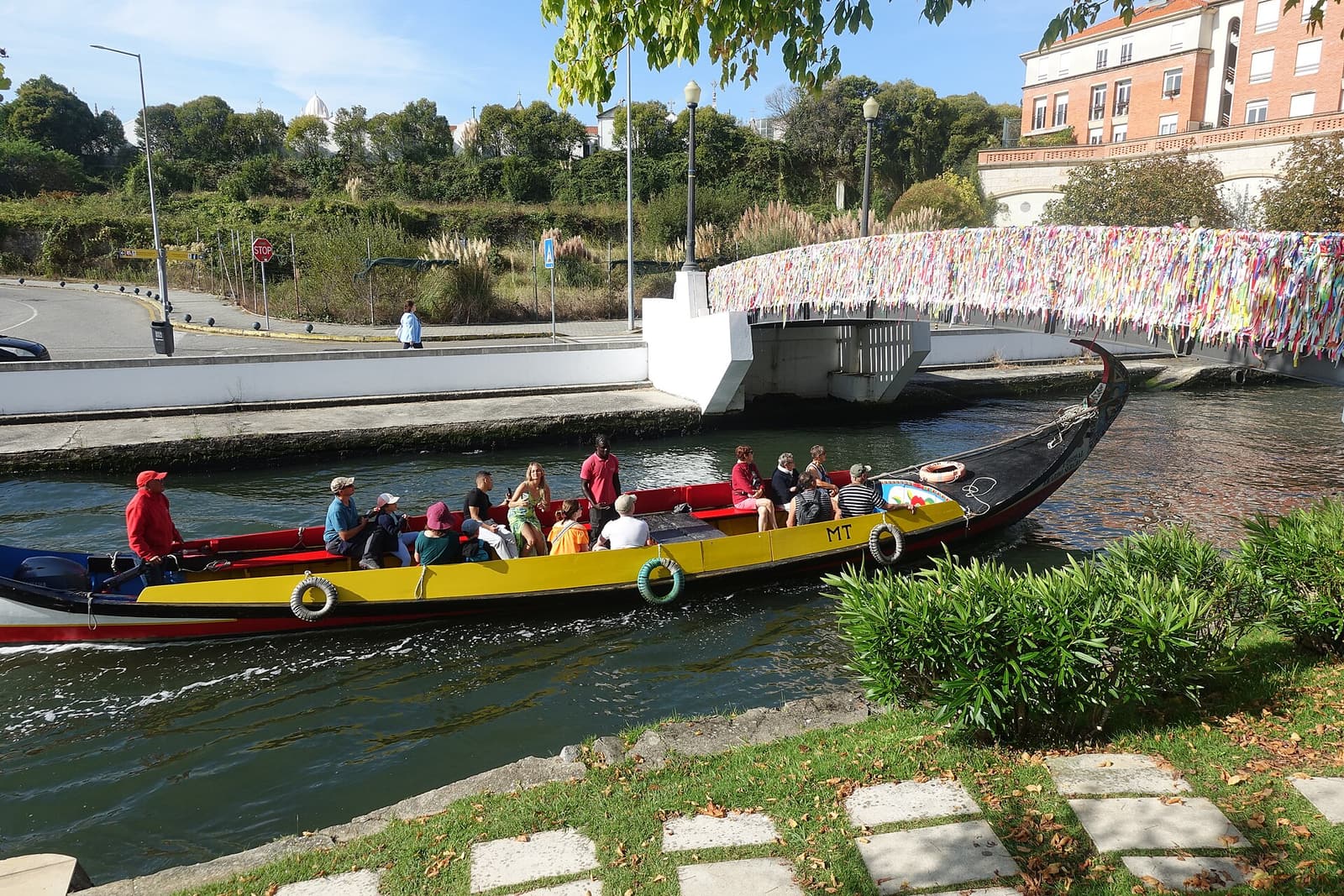
The district capital and one of the most unique cities on Portugal’s Atlantic coast, Aveiro owes its character to water. The city developed along the edge of a lagoon—the Ria de Aveiro—and is organized around canals that cut through the urban fabric, navigated by moliceiros with their raised prows and sterns. It is this amphibious landscape, halfway between river and sea, that has shaped Aveiro’s economy, architecture, and identity over the centuries.
From a closed estuary to a lagoon
Aveiro’s history is inextricably linked to the transformations of its inlet. During the Middle Ages, it was a thriving seaport, but between the 16th and 18th centuries, progressive siltation and the advance of a dune barrier gradually closed off access to the ocean, turning the former estuary into a lagoon system. The result was economic stagnation and demographic decline, only reversed in 1808 with the artificial reopening of the inlet, restoring the city’s access to the Atlantic. This long episode of closure and reopening shaped both the Ria de Aveiro and the livelihoods dependent on it.
Two foundational activities emerged around the lagoon: salt extraction and seaweed harvesting. The salt pans and marshes of the Ria, exploited since antiquity, were for centuries the engine of the local economy, sustained by the seasonal labor of salt workers. The harvesting of moliço—aquatic vegetation used as fertilizer—gave rise to the famous moliceiro boats, now a symbol of the city and a living example of traditional shipbuilding.
Few Portuguese cities illustrate as well as Aveiro how a geomorphological change—the closing of an inlet—can completely reshape the destiny of a community.
Monastic and religious heritage
The heart of Aveiro’s heritage is the former Jesus Monastery, founded in the 15th century for the Dominican Order and classified as a National Monument. It was here that Princess Joana, daughter of King Afonso V, lived and died, later beatified as Saint Joana, the city’s patron saint. The complex, now the Aveiro Museum | Santa Joana, houses a remarkable collection of sacred art, gilded woodwork, and azulejo tiles, and preserves the princess’s sumptuous Baroque tomb, crafted with inlaid marble. The conventual tradition also left a sweet legacy: ovos moles, an Aveiro specialty attributed to the monastery’s nuns.
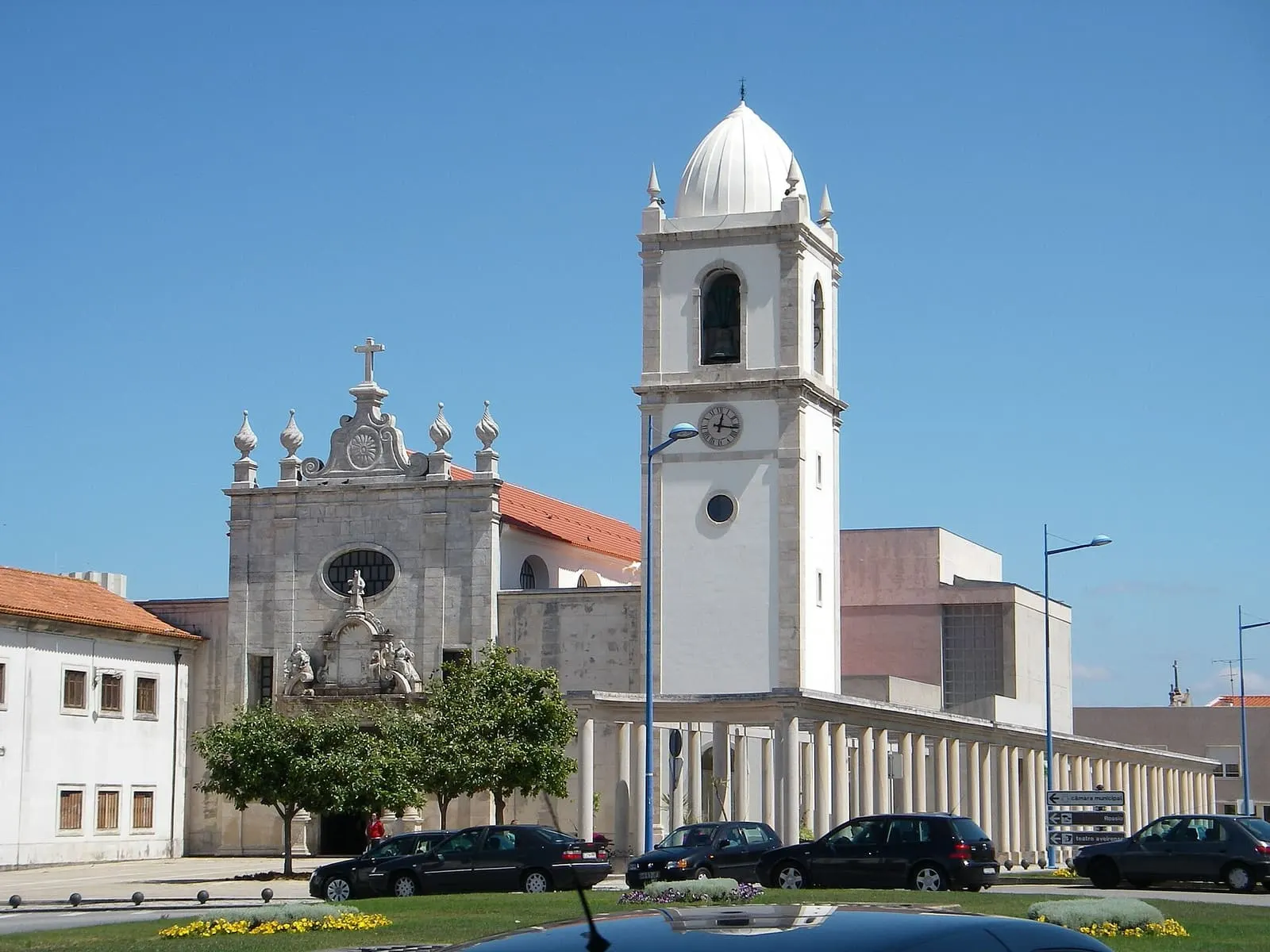
A few steps away stands the Aveiro Cathedral, the church of the former Convent of São Domingos, whose 15th-century origins coexist with later profound renovations. The religious ensemble is completed by the Misericórdia Church, built during the Philippine dynasty and adorned with azulejos, as well as various convents and churches dotting the old town.
The Art Nouveau city
In the early 20th century, the wealth of families linked to commerce and industry left Aveiro with one of the country’s most coherent collections of Art Nouveau architecture. Dozens of buildings—notably the Casa do Major Pessoa, now the Art Nouveau Museum—display facades with sinuous lines, wrought iron, and ceramic panels, earning the city a place in the international network dedicated to the movement. This density of decorated facades makes Aveiro a case study in the dialogue between European Art Nouveau and Portugal’s azulejo tradition.
The aquatic vocation extends southward to the beaches of Barra and Costa Nova, the latter famous for its brightly striped fishermen’s huts, and to nearby Ílhavo, where the Vista Alegre porcelain factory, established in 1824, became one of Portugal’s most prestigious traditions. Between lagoon, salt, and azulejos, Aveiro stands as one of the most distinctive heritage hubs in the Central Region.
Frequently asked questions
- Why is Aveiro called the 'Venice of Portugal'?
- Due to its network of canals crossing the urban center, navigated by moliceiros, traditional boats with high prows and sterns that once harvested seaweed in the lagoon.
- What is the Ria de Aveiro?
- It is a coastal lagoon formed when a dune barrier isolated the mouth of the Vouga River, creating an extensive system of channels, inlets, and salt pans of great natural and heritage value.
- What is Aveiro's main monument?
- The former Jesus Monastery, now the Aveiro Museum | Santa Joana, a 15th-century Dominican monastery classified as a National Monument, linked to Princess Saint Joana.
Sources
Keep exploring
Heritage nearby
More places to discover from here. Approximate straight-line distances, within 50 km.