Resources
Romanesque Route
The Romanesque Route brings together 58 Romanesque monuments in the Sousa, Douro, and Tâmega valleys in northern Portugal, as part of a cultural project based…
- Location
- Lousada, Porto
The Romanesque Route is a cultural and tourism project that brings together one of the densest and most coherent collections of Romanesque architecture in the Iberian Peninsula, located in northern Portugal. It spans twelve municipalities in the Sousa, Douro, and Tâmega valleys and currently includes 58 monuments — monasteries, parish churches, chapels, memorials, bridges, castles, and towers — dating primarily from the 11th to the 14th centuries, the period when the Romanesque style flourished and endured in this peripheral region.
Origins and Territory
The initiative began in 1998 under VALSOUSA — the Association of Municipalities of the Sousa Valley — initially covering six municipalities: Castelo de Paiva, Felgueiras, Lousada, Paços de Ferreira, Paredes, and Penafiel. In 2010, the project expanded to include the remaining municipalities of the Tâmega e Sousa sub-region — Amarante, Baião, Celorico de Basto, Cinfães, Marco de Canaveses, and Resende — becoming a supra-municipal project that unites a shared historical and cultural legacy.
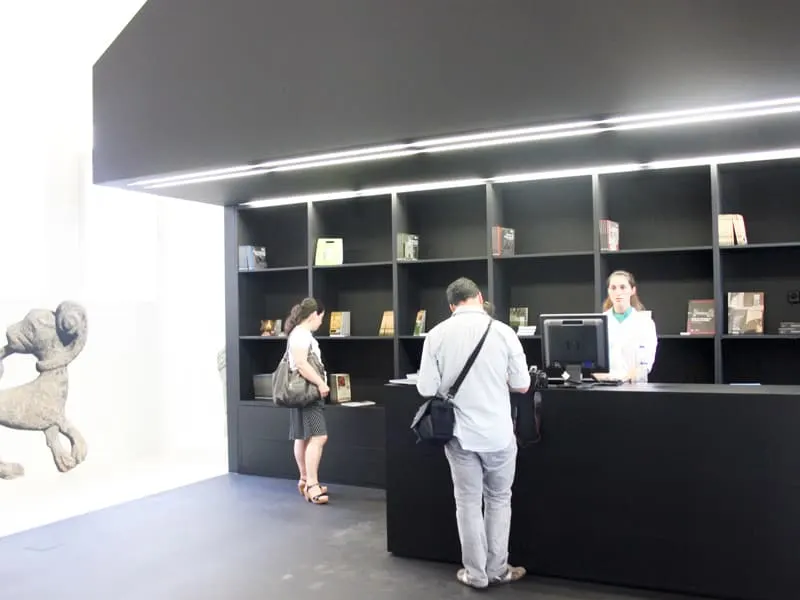
The route is organized into three interconnected circuits following the river valleys: the Sousa Valley, the Tâmega Valley, and the Douro Valley, linked by roads and aligned with the logic of the watersheds. The project’s management is based in Lousada, where the Romanesque and Territory Study Center — dedicated to research and academic publishing — and the Romanesque Interpretation Center, opened to the public in 2018, are located.
A Rural and Noble Romanesque
The Romanesque of these valleys is not that of grand urban cathedrals but rather a network of rural monasteries and churches tied to the lineages that helped establish the kingdom.
This region and its heritage are indelibly linked to the early days of Portuguese nationhood. It was here that noble families who supported the first kings in consolidating the territory resided, and their monasteries — Benedictine and later affiliated with other orders — shaped the religious and economic landscape. The result is a Romanesque style of modest scale, characterized by robust granite walls, portals adorned with archivolts and tympanums, and ornamental sculpture rich in vegetal, zoomorphic, and geometric motifs.
Among the landmark monuments are the Monastery of Paço de Sousa in Penafiel, the pantheon of the Egas Moniz lineage, and numerous churches documenting the transition from full Romanesque to early Gothic solutions. These examples complement the panorama outlined by Romanesque architecture in Portugal, allowing the evolution of workshops and construction models to be traced across a continuous territory. For comparative study, the Route also intersects with coastal cases like the Church of São Pedro de Rates, an essential reference for the Northwest’s Romanesque.
Conservation and Enhancement
The establishment of the Route was accompanied by an extensive program of restoration and conservation of its monuments, developed in collaboration with national heritage institutions — then IPPAR and DGEMN, now succeeded by the Directorate-General for Cultural Heritage. Alongside physical interventions, the project invested in research, signage, training, and tourism promotion, standing out for an integrated approach that links heritage, territory, and sustainable development. The initiative has received multiple national and international recognitions, establishing itself as a model for managing heritage networks at a regional scale.
Today, the Romanesque Route also serves as a gateway to other northern experiences, geographically connecting with itineraries like the Port Wine Route, in a territory where built heritage and cultural landscapes complement each other.
Frequently asked questions
- How many monuments are part of the Romanesque Route?
- The Route currently includes 58 monuments — monasteries, churches, chapels, memorials, bridges, castles, and towers — spread across twelve municipalities in the Sousa, Douro, and Tâmega valleys.
- When was the Romanesque Route established?
- It was created in 1998 under the association of municipalities of the Sousa Valley (VALSOUSA) and expanded in 2010 to cover the entire Tâmega e Sousa sub-region.
- Where is the headquarters of the Romanesque Route?
- The management structure is based in Lousada, home to the Romanesque and Territory Study Center and the Romanesque Interpretation Center, which opened to the public in 2018.
Sources
Resources for research
Find the sources. Follow the story.
Guides to researching buildings, exploring museum collections and understanding heritage protection.
SIPA
Get to know the architectural inventory, building records and documentary archive.
Read the guideMuseum collectionsMatrizNet
Explore the museum catalogue and records of works, materials, authorship and provenance.
Read the guideHeritage protectionHeritage classification
Understand cultural property categories and the levels of national, public and municipal interest.
Read the guide