Monuments
Monastery of Paço de Sousa
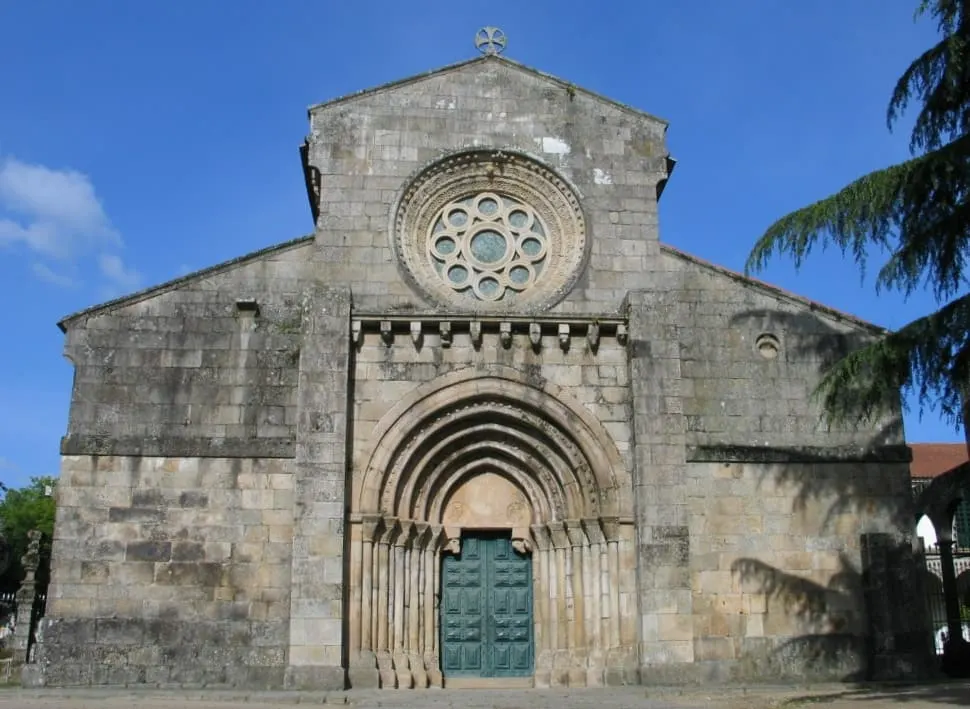
Monastery of Paço de Sousa in Penafiel: a Benedictine Romanesque church and pantheon of Egas Moniz, tutor to Afonso Henriques, on the Romanesque Route.
- Location
- Paço de Sousa, Penafiel, Porto
- Built
- Séculos XII-XIII
- Style
- Românico
The Monastery of Paço de Sousa, or Monastery of the Savior of Paço de Sousa, stands on the banks of the Sousa River in the eponymous parish of Penafiel municipality, Porto district. It is one of the most expressive testimonies of Romanesque architecture in the Sousa Valley and houses, within its church, the tomb of Egas Moniz, the tutor traditionally associated with the education of Portugal’s first king. Due to its connection to the nation’s origins and the quality of its architecture, it was classified as a National Monument in 1910.
Origins and Benedictine community
The roots of the monastery date back to the 10th century. Documentation points to a foundation linked to Trutesendo Galindes and his wife Anímia, ancestors of the powerful Ribadouro lineage, with the first secure mention dated to 994—a year when the site likely served as a refuge during Almanzor’s raids. It soon organized as a Benedictine community, and it was under the Order of Saint Benedict that the monastery consolidated its landholdings and influence over Penafiel’s lands throughout the 11th and 12th centuries.
The connection to Egas Moniz’s family made Paço de Sousa a center of aristocratic prestige. The monastery became the pantheon of this lineage, and this memorial vocation, more than any other factor, ensured its continuity and the care taken in its reconstruction in stone.
The Romanesque church
The church seen today results from a construction campaign in the 12th and 13th centuries, built over the earlier temple. It features a basilica plan with three naves, separated by arches on pillars, and a façade highlighted by a remarkable rose window. The ornamentation combines motifs from Romanesque tradition with archaic elements that researchers have linked to pre-Romanesque and Mozarabic influences—a trait that gives the monument a distinct personality within northern Portuguese Romanesque.
The design of Paço de Sousa radiated throughout the region, and the temple is often cited alongside Pombeiro, Travanca, and Roriz as a reference for Romanesque architecture in the Sousa Valley.
This lineage places the complex within a network of workshops and models that deeply influenced Romanesque architecture in Portugal between the Douro and Minho, where other monasteries of the same tradition share decorative grammar and structural solutions.
The tomb of Egas Moniz
In the church’s nave rests the funerary chest of Egas Moniz de Ribadouro (d. 1146), tutor and preceptor to Afonso Henriques. The funerary monument, composed of chests from the late 12th and 13th centuries, displays reliefs evoking the tutor’s legend: the famous journey to the court of León, where Egas Moniz is said to have appeared barefoot with a rope around his neck, accompanied by his wife and children, to fulfill a pledge on behalf of his lord. The scene, which medieval memory transformed into an emblem of loyalty, makes this tomb one of the most evocative pieces of Portuguese Romanesque funerary sculpture.
Visiting and context
After the dissolution of religious orders in 1834, the conventual dependencies were sold off, while the church remained open for worship and public access. Restorations in the 18th and 20th centuries, including interventions following a fire in 1927, restored its current appearance.
Today, the monastery is part of the Romanesque Route of the Sousa Valley, a trail that brings together dozens of churches, monasteries, and memorials from the same period. The visit gains meaning when combined with nearby monuments such as the Monastery of Pombeiro or the Monastery of São Pedro de Rates, which help illustrate the spread and variations of this rural Romanesque style in the northwestern Iberian Peninsula.
Frequently asked questions
- Who is buried in the Monastery of Paço de Sousa?
- Inside the church lies the tomb of Egas Moniz de Ribadouro, the tutor who educated Afonso Henriques. The funerary chest features reliefs depicting episodes from his legend.
- Where is the Monastery of Paço de Sousa located?
- It is situated in the parish of Paço de Sousa, in the municipality of Penafiel, Porto district, forming part of the Romanesque Route of the Sousa Valley.
- Is the monastery classified as a National Monument?
- Yes. It was classified as a National Monument by decree on June 16, 1910.
Sources
Keep exploring
Heritage nearby
More places to discover from here. Approximate straight-line distances, within 50 km.