Resources
The Schist Villages (Aldeias do Xisto)
Explore the 28 Aldeias do Xisto, including Coentral Grande, their four territories and varied rural heritage, with practical guidance for planning a visit.
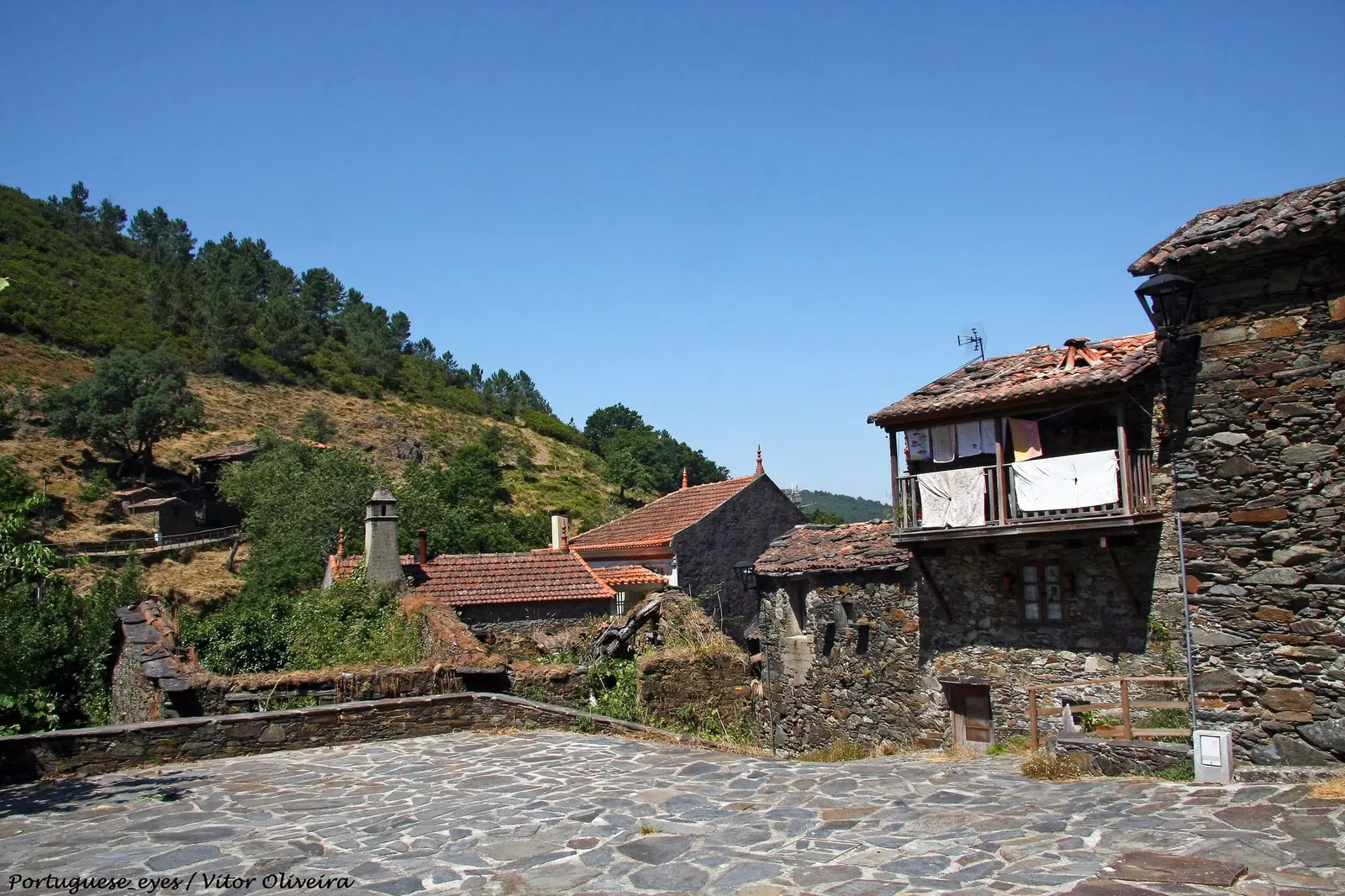
The Aldeias do Xisto, or Schist Villages, are a network of 28 villages in inland central Portugal, coordinated by ADXTUR — Agência para o Desenvolvimento Turístico das Aldeias do Xisto. The network brings together rural heritage, community life, cultural activities and tourism. Its name refers to a stone widely used in the area, but does not mean that every house is built of schist or that the villages form a single protected property.
Which are the 28 villages?
The ADXTUR presentation and official directory, checked on 2 October 2026, identify 28 villages in four territories:
| Territory | Villages |
|---|---|
| Serra da Lousã | Aigra Nova, Aigra Velha, Candal, Casal de São Simão, Casal Novo, Cerdeira, Chiqueiro, Comareira, Coentral Grande, Ferraria de São João, Gondramaz, Pena, Talasnal |
| Serra do Açor | Aldeia das Dez, Benfeita, Fajão, Sobral de São Miguel, Vila Cova de Alva |
| Zêzere | Álvaro, Barroca, Janeiro de Baixo, Janeiro de Cima, Mosteiro, Pedrógão Pequeno |
| Tejo-Ocreza | Água Formosa, Figueira, Martim Branco, Sarzedas |
Coentral Grande, in Castanheira de Pera municipality, is the 28th village. The announcement published on 7 July 2025 reports the integration ceremony held on 4 July. This update explains why some older references still list 27 villages.
Reading the landscape through its buildings
Schist houses, walls, watercourses and working spaces help explain rural settlement. Street layouts and the position of homes respond to local terrain and livelihoods. Look for these differences rather than expecting a uniform architectural style.
Candal, in the Serra da Lousã, provides a specific example: houses spread over slopes beside the stream; schist predominates, but rendered and painted facades also appear beside the road. Mills and an old olive press recall the use of water power. Coentral Grande, meanwhile, brings a strong granite tradition and a history associated with the snow trade. These are examples of the network’s varied landscapes and histories.
A programme of restoration and development
Implementation of the Schist Villages Programme began in 2001, with work on infrastructure, public spaces and buildings. ADXTUR was established in late 2007, continuing cooperation between public and private bodies, businesses and communities.
Building restoration, crafts, artistic creation and tourism services form part of this work. Retaining residents and economic activity remains a project objective; the network’s existence does not by itself establish that depopulation has ended in every village. The programme’s starting date also does not date the settlements or their houses.
Choosing a visit
For a first trip, choose one territory and a few nearby villages. The official map and village profiles help you connect heritage, trails, accommodation and places to eat. Plan around the actual access route and the walk you choose: map distance does not replace checking the journey.
Before travelling, confirm service opening and current access and trail conditions with the responsible organisations. Allow time to walk through the inhabited centre, understand former working spaces and visit local projects, while respecting private homes and land.
The Historical Villages of Portugal are a separate project with their own selection of places. Both offer ways to explore the Centro region, but membership of a tourism network does not replace checking the heritage designation of an individual building or site.
Photograph by Vitor Oliveira, 1 August 2016. Resized for the web. CC BY-SA 2.0.

Frequently asked questions
- How many villages belong to the Aldeias do Xisto network?
- The official portal checked on 2 October 2026 lists 28 villages. Coentral Grande, in Castanheira de Pera municipality, is the 28th; its integration ceremony took place on 4 July 2025.
- Are all the villages built entirely in schist?
- No. Schist shapes much of the network’s landscape and architecture, but materials, rendered facades and village layouts vary. Coentral Grande has a strong tradition of granite architecture.
- When did the project begin?
- Implementation of the Schist Villages Programme began in 2001. ADXTUR, which coordinates the network, was established in late 2007. These dates concern the project, not the construction of the villages.
- How should I plan a first visit?
- Choose one of the four territories — Serra da Lousã, Serra do Açor, Zêzere or Tejo-Ocreza — and consult the official village profiles. Check access, services and trail conditions for your travel date.
Sources
Resources for research
Find the sources. Follow the story.
Guides to researching buildings, exploring museum collections and understanding heritage protection.
SIPA
Get to know the architectural inventory, building records and documentary archive.
Read the guideMuseum collectionsMatrizNet
Explore the museum catalogue and records of works, materials, authorship and provenance.
Read the guideHeritage protectionHeritage classification
Understand cultural property categories and the levels of national, public and municipal interest.
Read the guide