Places
Angra do Heroísmo
Angra do Heroísmo, on Terceira Island in the Azores: an Atlantic port city and UNESCO World Heritage Site, with fortresses, a cathedral and a sixteenth-century…
- Location
- Angra do Heroísmo, Açores
- Built
- Séc. XV–XVI
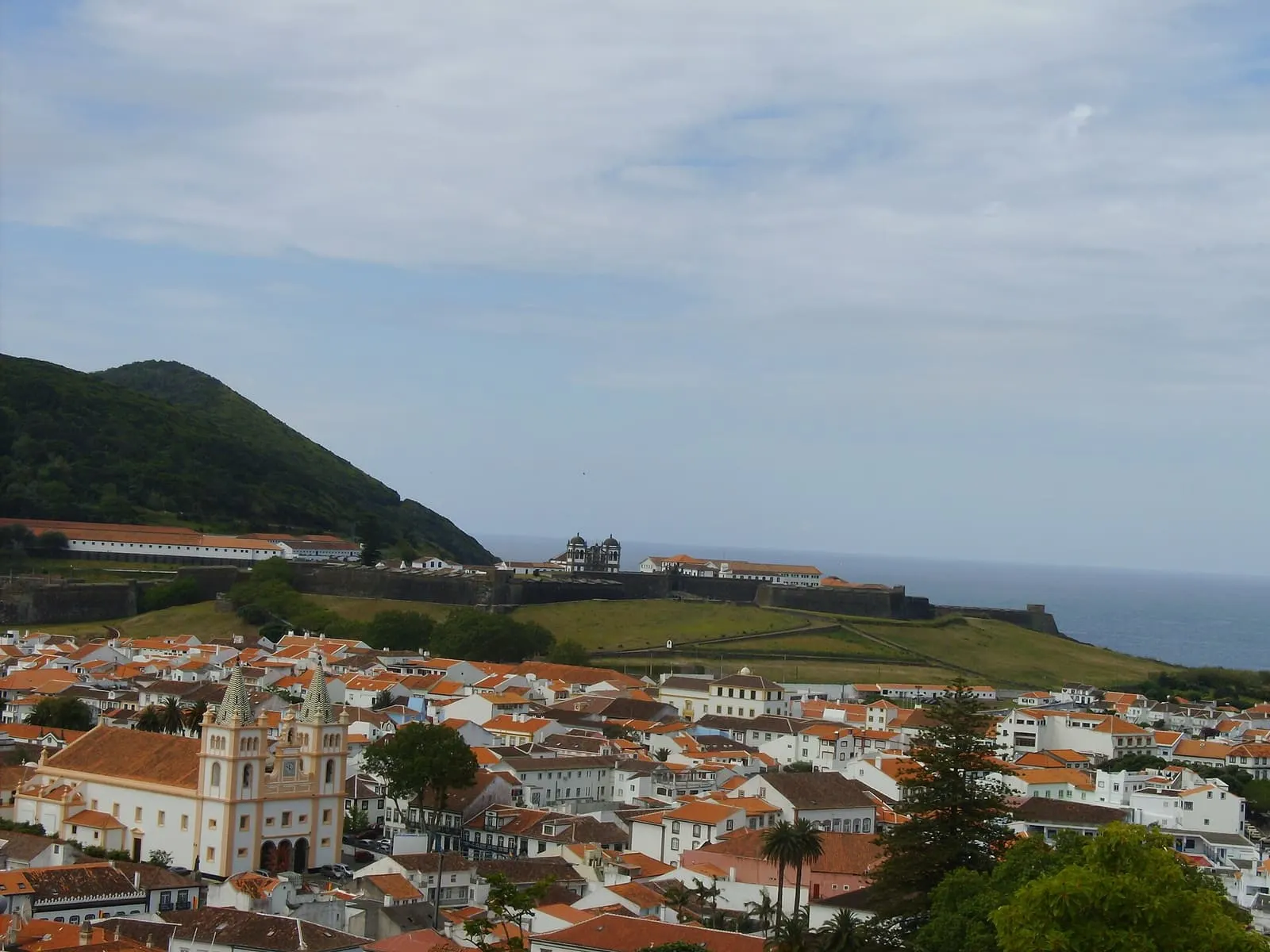
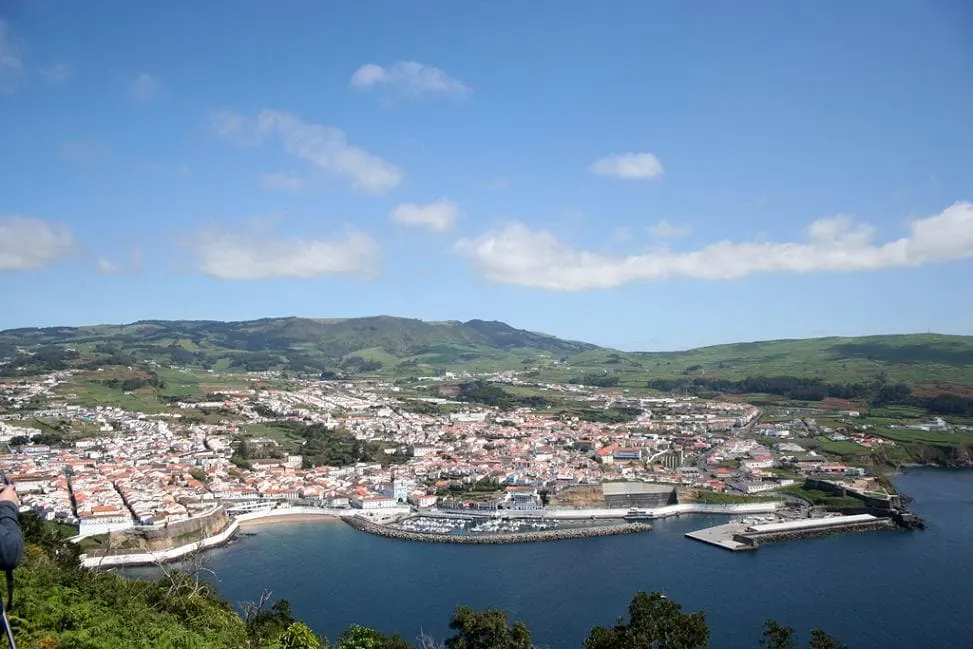
Arriving by boat, Angra do Heroísmo reveals itself just as it was conceived: an amphitheatre of white houses descending towards a sheltered bay, watched over by the volcanic silhouette of Monte Brasil. This is not a city that grew up by chance. Its regular layout, rare for a foundation of the late fifteenth century, reflects a clear purpose — to serve as a way station and stronghold in the middle of the Atlantic, at the very point where the fleets returning from the Indies and from Brazil crossed the ocean on their way to Europe.
The way station of the Atlantic
Settled from the mid-fifteenth century, Angra was the first locality in the archipelago to be raised to the status of a city, in 1534, and that same year became the seat of the bishopric of the Azores. Its importance was not merely administrative or religious: for four centuries, from the sailing of the carracks to the arrival of the steamship, the bay of Angra was an obligatory port of call for the oceanic fleets. It was there that the fleets linking Europe to America and the East would take on supplies, make repairs and await favourable winds.
That strategic function explains the ring of fortifications that still surrounds the city today. On the isthmus of Monte Brasil rises the imposing Fortress of São João Baptista, begun in 1570 during the Philippine rule and one of the greatest works of bastioned military architecture in Portugal; on the opposite side of the bay, the Castle of São Sebastião completed the defence of the anchorage.
Few places illustrate as well as Angra the idea that the Atlantic, at the dawn of the modern age, was not a void to be crossed but a network of ports — and that some islands were worth, on the imperial chessboard, as much as continents.
A planned city
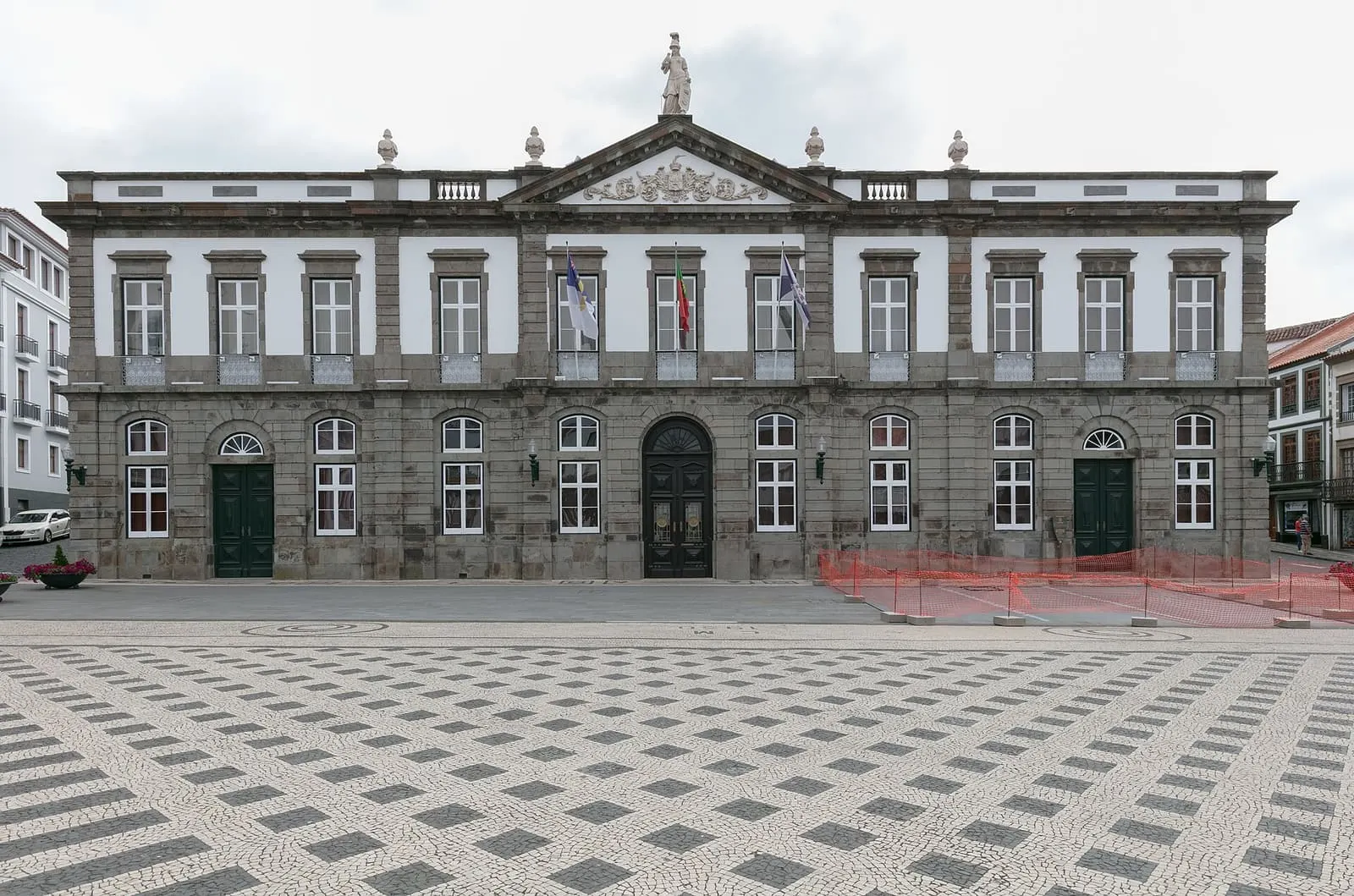
What justified the inscription of the central zone of Angra do Heroísmo on the World Heritage List, in 1983, was not a single monument but the ensemble. The straight streets and the grid of blocks, the armorial manor houses, the churches and the palaces form a remarkable example of a Renaissance port city, later exported as a model to other parts of the empire.
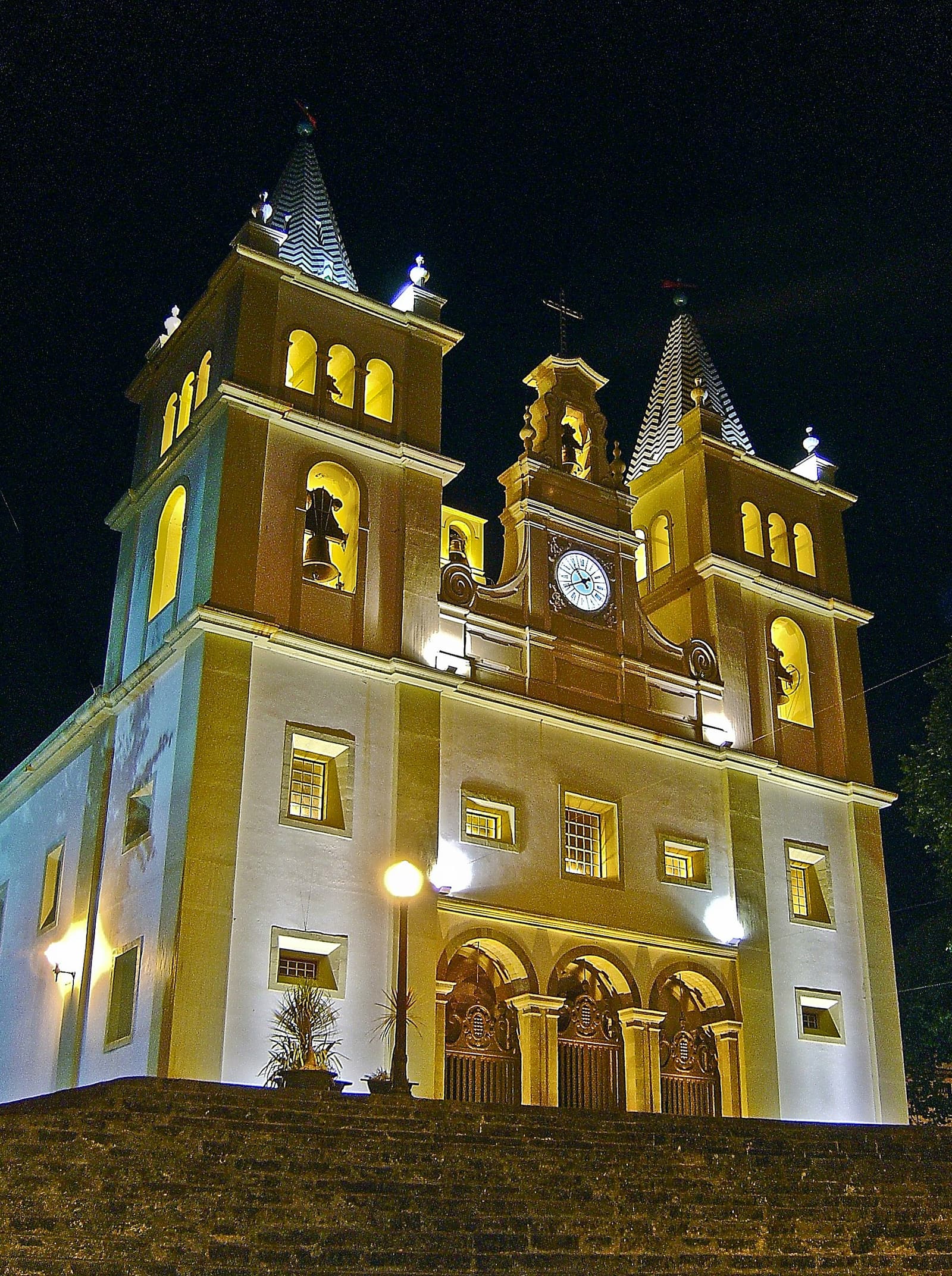
At the heart of this design stands the Cathedral of Angra do Heroísmo, a seventeenth-century cathedral raised over an earlier church, the principal temple of the archipelago. Around it multiply convents, charity houses and noble residences that give the city a monumental density unusual for an island community. The dark stone of volcanic origin, contrasting with the white lime of the façades, lends the houses the chromatic identity that marks all traditional Azorean architecture.
To resist and rebuild
The history of Angra is also one of repeated resilience. The city owes its epithet — “do Heroísmo”, “of Heroism” — to the role it played in the liberal wars of the nineteenth century, when it served as a bulwark for the constitutional forces; hence the title of “Most Noble, Loyal and Ever Constant City”, granted in 1837.
Closer to our own time, the earthquake of 1 January 1980, with a magnitude of around 7.2, flattened much of the built environment and left thousands of people homeless. The reconstruction that followed, attentive to the preservation of the historic layout and volumes, is frequently cited as a model for the recovery of an old centre — and was one of the arguments that, three years later, weighed in the city’s international recognition.
Beneath the waters of the bay itself another testimony to this long maritime vocation is still preserved: the underwater archaeological park of the Bay of Angra, where the remains of shipwrecks from various centuries lie. Those who today walk through Angra, one of the most remarkable places in the Azores, thus read, on land and underwater, the same history: that of a small island city that was, for four hundred years, one of the keys to the Atlantic.
Frequently asked questions
- Why is Angra do Heroísmo a World Heritage Site?
- The central zone of the city was inscribed by UNESCO in 1983 for the value of its sixteenth-century urban layout and for the strategic role its port played in the Atlantic routes from the fifteenth to the nineteenth centuries.
- On which island is Angra do Heroísmo?
- Angra lies on the south coast of Terceira Island, in the central group of the Azores archipelago, sheltered by the headland of Monte Brasil.
- How did the 1980 earthquake affect Angra?
- The earthquake of 1 January 1980 destroyed much of the city. The reconstruction, careful in preserving the historic fabric, is held up as exemplary and contributed to the inscription on the UNESCO list.
Sources
Keep exploring
Heritage nearby
More places to discover from here. Approximate straight-line distances, within 50 km.