Archaeology
Nautical and underwater archaeology
Nautical and underwater archaeology in Portugal: shipwrecks, harbours and shipbuilding studied in the country's Atlantic, estuarine and lagoon waters.
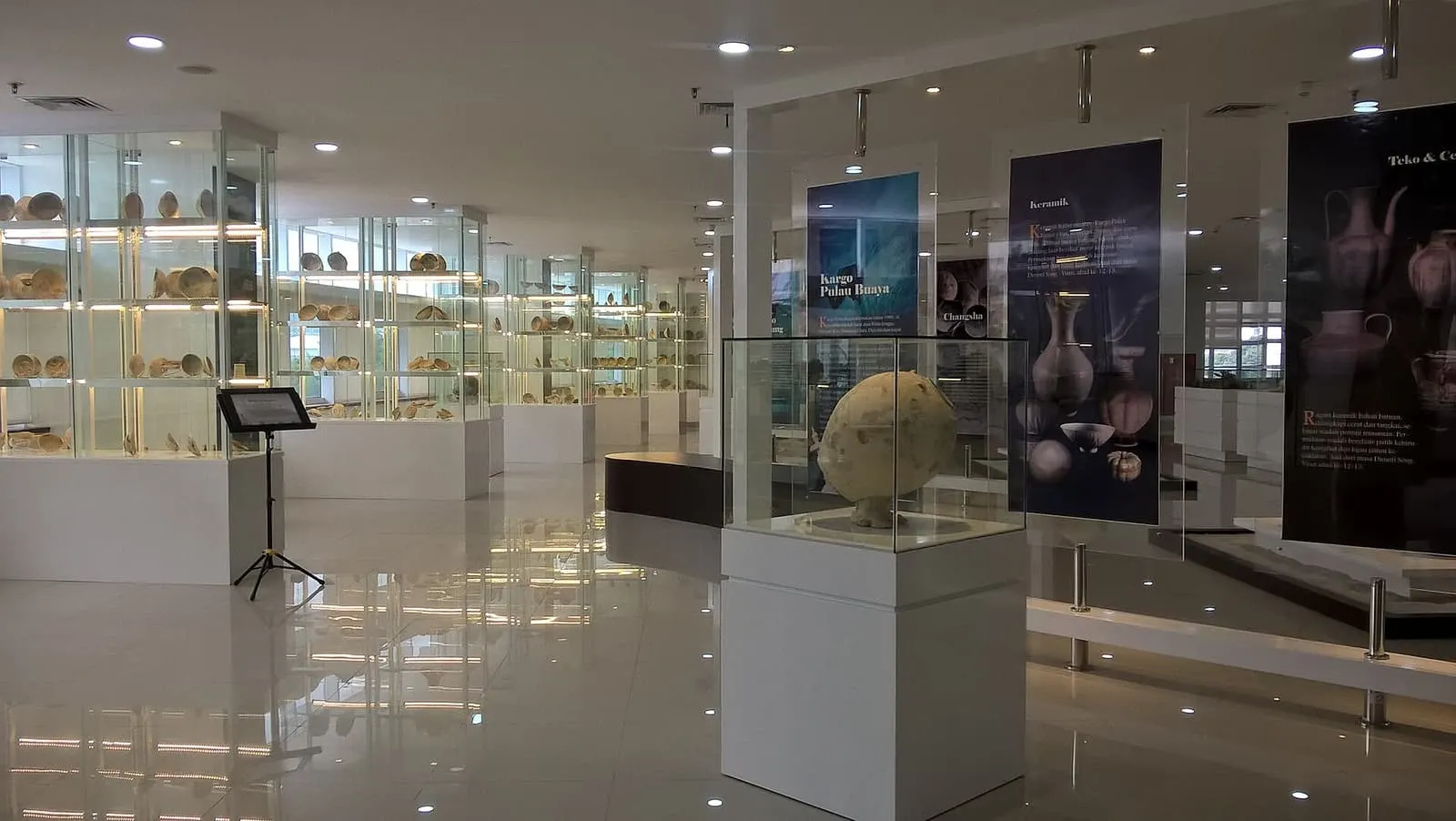
Nautical and underwater archaeology studies the material traces of the relationship between human communities and water, with a particular focus on vessels, cargoes, harbours and structures preserved in a submerged environment. For a country with a long Atlantic seaboard and a dense network of rivers and lagoons such as Portugal, this is one of the most fertile and, at the same time, most fragile fields of the national archaeological heritage: on the beds of rivers, estuaries and the sea lies a material archive of fishing, coastal trade and maritime expansion that rarely survives in a terrestrial context.
It is worth distinguishing the two terms that give the discipline its name. Nautical archaeology focuses on ships and the culture of navigation — naval architecture, construction techniques, onboard equipment — regardless of whether the finds lie underwater or not. Underwater archaeology is defined by the medium: it is the investigation conducted in a submerged environment, which may concern a shipwreck just as readily as a buried quay, a group of amphorae or an ancient coastline since drowned. The two fields cross paths frequently, but they are not synonyms.
An archive on the bed of the waters
The distinctiveness of submerged sites lies in their preservation. The absence of oxygen in water-saturated sediments preserves organic matter — wood, rigging, basketry, food remains — that on land would disappear entirely. A shipwreck thus acts as a time capsule: it freezes, in a single instant, a ship, its cargo and the daily life of its crew. This potential is also its vulnerability, for exposure to oxygen, dredging and looting irreparably compromise the contexts.
Every shipwreck is an involuntary photograph of a precise day: the stowed cargo, the tools in use and the interrupted meal, just as they were at the moment of disaster.
The diversity of environments in Portugal is remarkable. The Tagus estuary holds remains dating back to Antiquity, among them the famous wreck identified with the carrack Nossa Senhora dos Mártires, lost on the Lisbon bar in 1606. The Aveiro lagoon constitutes a singular case of harbour archaeology and of medieval and modern shipwrecks, protected by the silting that sealed their contexts. In the Algarve, the estuary of the river Arade brings together a sequence of shipwrecks studied in successive campaigns, with chronologies ranging from the Roman period to the nineteenth century. In the mid-Atlantic, meanwhile, the bay of Angra do Heroísmo in the Azores has proved to be one of the richest underwater archaeological sites in the territory, with several sunken ships in a cove that served as an anchorage for the India and Brazil routes.
From diving practice to scientific management
The public management of this discipline in Portugal took shape from the 1980s onwards, within the National Museum of Archaeology, and was consolidated with the creation of the National Centre for Nautical and Underwater Archaeology (CNANS), directed for many years by Francisco Alves. Now part of the structure of the Directorate-General for Cultural Heritage, the CNANS oversees chance finds, research projects, emergency situations and major works on the coast, in addition to maintaining the Underwater Archaeological Map of Portugal.
A decisive milestone was the ratification, in 2006, of the 2001 UNESCO Convention on the Protection of the Underwater Cultural Heritage. This instrument enshrines essential principles: a preference for in situ preservation, the prohibition of the commercial exploitation of sites, and international cooperation in research. Portugal was one of the first European states to commit to it, aligning its legislation with a view of shipwrecks not as treasures to be exploited, but as cultural assets of collective interest.
Shipwrecks, harbours and naval know-how
The contribution of the discipline goes beyond the recording of disasters. The study of the timbers and the assembly techniques of hulls illuminates the evolution of shipbuilding, in direct dialogue with the know-how of traditional naval craft still practised today in Portuguese shipyards. The cargoes — amphorae, ceramics, artillery, coins — document trade routes and contacts between regions. And buried harbour contexts, such as those identified during urban works along riverside fronts, reveal the workings of anchorages over the centuries. Understood in this way, Portuguese nautical and underwater archaeology reads, in the silence of the depths, chapters of history that no other source allows us to reconstruct.
Frequently asked questions
- What distinguishes nautical archaeology from underwater archaeology?
- Nautical archaeology studies vessels and the culture connected with navigation, whether or not the remains were found underwater. Underwater archaeology refers to any investigation carried out in a submerged environment, which may include harbours, amphorae, structures or cities, and not only ships.
- Who manages submerged archaeological heritage in Portugal?
- Public management falls to the Directorate-General for Cultural Heritage, chiefly through the National Centre for Nautical and Underwater Archaeology (CNANS), which is responsible for chance finds, research projects and the monitoring of coastal works.
- Has Portugal joined the UNESCO convention on underwater heritage?
- Yes. Portugal ratified the 2001 UNESCO Convention on the Protection of the Underwater Cultural Heritage in 2006, committing itself to in situ preservation and to combating the commercial exploitation of submerged sites.