Archaeology
Aljustrel (Vipasca)
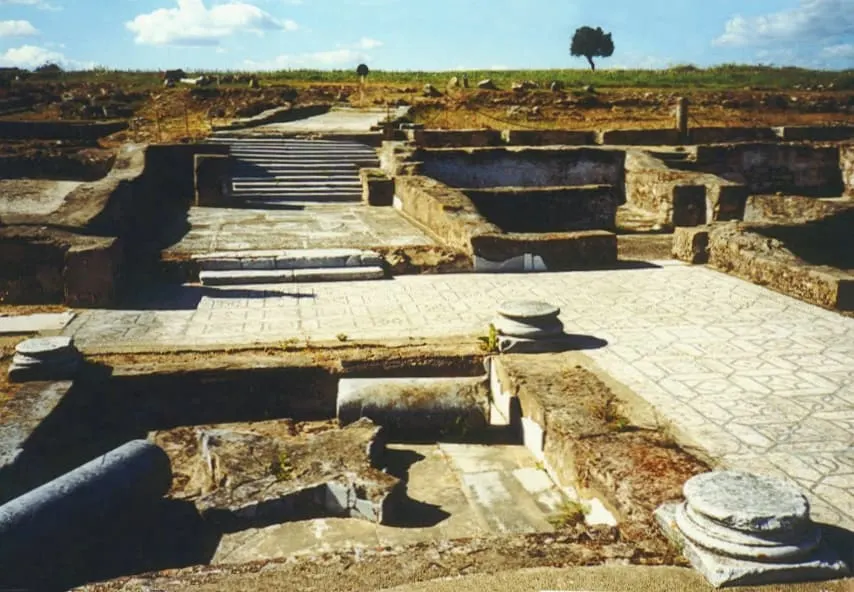
Vipasca, the Roman mining complex of Aljustrel in Beja district, renowned for its bronze tablets regulating mining operations in the Empire.
- Location
- Aljustrel, Beja
- Built
- Século I d.C.
- Style
- Romano
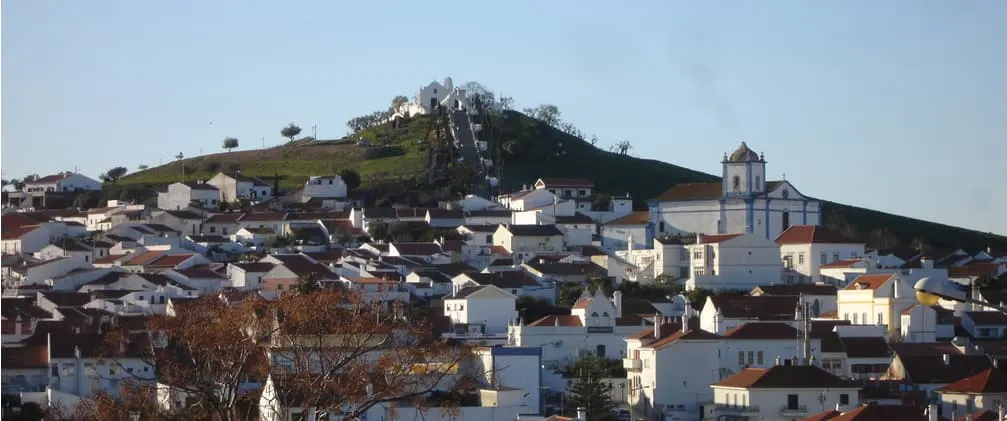
In Lower Alentejo, within the Iberian pyrite belt, the municipality of Aljustrel covers one of Western Europe’s richest mineral concentrations. It was here, around the Algares deposits, that Vipasca developed — the Roman mining settlement whose operational regulations have reached us engraved in bronze. More than an archaeological site, Vipasca is a documentary archive: it offers the most detailed view we possess of how a Roman imperial mining district was organized.
An Imperial Mining District
The exploitation of copper-bearing pyrites in Aljustrel predates Roman times, but it was under imperial rule, particularly between the 1st and 2nd centuries AD, that the activity reached industrial scale. The copper and silver extracted from sulphides fueled the economy of Lusitania province and, through it, the imperial treasury. The galleries, shafts and vast slag heaps still visible in the landscape testify to continuous metallurgical work that persisted, with fluctuations linked to imperial crises, until Late Antiquity.
The district was administered by an imperial procurator, assisted by an extensive apparatus overseeing concession holders, free workers and slaves. This organization fits within the broader framework of Roman mining in the Iberian Peninsula, where mines like Tresminas in Trás-os-Montes and the northwestern gold deposits formed pillars of imperial taxation.
The Bronze Tablets
Vipasca’s fame stems from its two bronze plaques, discovered separately. The first, known as Vipasca I, was found in 1876 in the Algares area; the second, Vipasca II, emerged in 1906 at Malpique. Together they form one of the most remarkable epigraphic documents on Roman mining law.
Vipasca II transcribes provisions from the general law of imperial mines — often associated with Hadrian’s reign (117-138 AD) — establishing gallery concession terms: concessionaires had to begin exploitation promptly and couldn’t leave mines inactive, under penalty of losing rights to others. Vipasca I, more detailed, regulated daily life in the settlement: taxes on ore sales, bathhouse management and hot water maintenance, plus regulations for barbers, shoemakers and fullers, and obligations of schoolmasters.
Few ancient texts offer such clear insight into the pulse of a Roman working community: from extraction rates to public bath opening hours.
Written in the administrative Latin of their time, these regulations are essential reading for studying epigraphy and Roman law, making Aljustrel an indispensable reference in Roman Portugal.
Vipasca Today
Continued mining into modern times for pyrite, copper, zinc and lead has profoundly altered the terrain, obscuring the ancient site. Nevertheless, traces remain of necropolises, ore processing structures and housing, along with material evidence of Roman galleries. The original tablets now reside in museum collections, distant from their birthplace, but their value remains tied to this territory in Beja district, where mining history merges with the very identity of the Alentejo landscape.
Frequently asked questions
- What are the Vipasca bronze tablets?
- They are two bronze plaques inscribed with Roman mining regulations, discovered in Aljustrel in 1876 and 1906. The first establishes rules for the local mining district; the second transcribes provisions from the general law of imperial mines.
- Where is Vipasca located?
- Vipasca corresponds to the mining area of Aljustrel in Beja district, within the Iberian pyrite belt of Lower Alentejo. Mining activity was concentrated primarily in the Algares mining concession.
- What was extracted from the Roman mines of Aljustrel?
- The Romans primarily exploited copper and silver from the sulphides of the pyrite belt, continuing extractive activities begun in earlier periods.
Sources
Keep exploring
Heritage nearby
More places to discover from here. Approximate straight-line distances, within 50 km.