Intangible Heritage
Moliceiro Boat
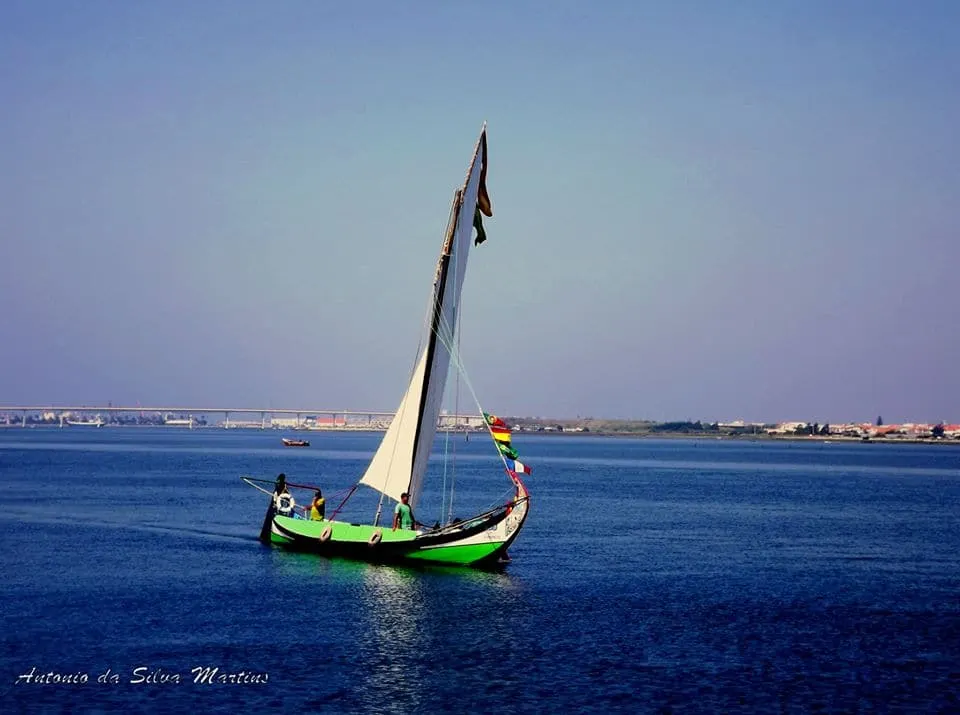
The moliceiro boat of the Ria de Aveiro: a traditional flat-bottomed vessel with painted panels and naval carpentry inscribed by UNESCO in 2025.
- Location
- Aveiro, Aveiro
- Built
- Século XIX
The moliceiro boat is the most emblematic traditional vessel of the Ria de Aveiro, recognizable by its elegantly curved bow and stern and its vividly painted panels. Designed to glide over the shallow waters and winding channels of the lagoon, it has become a symbol of the identity of the city of Aveiro and the entire Beira Litoral region.
Function and construction
The boat’s name derives from ‘moliço,’ a collection of aquatic plants that grow on the bottom of the Ria. Harvested with long-handled rakes, the moliço was transported in large quantities and spread on fields as natural fertilizer, sustaining the agriculture of the lagoon lands. This task required a flat-bottomed vessel capable of carrying heavy loads in waters just a few centimeters deep.
Emerging in the 19th century, the moliceiro measures about fifteen meters in length and nearly 2.5 meters in beam. It is built from pine wood by master carpenters from riverside communities, particularly Murtosa and Ílhavo. The assembly follows orally transmitted knowledge, using specialized tools—such as the pau-de-pontos, used to mark the hull’s measurements—to ensure the boat’s characteristic proportions without the need for drawn plans.
More than an object, the moliceiro is the result of a gesture: that of the master who measures the hull by eye and ruler, embedding in a vessel the technical memory of generations of Ria carpenters.
The painted panels
The moliceiro’s distinctive feature is the four panels that adorn the bow and stern. Each follows its own theme—religious, romantic, humorous, or social satire—always combining an image with a written caption. For decades, and particularly during the dictatorship years, these captions served as a space for expression and critique that evaded censorship, ridiculing everyday situations and local figures. This is why it is often said that moliceiros were long the “newspaper” of the lagoon.
The vibrant and sometimes deliberately provocative painting transformed these utilitarian vessels into one of the most expressive examples of Portuguese folk art linked to labor. Each panel is periodically renewed, keeping alive the tradition of social commentary that has always distinguished the moliceiro from other working boats.
Safeguarding and recognition
With the decline of moliço harvesting as an economic activity, the moliceiro shifted to tourist routes that now traverse Aveiro’s central canals. This transition ensured the boat’s survival but endangered the naval carpentry knowledge behind it: few master carpenters remain active, and training programs face continuity challenges.
In 2025, UNESCO inscribed the naval carpentry art of the Aveiro region on the List of Intangible Cultural Heritage in Need of Urgent Safeguarding, highlighting the fragility of this knowledge. The moliceiro thus joins the broader landscape of Portuguese traditional boats and Portugal’s intangible cultural heritage, alongside other expressions whose value lies less in the object and more in the craftsmanship that produces it. Today, regattas, panel competitions, and training initiatives aim to ensure that the art of building and painting moliceiros continues to navigate the Ria.
Frequently asked questions
- What was the moliceiro boat used for?
- It was used for harvesting 'moliço,' aquatic vegetation collected from the bottom of the Ria de Aveiro and used as fertilizer in the region's agricultural lands. Today, it primarily navigates tourist routes through the canals.
- Why are moliceiros painted?
- The bow and stern feature four panels with images and captions. The scenes combine religious, romantic, humorous, and social critique themes, functioning as a kind of popular newspaper of the Ria.
- Is the moliceiro a UNESCO World Heritage site?
- In 2025, UNESCO inscribed the naval carpentry art of the Aveiro region, of which the moliceiro is the most famous example, on the List of Intangible Cultural Heritage in Need of Urgent Safeguarding.