Periods & Styles
Pombaline Style
The Pombaline style: the rational, earthquake-resistant architecture that rebuilt Lisbon's Baixa after the 1755 earthquake, from the gaiola pombalina cage to…
- Built
- 1755–1777
- Style
- Pombalino
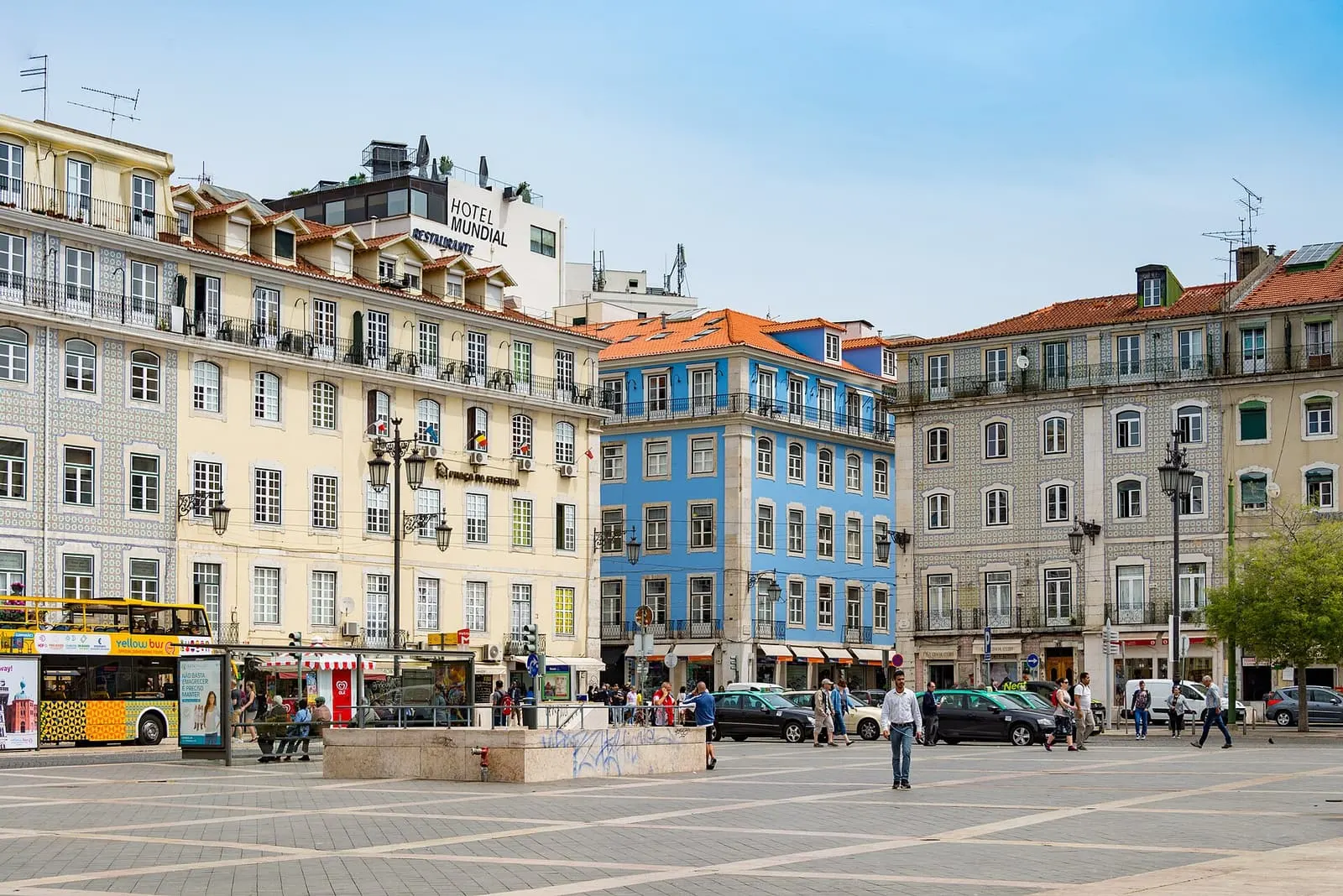
The Pombaline style denotes the architectural and urban language developed in Portugal from 1755 onwards, in the wake of the violent earthquake that destroyed much of Lisbon. The name honours Sebastião José de Carvalho e Melo, the future Marquis of Pombal, minister to King José I who led the reconstruction effort. More than a decorative vocabulary, the Pombaline was an integral system of urban planning, construction and regulation, considered one of the first European examples of a city conceived entirely anew according to rational and earthquake-resistant principles.
From the earthquake to the new city
On 1 November 1755, an earthquake of enormous magnitude, followed by a tsunami and a fire that burned for days, devastated the centre of Lisbon. Little more than a month later, on 4 December, the kingdom’s chief engineer Manuel da Maia presented a set of hypotheses for the reconstruction. The option chosen was the most radical: to raze what remained of the medieval Baixa and lay out an entirely new city, with broad and regular streets.
The definitive plan fell to the architect Eugénio dos Santos, of the City Senate, assisted by the Hungarian Carlos Mardel, who took charge of the works after Santos’s death in 1760. Over the previous labyrinthine fabric an orthogonal layout of geometric blocks was imposed, articulated between two great squares: the Terreiro do Paço, reconverted into the monumental Praça do Comércio opening onto the Tagus, and the Rossio. Rua Augusta became the main axis of this system.
The gaiola pombalina and earthquake-resistant engineering
The most celebrated innovation of the period is the gaiola pombalina, a three-dimensional timber structure — posts, beams and St Andrew’s crosses — embedded in the masonry walls. Inspired by techniques of naval carpentry, this flexible framework allowed the building to absorb the deformations of an earthquake, deforming without collapsing. Hence the saying that became famous: the building “shakes, but does not fall”.
The Pombaline reconstruction is regarded as one of the first European building systems deliberately conceived to resist earthquakes, anticipating modern earthquake-resistant engineering by almost two centuries.
This rationalisation was not limited to the structure. The buildings followed standardised typologies, with standardised height, number of storeys and façade design, drawing on prefabricated elements — stonework, window frames and railings — produced in series. This logic of economy and repetition is reflected in the sobriety of the façades, classicising in inspiration, which brings the Pombaline close to the spirit of the Neoclassicism then emerging in Portugal.
Language, ornament and legacy
Although marked by restraint, the Pombaline developed an aesthetic of its own. The tiled surfaces, with industrialised patterns known as Pombaline azulejo, clad interiors and courtyards with economical yet strikingly decorative solutions. The Portuguese pavement, with its black-and-white limestone mosaics, and the careful design of the urban furniture complete an ensemble of remarkable coherence.
The result — the so-called Baixa Pombalina — forms the historic heart of Lisbon and a landmark of Enlightenment urbanism. Its heritage value is recognised in the nomination of Pombaline Lisbon for the UNESCO World Heritage List. Beyond the capital, the Pombaline vocabulary influenced the reconstruction of towns such as Vila Real de Santo António, in the Algarve, radiating across the whole country a matrix of rationality that occupies a singular place among the periods and styles of Portuguese architecture.
Frequently asked questions
- What is the Pombaline style?
- It is the architectural and urban style developed in Portugal during the rebuilding of Lisbon after the 1755 earthquake, marked by orthogonal layouts, sober and standardised façades, and earthquake-resistant timber structures.
- What is the gaiola pombalina?
- It is the three-dimensional timber structure embedded in the walls of Pombaline buildings, designed to absorb seismic shocks. Hence the saying that the building 'shakes, but does not fall'.
- Who devised the Pombaline reconstruction?
- It was directed by the chief engineer Manuel da Maia, under the impetus of the Marquis of Pombal, with designs by the architects Eugénio dos Santos and, after 1760, Carlos Mardel.