Themes
The Pombaline
The reconstruction of Lisbon after the 1755 earthquake: the first Enlightenment urbanism in Europe — rational and earthquake-resistant.
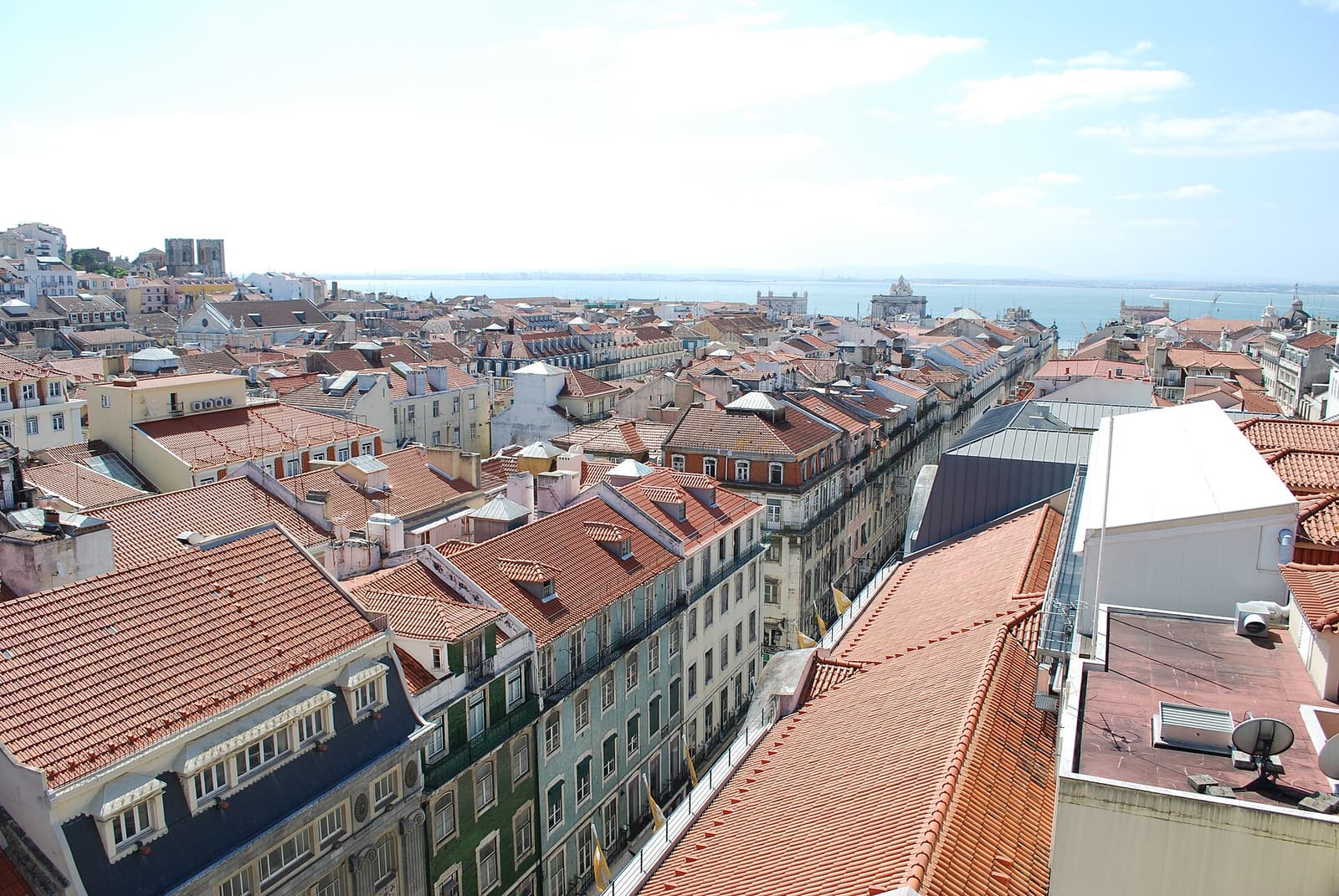
On 1 November 1755, an earthquake followed by a tsunami and fire destroyed the centre of Lisbon and killed tens of thousands of people. From the catastrophe was born one of the most remarkable operations of urbanism in modern Europe — and a style that bears the name of the minister who led it, Sebastião José de Carvalho e Melo, the Marquis of Pombal.
To rebuild, not to restore
The political decision was radical: instead of rebuilding the medieval city along its layout of alleyways, what remained of the Baixa was razed and an entirely new plan was drawn. Under the direction of Manuel da Maia and the military engineers Eugénio dos Santos and Carlos Mardel, an orthogonal mesh of wide streets and regular blocks was laid out, linking two squares — the Rossio and the rebuilt Terreiro do Paço (Praça do Comércio).
The engineering of prevention
The Pombaline is, above all, earthquake-resistant. The buildings rest on a three-dimensional timber structure — the gaiola pombalina — designed to sway with the ground without collapsing. The façades are uniform and the buildings of controlled height; the streets wide enough that, in a new tremor, the rubble would not block the escape. It is urbanism conceived as public safety.
The Baixa Pombalina is perhaps the first European example of a city designed on the scale of the neighbourhood as an integrated system — structure, façade, street and square conceived together.
An aesthetic of reason
To the engineering corresponds a sober aesthetic. The ornamentation is minimal, repetition is a principle, the dressed stone draws only the essential. This restraint — almost pre-industrial in its logic of serial production — expresses the Enlightenment ideals of the Pombaline State: order, utility, foresight.
The Pombaline did not stay in Lisbon. The same method — to raze and to lay out anew according to reason — was applied in Vila Real de Santo António and influenced the reconstruction of towns throughout the kingdom. It is, in the fullest sense, the moment when the Portuguese State learned to design the city from above.