Periods & Styles
Neoclassicism in Portugal
Neoclassicism in Portugal: the return to classical order between the late 18th and mid-19th centuries, from the Porto school to Lisbon.
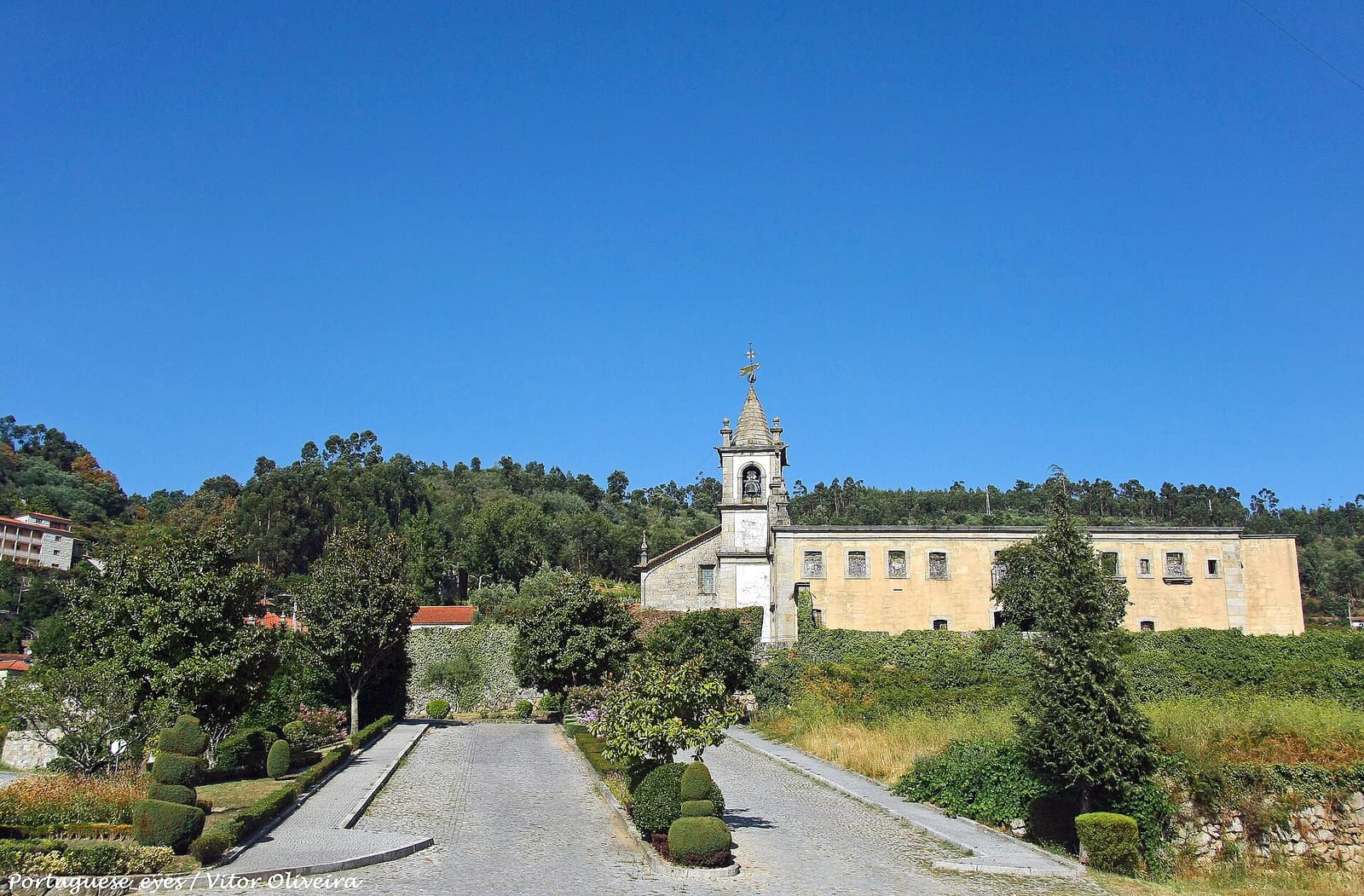
- Built
- c. 1770–1850
- Style
- Neoclassicismo
Neoclassicism was the artistic movement that, in reaction to the exuberant Baroque and the more delicate Rococo, proposed a return to the clarity, symmetry, and order of Greco-Roman antiquity. In Portugal, it emerged with particular delay and distinct character: it appeared only in the last quarter of the 18th century—around 1770—and lasted until the mid-19th century, overlapping with other movements and, in some cases, surviving into the early 20th century.
A start conditioned by the earthquake
Portugal’s timeline is explained by a decisive event: the 1755 earthquake. While Europe was discovering Neoclassical taste, Lisbon was engaged in the Pombaline reconstruction, a prefabricated and earthquake-resistant building system that, by stripping architecture of ornament, already hinted at a classical-rooted sobriety. This pragmatism of rebuilding constrained the normal development of Neoclassicism, imposing a periodization distinct from the rest of the continent and delaying the arrival of an erudite vocabulary inspired by antiquity.
In Portugal, austerity did not first come from aesthetic theory but from the need to rebuild a devastated capital—and it was this forced restraint that paved the way for the classical ideal.
The primacy of Porto
Contrary to expectations, the initial impulse came from the North rather than the capital. In Porto, the influential British community linked to the wine trade facilitated the introduction of English models, sometimes of an almost Neopaladian character. The Hospital de Santo António, designed by English architect John Carr, and the Feitoria Inglesa, by John Whitehead, established a repertoire of regular facades, pediments, and sober orders that would define the city. This vitality helps explain the genesis of the so-called Porto school and continued in later works like the monumental Palácio da Bolsa.
The leading figure of Northern Neoclassicism was Carlos Amarante (1748–1815), an engineer and architect who transitioned from late Baroque to the new language. He designed the famous staircase at the Sanctuary of Bom Jesus do Monte in Braga, whose geometric layout and scenographic ascent encapsulate the shift from one style to another.
Lisbon, Italian influence, and painting
In Lisbon, classical taste arrived primarily through Italian channels. The Teatro Nacional de São Carlos, built in 1792–1793 to designs by José da Costa e Silva (1747–1819), was inspired by the great opera houses of Milan and Naples and became one of the style’s symbols in the capital. The Palácio Nacional da Ajuda, begun in 1795 by Costa e Silva and Francisco Xavier Fabri, was the most ambitious royal project of the period, though never fully completed according to the original plan.
In painting, Neoclassicism found expression in Vieira Portuense (1765–1805), trained in Rome and a pioneer of history painting, and especially in Domingos António de Sequeira (1768–1837), a court painter who mastered light and composition and whose work already bridges to the next sensibility. The exhaustion of this classicism would pave the way for Romanticism and revivalisms that dominated the second half of the 19th century.
More than a simple import of models, Portuguese Neoclassicism was a dialogue: between Baroque heritage, Pombaline engineering, and classical ideals from England and Italy. This intersection gave it a sober balance and a recognizable identity within the panorama of periods and styles in Portuguese art.
Frequently asked questions
- When did Neoclassicism emerge in Portugal?
- It established itself in the last quarter of the 18th century, around 1770, and lasted until the mid-19th century, later than in the rest of Europe.
- Where did Portuguese Neoclassical taste originate?
- It first found major expression in Porto, favored by the influence of the British colony linked to the wine trade, before spreading to Lisbon.
- Who was Carlos Amarante?
- Carlos Amarante (1748–1815) was one of the leading Neoclassical architects in the North, designer of the staircase at Bom Jesus do Monte in Braga and other works in Porto.