World Heritage
Garrison Border Town of Elvas and its Fortifications
The Garrison Border Town of Elvas, in the Alentejo, holds the largest system of bastioned fortifications in the world, a UNESCO World Heritage Site since 2012.
- Location
- Elvas, Portalegre
- Built
- Séculos XVII–XIX
- Style
- Fortificação abaluartada (traça italiana e escola holandesa)
- UNESCO
- World Heritage · since 2012
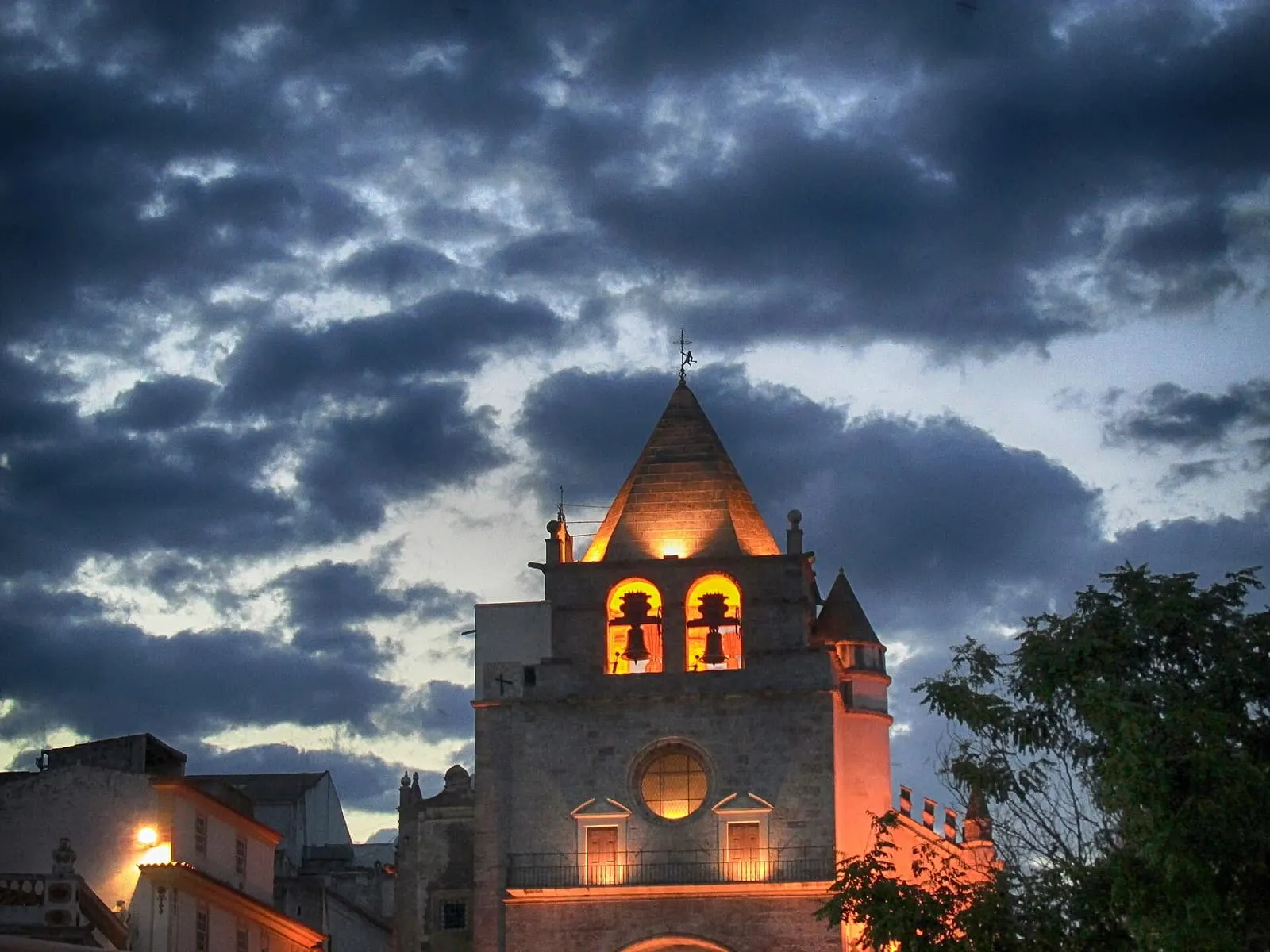
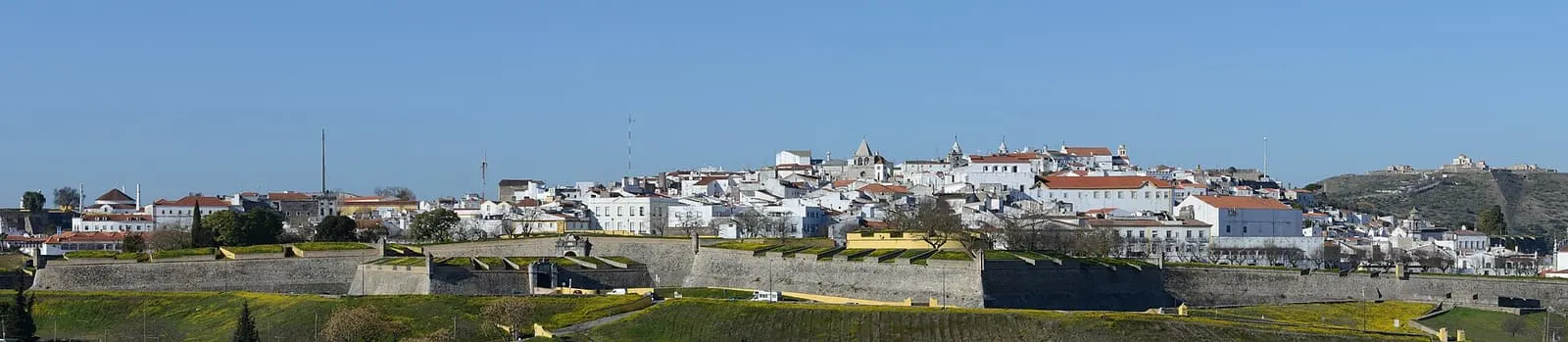
At the eastern edge of the Alentejo, a few kilometres from the Spanish border, stands the town of Elvas, protected by what is recognised as the largest system of bastioned fortifications with a dry moat in the world. Inscribed on the UNESCO World Heritage List in 2012, the Garrison Border Town of Elvas bears witness, like no other place, to the effort of a country that, after the Restoration of independence in 1640, transformed a frontier settlement into a powerful military stronghold.
A fortress born of war
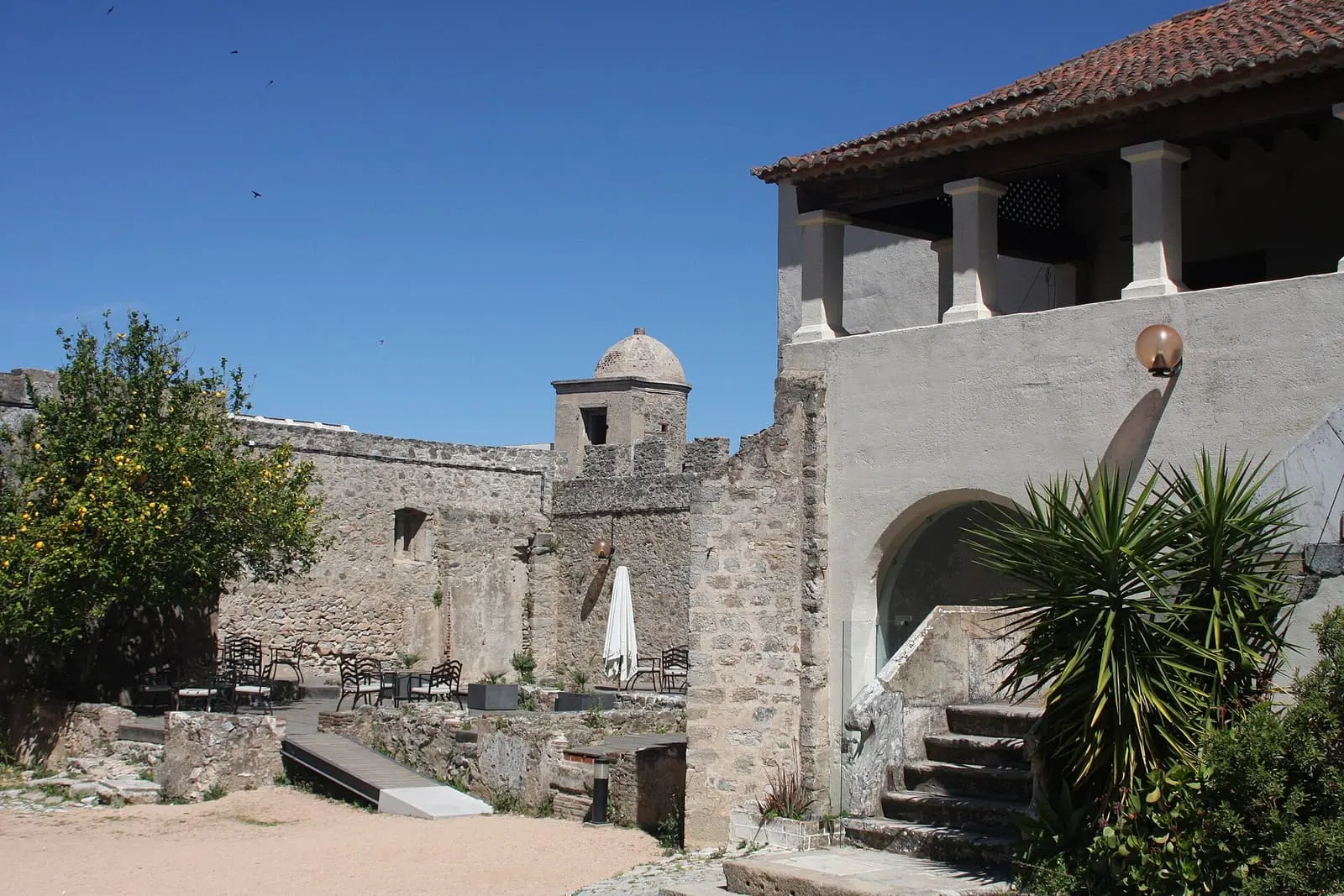
Although Elvas preserves medieval remains — the castle and stretches of wall date back to the centuries of the Reconquista and the reign of King Sancho II —, it was from 1640 onwards that the town took on its character as a fortified stronghold. During the Restoration War (1640–1668), and faced with the permanent threat from Castile, military engineers conceived a ring of bastioned walls following the principles of modern fortification, combining the Italian design with the influence of the Dutch school spread through Portugal by engineers such as the Jesuit João Piscásio Cosmander.
The result is a fortified perimeter several kilometres long, with bastions, ravelins, dry moats and monumental gates, entirely enclosing the historic centre. To this main belt are added advanced works that command the surrounding hills, ensuring visual control and defence in depth — an essential feature of the art of siege warfare in the seventeenth and eighteenth centuries.
The forts and the aqueduct
The property classified by UNESCO is not limited to the urban walls. It includes the imposing Fort of Santa Luzia, from the seventeenth century, to the south of the town, and the remarkable Fort of Nossa Senhora da Graça, from the eighteenth century, raised to the north on the hill of São Miguel and considered a masterpiece of modern military engineering. Completing the ensemble are the fortlets of São Mamede, São Pedro and São Domingos (or da Piedade), small detached works that reinforced the defensive system.
Inseparable from this ensemble is the Amoreira Aqueduct, whose construction lasted more than a century. With its superimposed arches spanning the valley, it ensured the water supply to the town — an indispensable condition for withstanding prolonged sieges, such as the one Elvas endured and won in 1659.
The strength of Elvas lies not in an isolated wall, but in the intelligence of a system: each fort, each moat and each aqueduct was conceived so that the town could survive, autonomous and supplied, through the longest of sieges.
Universal value and recognition
UNESCO inscribed Elvas on the basis of criterion (iv), recognising it as an exceptionally well-preserved example of a garrison border town that illustrates the evolution of bastioned fortification techniques in Europe. More than a monument, Elvas is a living military landscape, where the defensive function shaped the urban form, the architecture and the very relationship with the territory.
This recognition places Elvas among the Portuguese World Heritage sites and falls within the long tradition of the fortifications that defended the kingdom. Its nomination paved the way for a broader effort to enhance the borderlands, today reflected in the proposal for the bastioned fortifications of the frontier and in dialogue with other military properties such as the Convent of Christ in Tomar. Set in the heart of the Alentejo, Elvas stands as one of the most complete testimonies of the art of fortification in all of Europe.
Frequently asked questions
- In what year was Elvas classified as a World Heritage Site?
- The Garrison Border Town of Elvas and its Fortifications was inscribed on the UNESCO World Heritage List on 30 June 2012, during the 36th session of the World Heritage Committee, held in Saint Petersburg.
- Why is Elvas considered unique in the world?
- Elvas preserves the largest ensemble of bastioned fortifications with a dry moat in the world, a land-based defensive system extending over some 300 hectares and comprising walls, forts and fortlets that are still intact.
- What can you visit in Elvas?
- Beyond the bastioned walls, the highlights include the Fort of Santa Luzia, the Fort of Nossa Senhora da Graça, the fortlets of São Mamede, São Pedro and São Domingos, and the monumental Amoreira Aqueduct.
Sources
Keep exploring
Heritage nearby
More places to discover from here. Approximate straight-line distances, within 50 km.