World Heritage
Alcobaça Monastery
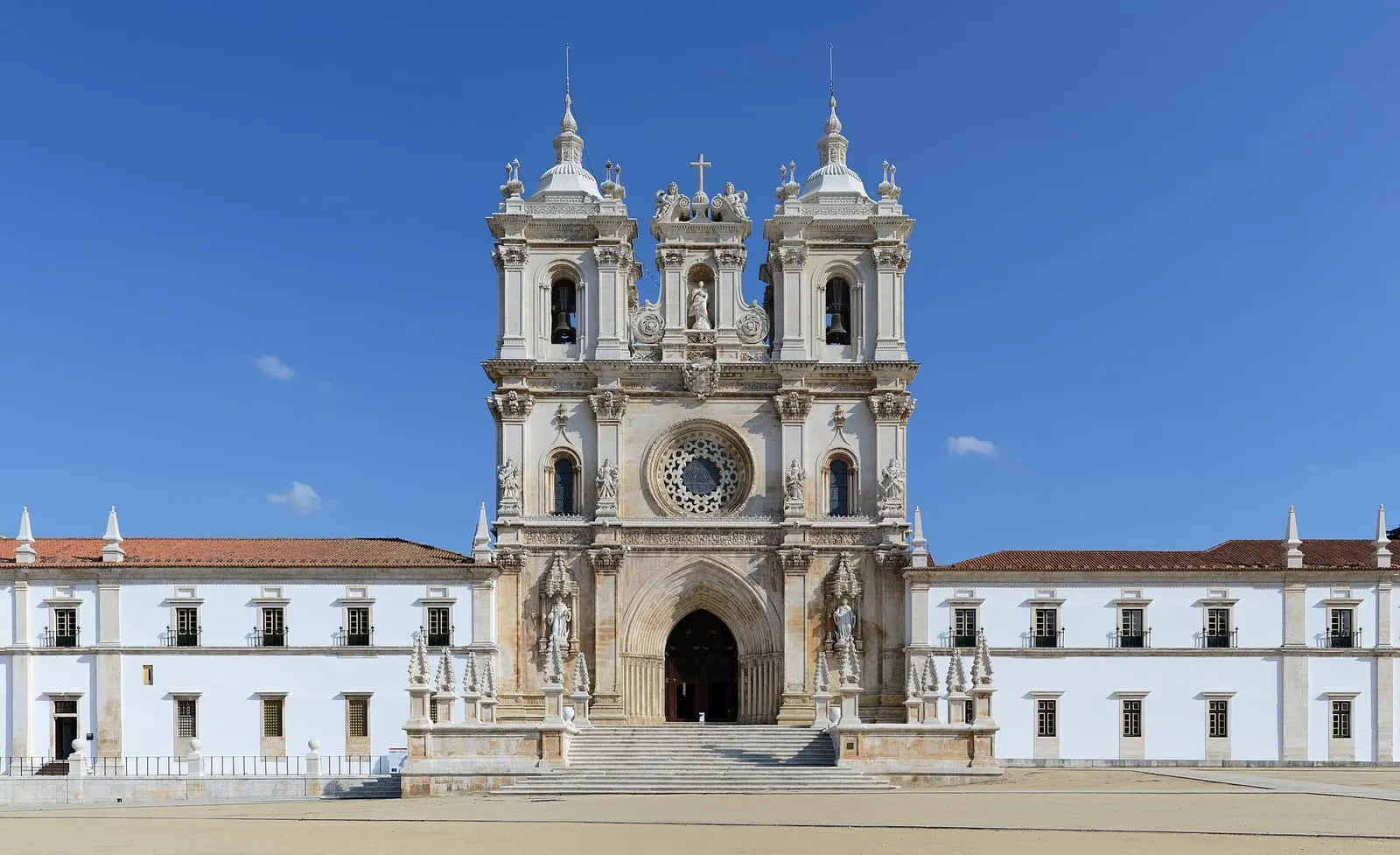
Monastery of Santa Maria de Alcobaça, a Gothic Cistercian masterpiece and UNESCO World Heritage Site since 1989, houses the tombs of Pedro and Inês.
- Location
- Alcobaça, Leiria
- Built
- 1178–c. 1252
- Style
- Gótico cisterciense
- UNESCO
- World Heritage · since 1989
The Monastery of Santa Maria de Alcobaça, in the town of Alcobaça (Leiria district), is one of the most remarkable monastic complexes in medieval Europe and the first fully Gothic structure built on Portuguese soil. Founded by the Cistercian Order in 1153, following a donation charter from King Afonso Henriques, it became a symbol of the kingdom’s consolidation and the highest expression of the Cistercian ideals of austerity, work, and prayer. It has been inscribed on the World Heritage List by UNESCO since 1989.
Foundation and Construction
The royal donation of Alcobaça to the monks of Clairvaux followed the conquest of territories south of the Tagus River and was part of the settlement and territorial reorganization policy after the capture of Santarém. Construction of the church and monastery began in 1178, and the great abbey church was consecrated in 1252. At approximately 106 meters in length, it was then the largest temple in Portugal.
The architecture faithfully follows the austerity advocated by Saint Bernard of Clairvaux: three naves of nearly identical height, an absence of superfluous decoration, and diffused light emphasizing the verticality of the columns. This sobriety contrasts with the exuberance of later monastic buildings and makes Alcobaça a benchmark example of Cistercian Gothic, close in spirit to other medieval Portuguese monasteries.
The Cistercian rule imposed an aesthetic of bareness in Alcobaça: here, beauty arises from proportion and light, not ornament.
The Tombs of Pedro and Inês
In the transept of the church lie the Gothic tombs of King Pedro I and Inês de Castro, carved in limestone in the 14th century and considered masterpieces of European medieval sculpture. Their faces, adorned with scenes from the life of Christ and the wheel of fortune, evoke the tragic love between the future king and the Galician noblewoman, murdered for reasons of state. Tradition holds that the recumbent figures were placed facing each other so that, on Judgment Day, the couple could gaze into each other’s eyes upon resurrection.
Over the centuries, the complex acquired Manueline, Mannerist, and Baroque additions—from the Hall of Kings to the imposing 18th-century façade—without ever losing its medieval essence. The monastic kitchen, traversed by a water channel diverted from the Alcoa River, and the vast dormitory attest to the scale and self-sufficiency of the community.
Significance and Visit
An agricultural, cultural, and intellectual center for centuries, the monastery held vast domains and one of the country’s most important libraries until the dissolution of religious orders in 1834. Designated a National Monument in 1910 and voted one of the Seven Wonders of Portugal in 2007, it remains open to visitors today.
Due to its antiquity, scale, and stylistic purity, Alcobaça forms, along with the Monastery of Batalha and the Convent of Christ in Tomar, an essential axis of UNESCO-listed monastic heritage, indispensable for understanding Portuguese religious architecture from the Gothic to the Baroque.
Frequently asked questions
- When was Alcobaça Monastery classified as a World Heritage Site?
- Alcobaça Monastery was inscribed on the UNESCO World Heritage List in 1989, with reference number 505, under criteria (i) and (iv).
- Where are the tombs of Pedro and Inês de Castro?
- The Gothic tombs of King Pedro I and Inês de Castro are located in the transept of the monastery's church, placed facing each other according to tradition.
- Which religious order founded the monastery?
- It was founded by the Cistercian Order in 1153, following a donation by King Afonso Henriques, the first king of Portugal.
Sources
Keep exploring
Heritage nearby
More places to discover from here. Approximate straight-line distances, within 50 km.