World Heritage
Convent of Christ in Tomar
The Convent of Christ in Tomar, former seat of the Templars and the Order of Christ, a UNESCO World Heritage Site since 1983, with the Charola and the Chapter…
- Location
- Tomar, Santarém
- Built
- 1160–1601
- Style
- Românico, Gótico, Manuelino, Renascentista e Maneirista
- UNESCO
- World Heritage · since 1983
High on a hill above the city of Tomar, in the district of Santarém, stands one of the densest and most stratified monumental complexes in Portugal. The Convent of Christ began as a castle and fortress of the Knights Templar and, over nearly five centuries, became the seat of the Order of Christ and a major symbol of Portuguese maritime expansion. It was inscribed on the UNESCO World Heritage list in 1983, under criteria (i) and (vi).
From the Templars to the Order of Christ
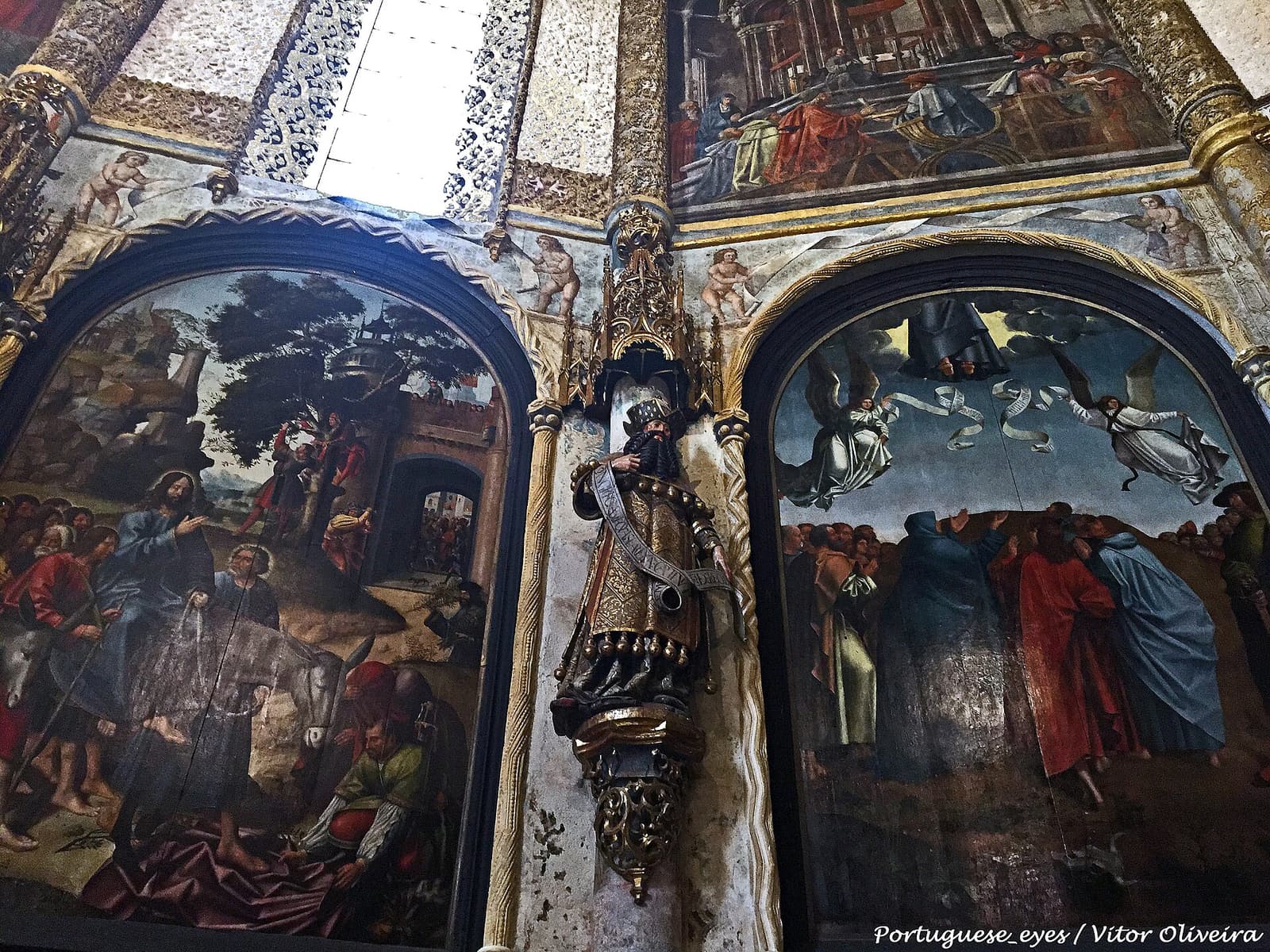
The origin of the site dates back to 1160, when the Templar master Gualdim Pais had the castle and its church built, in the context of the Reconquista and the defence of the Tagus line. The oldest and most singular element is the Charola, an oratory of centralised plan, Romanesque and late-Romanesque in origin, inspired by the models of the rotundas of the East. Inside, an ambulatory surrounds a central octagonal body, decorated with painting and carving that lend it a rare scenographic character.
After the Order of the Temple was suppressed in the early fourteenth century, its possessions in Portugal passed, at the initiative of King Dinis, to the newly created Order of Christ in 1319. From 1420, under the rule of Prince Henry the Navigator, and later of King Manuel I, the Templar house was converted into a true convent, opening one of the most fruitful chapters in its history.
Conceived as a monument of the Reconquista, the Convent of Christ would end up expressing the opposite: the opening of Portugal to the world in the age of the Discoveries.
The Chapter Window and Manueline splendour
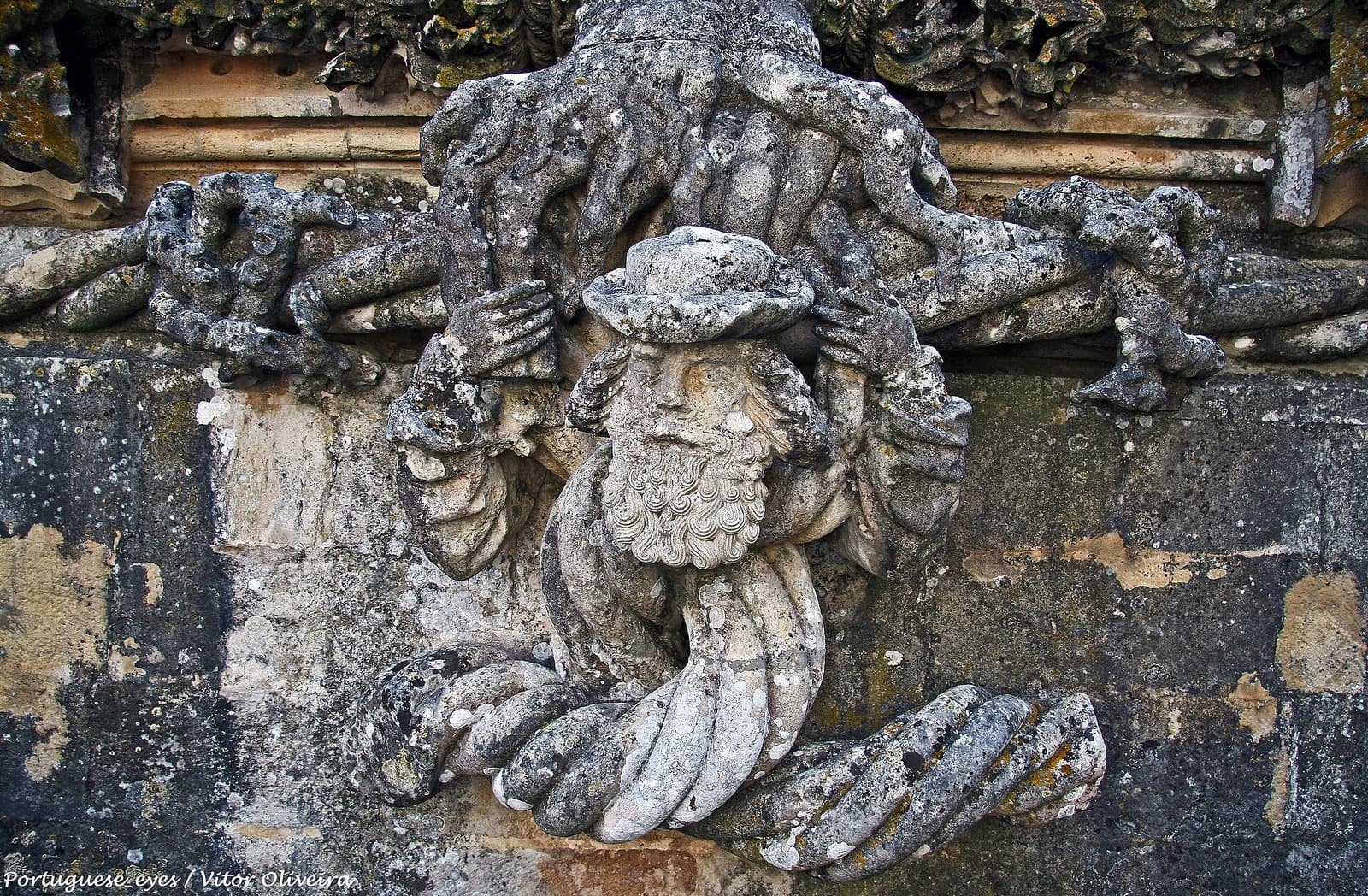
During the reign of King Manuel I, the old Charola was extended westwards by a new nave, the so-called Manueline church, linking the Templar oratory to the convent. It is in this phase that the monument’s emblem appears: the Chapter Window, carved around 1510 and attributed to the master Diogo de Arruda. In it, ropes, shells, seaweed, roots and the cross of the Order of Christ intertwine in a naturalistic exuberance that makes it one of the high points of the Manueline style, alongside the sculpture of the Monastery of Batalha.
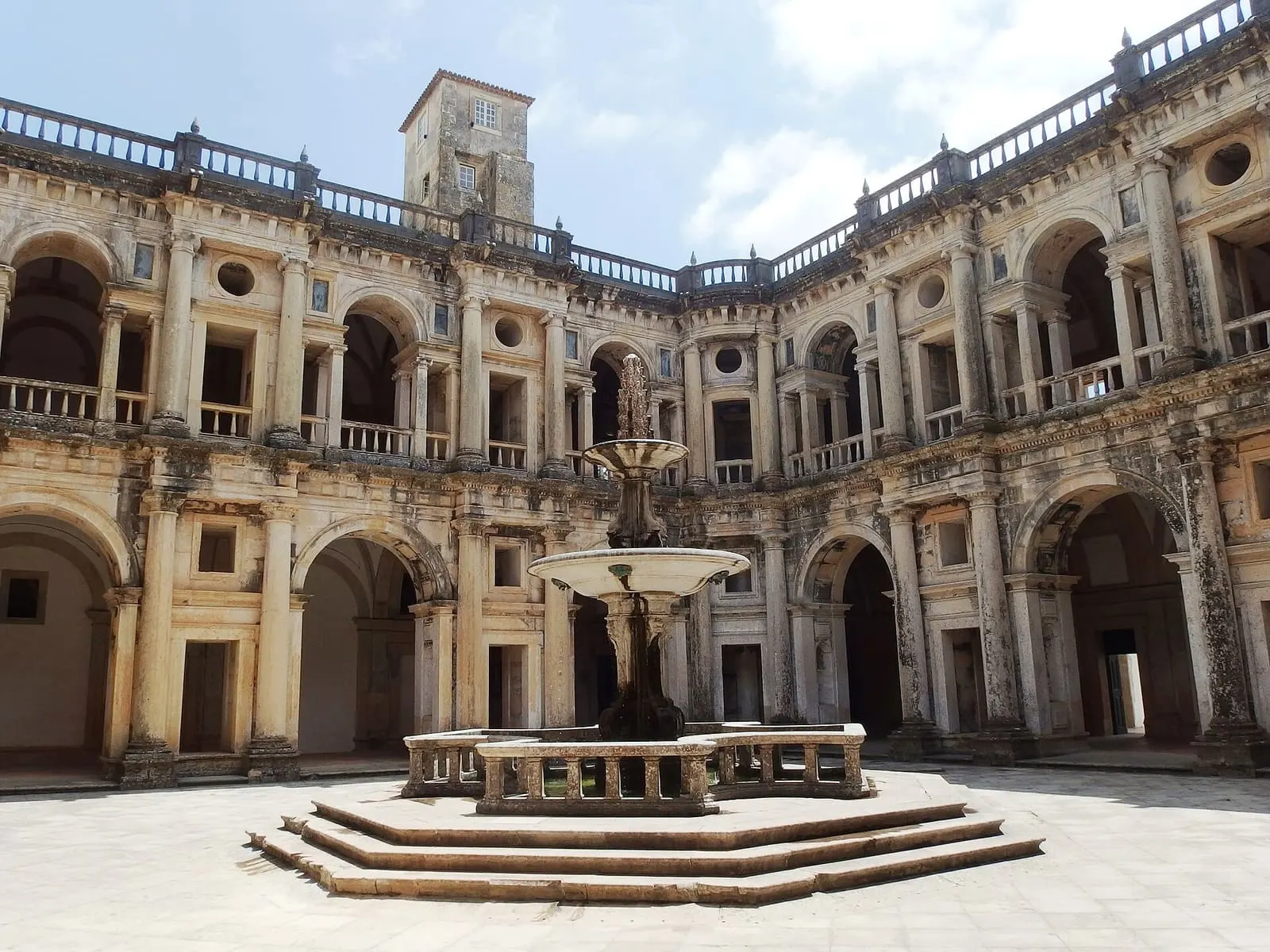
Around the church unfold several cloisters from different periods, among them the sober Cloister of King John III, a masterpiece of the Renaissance and Mannerism, designed in the sixteenth century by Diogo de Torralva and completed by Filippo Terzi. It was here, in 1581, that the Cortes of Tomar were held, which acclaimed Philip II of Spain as king of Portugal.
A fortified and hydraulic complex
The Convent of Christ is not limited to the church and the cloisters. It includes a walled perimeter of medieval origin, close to the traditions of Portuguese fortifications, and was served by the remarkable Pegões Aqueduct, some six kilometres long and with more than a hundred arches, which supplied water to the conventual community.
This accumulation of building campaigns — from the Romanesque to Mannerism — makes the monument a living manual of Portuguese architecture. Part of the network of the country’s great convents, the Convent of Christ remains one of the most visited monuments in Portugal and an essential destination for anyone seeking to understand the link between architecture, military orders and the memory of the age of navigation.
Frequently asked questions
- Who founded the Convent of Christ in Tomar?
- Its foundation dates back to 1160, when the Templar master Gualdim Pais ordered the castle and the Charola to be built, during the reign of King Afonso Henriques. The complex was later enlarged by the Order of Christ.
- Why is the Convent of Christ a World Heritage Site?
- It was inscribed on the UNESCO list in 1983 under criteria (i) and (vi), for bringing together in a single complex around five centuries of Portuguese architecture and for linking the history of the Templars to that of the Order of Christ and the Age of Discovery.
- What is the Chapter Window?
- It is the celebrated Manueline window of the Chapter House, carved in stone with ropes, shells, roots and the cross of Christ. It is considered one of the pinnacles of Manueline sculpture in Portugal.
Sources
Keep exploring
Heritage nearby
More places to discover from here. Approximate straight-line distances, within 50 km.