Intangible Heritage
Tinsmithing
Tinsmithing: the traditional craft of the tinsmith in Portugal, who turns tinplate and brass into domestic, agricultural and decorative utensils.
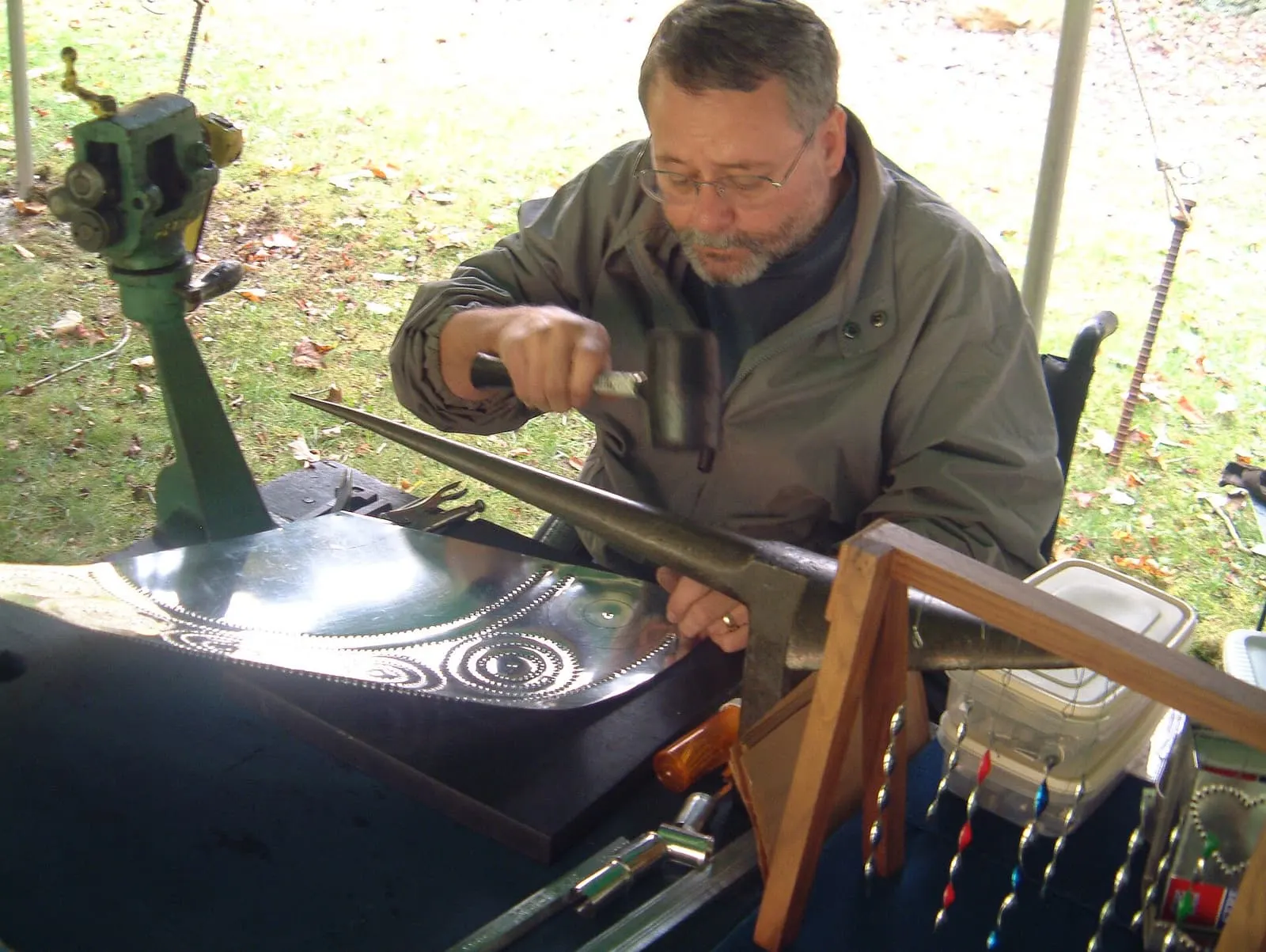
Tinsmithing is the art and craft of the tinsmith, the artisan who makes, repairs and reconditions objects in light-coloured or yellowish sheet metal — above all tinplate (tin-coated steel sheet), brass and galvanised sheet. More than a technique, it is a body of know-how of extreme versatility, in which each piece is designed and executed to meet a specific need of domestic, agricultural or festive life.
A craft forged in sheet metal
The tinsmith’s work is carried out entirely cold. It begins with marking out and laying out the design on the sheet, using templates, dividers and measuring instruments. There follow the cutting with metal shears and the shaping of the piece on the anvil, achieved through creases, folds and curves obtained with hammers and wooden mallets. The parts are joined by lead-tin soldering, with larger junctions reinforced by overlapping seams, carefully beaten before soldering.
The traditional workshop brings together a bench, anvils set on wooden blocks, and beams with concave profiles for shaping curved surfaces. Among the tools are pliers, swages, files, soldering iron and moulds — many of them built by the artisan himself, made to fit the pieces he intends to produce.
Functionality is the true signature of tinsmithing: a hinged lid, a well-balanced handle or a spout calculated to the millimetre reveal more ingenuity than any ornament.
From the ships of the Discoveries to the rural home
Tinsmithing gained expression in Portugal from the fifteenth century onwards, linked to the Age of Discoveries, for the manufacture of containers to store liquids and dry goods aboard ships. In the sixteenth century, tinsmiths achieved great prestige, to the point that the Senate of Lisbon granted them their own regulations. After a period of stagnation during the Restoration War, the mercantilist policy of the Marquis of Pombal stimulated a new phase of development, and by the late eighteenth century the activity had become notable on a national scale, most prominent in the towns and cities of the north of the country.
From the second half of the nineteenth century, the introduction of aluminium and, later, of celluloid, plastics and galvanised iron sheet caused demand for tinplate objects to recede — a trend that worsened over the twentieth century with mass industrial production.
A knowledge at risk
Today very few tinsmiths remain active, most of them elderly, which places tinsmithing among the most endangered traditional crafts in Portugal. Some objects retain practical use — funnels, watering cans and utensils linked to cheese-making — while lamps, lanterns and decorative pieces find a market as ornamental objects of rural inspiration. Not by chance, the watering can, a typical tinsmithing artefact, has been adopted by various institutions as a symbol of the rational use of water.
Tinsmithing belongs to the world of metal crafts and converses with wrought iron and the art of ironwork, sharing with the making of cowbells the same logic of artisanal transformation of sheet and alloy. Alongside traditional Portuguese pottery, it constitutes an essential chapter of the intangible cultural heritage of Portugal, whose transmission today depends on a handful of masters and on programmes for safeguarding traditional know-how.
Frequently asked questions
- What does a tinsmith do?
- The tinsmith is the craftsman who makes, repairs and reconditions objects in sheet metal, above all tinplate, brass and galvanised sheet, working the metal cold with shears, mallet and soldering iron.
- What objects are made in tinsmithing?
- Watering cans, oil lamps and lights, funnels, jugs, basins, buckets, lanterns, cake moulds and measures for liquids and dry goods — pieces marked by extreme functionality and by details adapted to each use.
- Is tinsmithing still practised in Portugal?
- Yes, but only marginally. Very few tinsmiths remain active, most of them elderly, in a craft at risk of disappearing after the advance of plastic and industrial production.