Memory of the World
Pero Vaz de Caminha’s letter: manuscript, history and access
Explore Pero Vaz de Caminha’s 1500 letter, registered in 2005, and find its manuscript reference and digital images in the Torre do Tombo catalogue.
- Location
- Lisboa, Lisboa
- Document dates
- 24 April–1 May 1500
- UNESCO
- Memory of the World · since 2005
Pero Vaz de Caminha’s letter, addressed to King Manuel I, describes the arrival of Pedro Álvares Cabral’s fleet on the coast of what is now Brazil. Held at Torre do Tombo in Lisbon, it entered UNESCO’s Memory of the World Register in 2005. The registration concerns documentary heritage, rather than a monument or the archive building.
Writing dates and the date of the letter
UNESCO states that Caminha began writing on 24 April and finished on 1 May 1500, at Vera Cruz. The current Digitarq record gives 1 May as its production and creation date. The writing period and the final date refer to different aspects of the same document.
Caminha travelled with the India-bound fleet and wrote to inform the king. His account describes encounters, gestures, exchanges of objects, religious practices and the landscape. Its recipient and administrative purpose help explain which events he selected and how he presented them.
Reading a participant’s perspective
The letter offers a Portuguese participant’s account of contact with Indigenous populations. It does not directly preserve every participant’s voice. When reading descriptions of customs or supposed intentions, distinguish Caminha’s observations from his interpretations.
Its importance to Portuguese and Brazilian history does not mean that the histories of the territory’s peoples began in 1500. Compare transcriptions and scholarship, and consult other sources to understand the encounters and their consequences.
Finding the correct manuscript
Open the letter’s catalogue record and identify PT/TT/GAV/8/2/8, currently Drawer 8, bundle 2, item 8. The 2004 nomination gives a different reference, Drawer 18; use the archive’s current identification when requesting the document.
The description lists facsimiles, photocopies, a 1773 copy and authentication and registration documents. Those associated materials and digital files do not represent several original letters from 1500.
Preparing research and access
Record the reference, date and folio or image number you use. A transcription makes the text easier to read but may modernise spelling and punctuation. Consult the manuscript where those features matter. The current catalogue lists restricted access to the original; confirm the archive’s procedures before visiting.
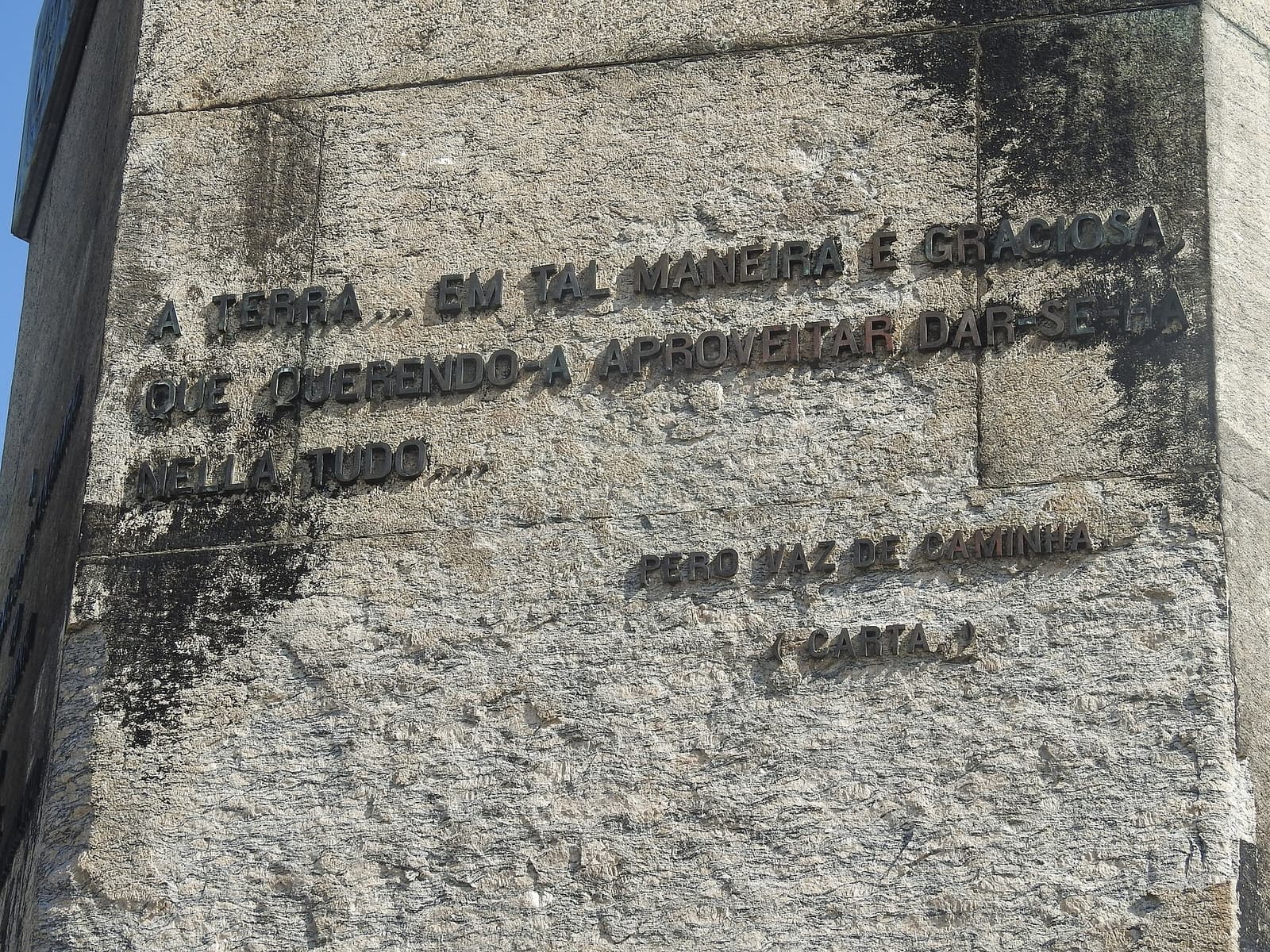
This page’s photograph shows a commemorative stone inscription, rather than the letter. For context, explore the Treaty of Tordesillas and Vasco da Gama’s journal.
Frequently asked questions
- When was the letter written?
- UNESCO states that Caminha began the account on 24 April and finished it on 1 May 1500. The manuscript catalogue records 1 May, the date written in the letter.
- Where is the original?
- At Torre do Tombo in Lisbon, under PT/TT/GAV/8/2/8. The record includes images and associated material; copies and certificates are not additional 1500 originals.
- Can I see it during a visit?
- Archival custody does not mean permanent public display. Start with the record’s images and confirm conditions for original access and reproduction with the archive.