Resources
National Museum of Archaeology
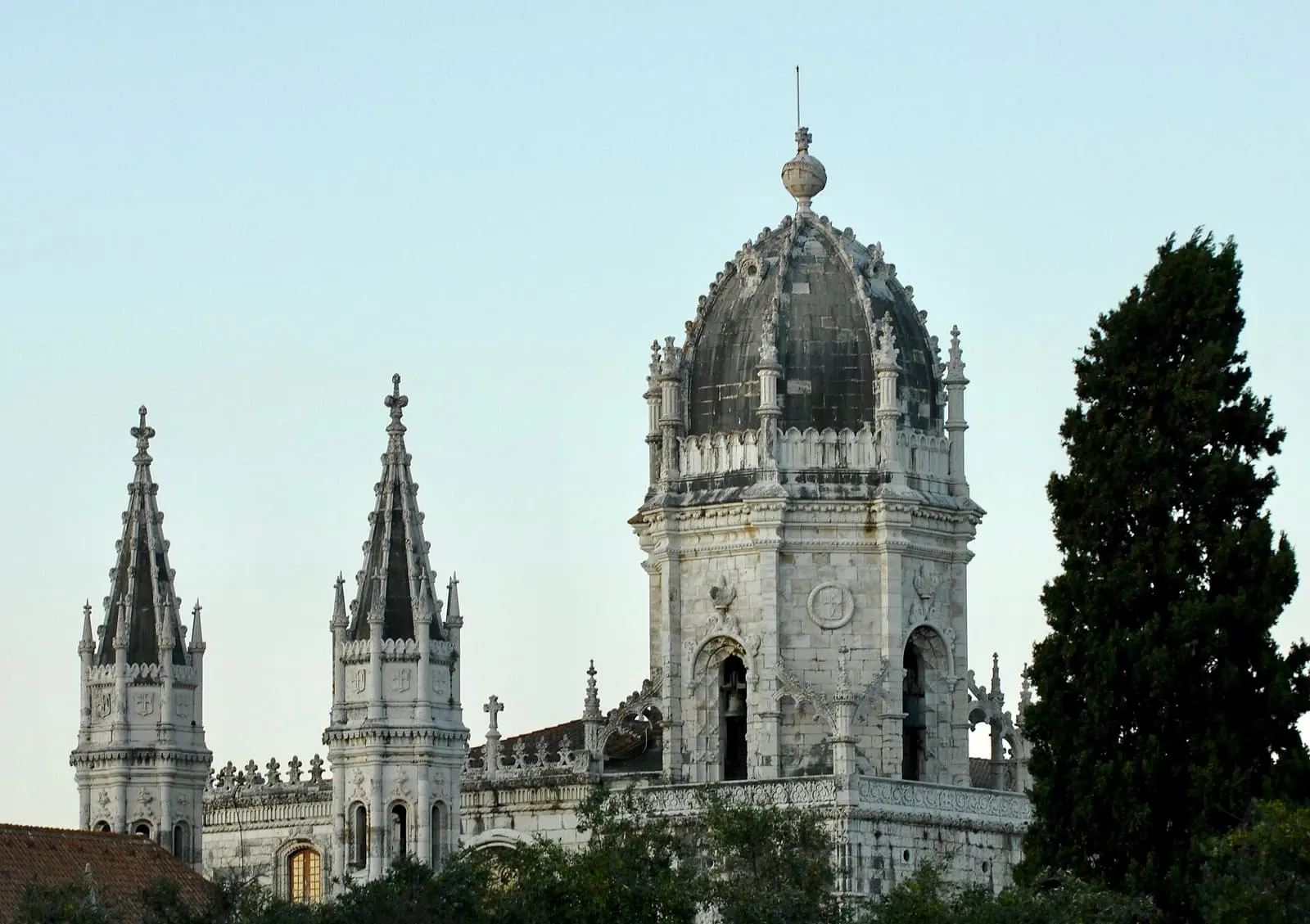
The National Museum of Archaeology, founded in 1893 by Leite de Vasconcelos in the Jerónimos Monastery, Belém, Lisbon: a reference in archaeology.
- Location
- Lisboa, Lisboa
- Built
- 1893
In the western wing of the Jerónimos Monastery, where one enters leaving behind the cloister and the tomb of Vasco da Gama, lies a museum less famous than the monument that houses it but crucial to how Portugal understands its most distant past. The National Museum of Archaeology is the oldest and most comprehensive institution dedicated to Portuguese archaeology — it safeguards objects from over three thousand sites and covers, without interruption, more than half a million years of human occupation in the Iberian Peninsula.
A museum born from an idea
The museum owes its existence to one man and one vision. José Leite de Vasconcelos (1858–1941) — philologist, ethnographer, and archaeologist — conceived it as a Museum of the Portuguese Man: not a collection of beautiful antiquities but a material archive of national identity, from prehistory to the rural traditions of his time. By royal decree on December 20, 1893, signed by ministers Bernardino Machado and João Franco, the Portuguese Ethnographic Museum was born, with Leite de Vasconcelos as its director until his death.
The institution had humble beginnings. It was first housed in a room provided by the Geological Commission at the Lisbon Academy of Sciences and only in 1900 was it assigned to the Jerónimos Monastery. It occupied the space from 1903 and opened its doors on April 22, 1906. The wing that houses it — the western wing, in neo-Manueline style — was added to the monastery in the 19th century, a historicist gesture extending the original Manueline grammar.
Leite de Vasconcelos envisioned a museum that would be, at once, a laboratory and an archive: the place where Portuguese archaeology would establish itself as a scientific discipline, not merely as a collection of curiosities.
Collections spanning half a million years
The collection was formed from the founder’s own acquisitions and the collection of Estácio da Veiga, a pioneer of Algarve archaeology, and grew over a century of excavations and donations. Today, it boasts the largest collection of classical sculpture and Roman mosaics in Portugal, a treasure trove of goldsmithing spanning from the Chalcolithic to the Iron Age, extensive Latin epigraphy, a numismatic collection with tens of thousands of coins — mostly Roman — and a remarkable core of Egyptian antiquities.
Alongside these collections, the museum preserves Portuguese and African ethnography, extending the founder’s holistic vision. Thus, more than a repository of objects, the National Museum of Archaeology serves as a material synthesis of the territory: the amphorae documenting Roman trade routes, inscribed stelae, Neolithic schist plaques, or examples of rock art engage in dialogue with discoveries still being made in the field today.
A place in the history of institutions
The museum’s trajectory mirrors the history of heritage institutions in Portugal. Successive administrations and reorganizations changed its name — since 1989, it has borne the tribute Dr. Leite de Vasconcelos National Museum of Archaeology — without altering its centrality in the network of national museums. It remains, simultaneously, an exhibition space, a research center, and the legal repository of archaeological finds, a role few Portuguese institutions have held with such longevity.
To visit it is, in large part, to traverse the memory of how the country learned to read its traces. Between Manueline stone and display cases, the National Museum of Archaeology keeps alive Leite de Vasconcelos’ original wager: that knowing a people begins by excavating the ground they inhabited.
Frequently asked questions
- When was the National Museum of Archaeology founded?
- It was established by royal decree on December 20, 1893, on the proposal of José Leite de Vasconcelos. Initially named the Portuguese Ethnographic Museum, it opened to the public at the Jerónimos Monastery on April 22, 1906.
- Where is the National Museum of Archaeology located?
- It occupies the western wing of the Jerónimos Monastery, in Praça do Império, Belém, Lisbon, in a neo-Manueline structure added to the complex in the 19th century.
- What can be seen in the museum?
- It houses collections spanning over 500,000 years of Iberian Peninsula history, including the largest collection of Roman mosaics and classical sculpture in the country, ancient goldsmithing, epigraphy, numismatics, and Egyptian antiquities.
Sources
Keep exploring
Heritage nearby
More places to discover from here. Approximate straight-line distances, within 50 km.
Resources for research
Find the sources. Follow the story.
Guides to researching buildings, exploring museum collections and understanding heritage protection.
SIPA
Get to know the architectural inventory, building records and documentary archive.
Read the guideMuseum collectionsMatrizNet
Explore the museum catalogue and records of works, materials, authorship and provenance.
Read the guideHeritage protectionHeritage classification
Understand cultural property categories and the levels of national, public and municipal interest.
Read the guide