Themes
The Portuguese azulejo
Five centuries of decorative tilework, from the Hispano-Moresque pattern to the great Baroque panel and the industrial azulejo.
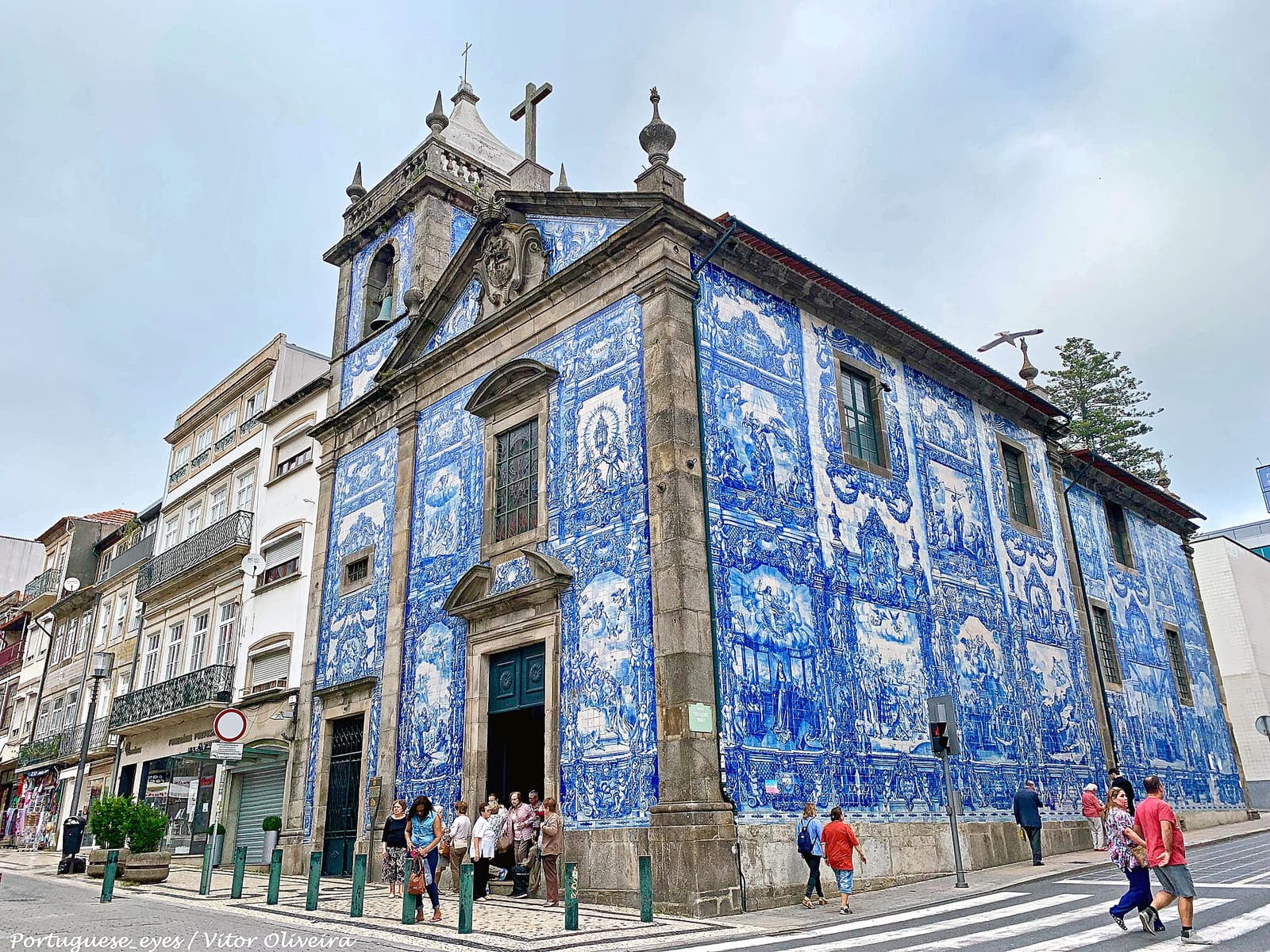
No other European country made the azulejo so structural an element of its visual culture. In Portugal, decorative tilework ceased to be incidental ornament and became a language in its own right — able to organise space, to narrate episodes and to fix an identity. To follow its history is to follow the very history of Portuguese art.
From pattern to figure
The word comes from the Arabic az-zulayj, “polished stone”. The first azulejos to reach Portugal, in the fifteenth century, were Hispano-Moresque, imported from Seville: geometric patterns of Islamic tradition, in which modular repetition covered the wall like a carpet. The cuerda seca and aresta techniques kept the colours separated by grooves or raised ridges.
The turning point comes in the sixteenth century, with the arrival of Italian-influenced faience and the majolica technique, which allowed free painting over the white tin glaze. The azulejo ceases to be pattern and becomes able to be figure: it opens itself to composition, to perspective and, finally, to narrative.
The century of the great panel
The seventeenth century and the first half of the eighteenth are the golden age of the narrative azulejo. Blue-and-white — heir both to Chinese export porcelain and to European engraving — covers entire church naves with hagiographic cycles, and fills the palaces with scenes of hunting, battle and courtship. The figure of the master tiler emerges and, with it, signature workshops: António de Oliveira Bernardes and his son Policarpo raise the panel to a scenographic virtuosity that rivals fresco painting.
The Baroque azulejo does not decorate architecture: it dissolves its walls, opening them onto illusory spaces that extend the building beyond its own limits.
The earthquake, the industry and the city
The 1755 earthquake and the Pombaline reconstruction bring a pragmatic shift. The azulejo becomes more sober and serial, at the service of an urban programme. In the nineteenth century, industrialisation and Brazilian influence make the tiled façade widespread: for the first time, whole houses dress themselves in ceramic, turning ordinary streets into luminous, washable surfaces.
The twentieth century restores its artistic ambition. Jorge Barradas, Querubim Lapa and, above all, Maria Keil — author of the panels in the first stations of the Lisbon Metro — reinvent the azulejo as modern public art, closing the circle between the medieval pattern and contemporary abstraction.
How to read a panel
Reading an azulejo means attending to three things at once: the module (the repeating unit), the palette (which almost always dates the piece) and the relationship with the architecture it covers. A panel cannot be understood apart from the wall it clothes — it was conceived for that wall, and that wall alone.