Resources
Cistercian Routes in Portugal
Itineraries of the Cistercian Route in Portugal, linking Cistercian monasteries from Alcobaça to São João de Tarouca and Salzedas in the Douro and Beira regions.
- Location
- Alcobaça, Leiria
- Built
- séc. XII–XIII (mosteiros); rota séc. XXI
The Cistercian Order left in Portugal one of the most cohesive monastic legacies of medieval Europe. From the mid-12th century onwards, the white monks established themselves in fertile and remote valleys, building monasteries that were simultaneously spiritual centres, agricultural hubs, and cultural focal points. The Cistercian routes are contemporary cultural itineraries that reconnect these houses, proposing a unified reading of a heritage now scattered across several regions.
A medieval monastic network
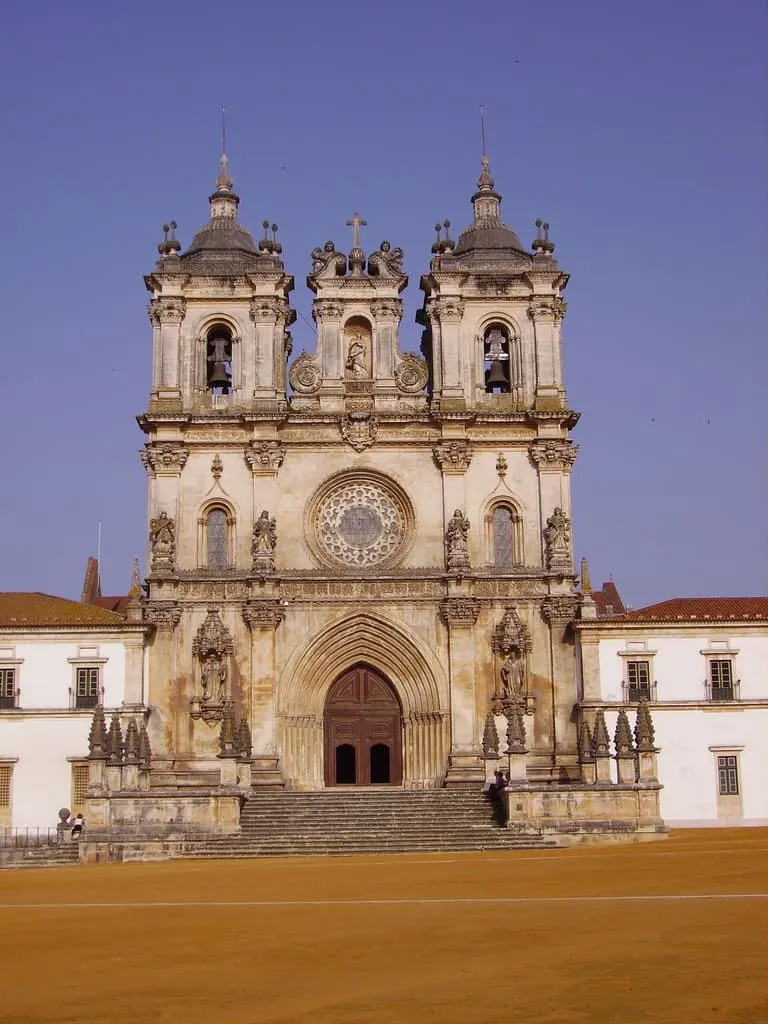
The Cistercian presence in Portugal is believed to have begun south of Lamego, at São João de Tarouca, traditionally dated to around 1144 and considered the order’s first house in the territory. This was followed by foundations in Beira and the Douro — including Salzedas, established from 1156 onwards — and above all, Alcobaça, whose royal donation in 1153 gave rise to the most powerful and influential of Portuguese monasteries. Alcobaça became the artistic and intellectual centre of the order, and its Gothic church left a lasting mark on national architecture.
The order was not limited to male communities. In the 12th and 13th centuries, female monasteries multiplied under the protection of princess-queens, such as Arouca, Lorvão, and São Bento de Cástris in Évora. This dense network remained active for centuries, until the dissolution of religious orders in 1834, which dispersed the communities and led to the ruin of many houses. The ensemble of Cistercian monasteries nonetheless constitutes a coherent testimony to a shared architectural and spiritual model.
Contemporary itineraries
The current routes seek to make this unity intelligible. The Directorate-General for Cultural Heritage includes a Cistercian itinerary focused on the Douro, while territorial cooperation initiatives have linked Alcobaça and the Oeste region to European partners, shaping routes that combine landscape, wine, and devotion. In the Douro axis, the itinerary primarily connects São João de Tarouca and Salzedas, two nearby complexes whose history is intertwined with the fortified bridge of Ucanha and the wine estates of the region.
Exploring these itineraries reveals a common pattern: the location in valley bottoms near watercourses, the sobriety of primitive architecture, the profound remodelling between the 16th and 18th centuries, and, in many cases, the long period of abandonment after 1834.
Heritage value and visitation
A networked reading adds meaning to each isolated monument. Alcobaça, classified as a World Heritage site, serves as the symbolic head of the ensemble, but the richness of the routes lies precisely in linking the great monastery with more modest and sometimes ruined houses, where archaeology has revealed early traces. São João de Tarouca, with its museum collection, and Salzedas, with its altarpieces and paintings, illustrate recovery processes that have returned long-forgotten spaces to public visitation.
For visitors, the Cistercian routes offer more than a collection of buildings: they propose a way of understanding how a religious order organised the territory, economy, and landscape of much of medieval Portugal, and how this legacy continues to shape the cultural identity of regions such as the Douro, Beira, and Oeste.
Frequently asked questions
- What was the first Cistercian monastery founded in Portugal?
- São João de Tarouca, south of Lamego, is traditionally regarded as the first Cistercian house in Portuguese territory, with origins dating back to around 1144.
- Which monasteries are part of the Cistercian Route?
- The route connects houses such as Alcobaça, São João de Tarouca, and Salzedas, extending to other Cistercian monasteries in the Douro, Beira, and Oeste regions.
- Does the Cistercian Order still exist in Portugal?
- Monastic communities were dispersed following the dissolution of religious orders in 1834. The buildings survive today as monuments and visitor centres.
Sources
Resources for research
Find the sources. Follow the story.
Guides to researching buildings, exploring museum collections and understanding heritage protection.
SIPA
Get to know the architectural inventory, building records and documentary archive.
Read the guideMuseum collectionsMatrizNet
Explore the museum catalogue and records of works, materials, authorship and provenance.
Read the guideHeritage protectionHeritage classification
Understand cultural property categories and the levels of national, public and municipal interest.
Read the guide