Typologies
Manor Houses and Noble Residences
Manor houses, noble residences, and stately homes in Portugal: the residential architecture of the nobility, from medieval Minho manor houses to Baroque…
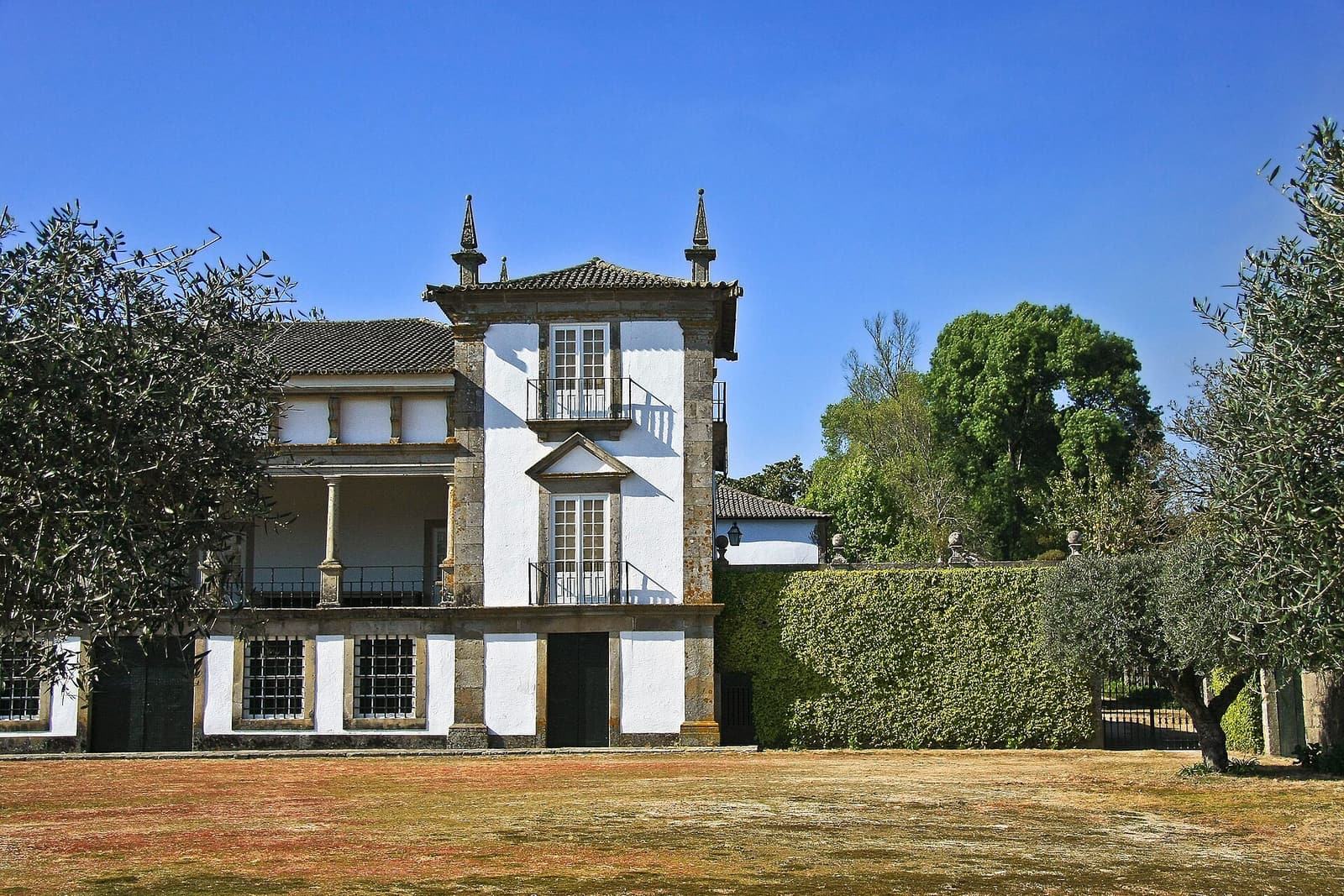
Manor house (solar), noble residence (paço), tower house, noble estate, or simply entailed estate: under these names lies one of the most expressive typologies of Portugal’s built heritage—the residences of the nobility. More than dwellings, these houses were symbolic structures that made visible, in stone, a family’s power and its place in the social hierarchy. Their study allows us to trace, over centuries, the transformations of taste, rural economy, and the very idea of nobility in Portugal.
Origins and geography of the manor house
The term solar strictly designates the ancestral home of a noble family, the land to which that lineage was tied. It is no coincidence that the term is primarily associated with Northern Portugal and the early nobility of the nation’s formation. The first Portuguese nobility emerged from the 11th century, with descendants of lords established between the Douro and Minho rivers—a region that would become, par excellence, the land of manor houses and the kingdom’s most powerful men.
From this northern roots emerged the Minho manor house, initially military and defensive in nature, akin to the lordly towers and fortified houses of the Middle Ages. Over time, the defensive function faded, and the house opened to the landscape, exchanging the tower’s verticality for the facade’s horizontality, often organized in a U-shaped plan around a courtyard or forecourt.
The language of facades
What unites this family of houses, beyond their regional diversity, is a set of recognizable elements. First, the family’s signature: the coat of arms, carved in stone and prominently placed above the portal or on the gable. This is joined by the use of local materials—granite in the North, schist in certain areas, limestone masonry and lime in the South—giving each region its distinct character.
In a Portuguese noble residence, the heraldic stone is not an accessory ornament: it is the very raison d’être of the facade, the mark that transforms a building into a testament of lineage.
There is also a characteristic tendency to combine, on the same walls, erudite and popular elements—the classical grammar of orders and pediments intersecting with vernacular solutions, akin to the granite houses of Minho and the region’s rural construction.
From entailed estates to granite palaces
The golden age of the manor house was the Baroque period. As the nobility settled in the countryside, tied to the entailed estate system that kept property undivided within the same lineage, commissions for increasingly ambitious residences multiplied. In the 18th century, particularly along the Douro Valley and in Minho, grand granite palaces rose, with scenographic facades, monumental staircases, and formal gardens. The Casa de Mateus in Vila Real is among the most celebrated examples of this Baroque noble architecture.
Alongside these rural manor houses, the nobility developed other forms of dwelling. In cities, urban palaces emerged, integrated into town grids and linked to court life and offices; on the outskirts of settlements, recreational estates multiplied, uniting house, chapel, gardens, and agricultural production in a single complex. All these variants belong to the same typological family and share the same codes of prestige.
The abolition of entailed estates in the 19th century and subsequent social transformations left many of these houses orphaned of their original function. Many survive today as classified heritage, repurposed for tourism, restored by descendants, or, in some cases, threatened by neglect. Among the typologies of built heritage, manor houses and noble residences remain one of the richest keys to understanding Portugal’s social, economic, and artistic history.
Frequently asked questions
- What distinguishes a manor house from a palace?
- A manor house (solar) refers to the ancestral home of a noble family, typically rural or semi-rural and linked to an entailed estate (morgadio); a palace implies greater size, ceremonial functions, and often an urban setting. The term 'solar' is primarily associated with Northern Portugal and the older nobility.
- Why are manor houses concentrated in Northern Portugal?
- The first Portuguese nobility emerged between the Douro and Minho rivers during the formation of the nation. This region, rich in granite and entailed estates, became the quintessential territory of the manor house, particularly in its 18th-century form.
- What is a coat of arms on a noble residence?
- It is the heraldic stone displaying the family's coat of arms, typically placed above the portal or on the facade. It served as a visible signature of status and lineage, being one of the most characteristic elements of Portuguese noble houses.