Typologies
Urban Palaces
The urban palaces and mansions of Portuguese nobility and bourgeoisie: typology, history, architectural evolution, and examples in Lisbon and Porto.
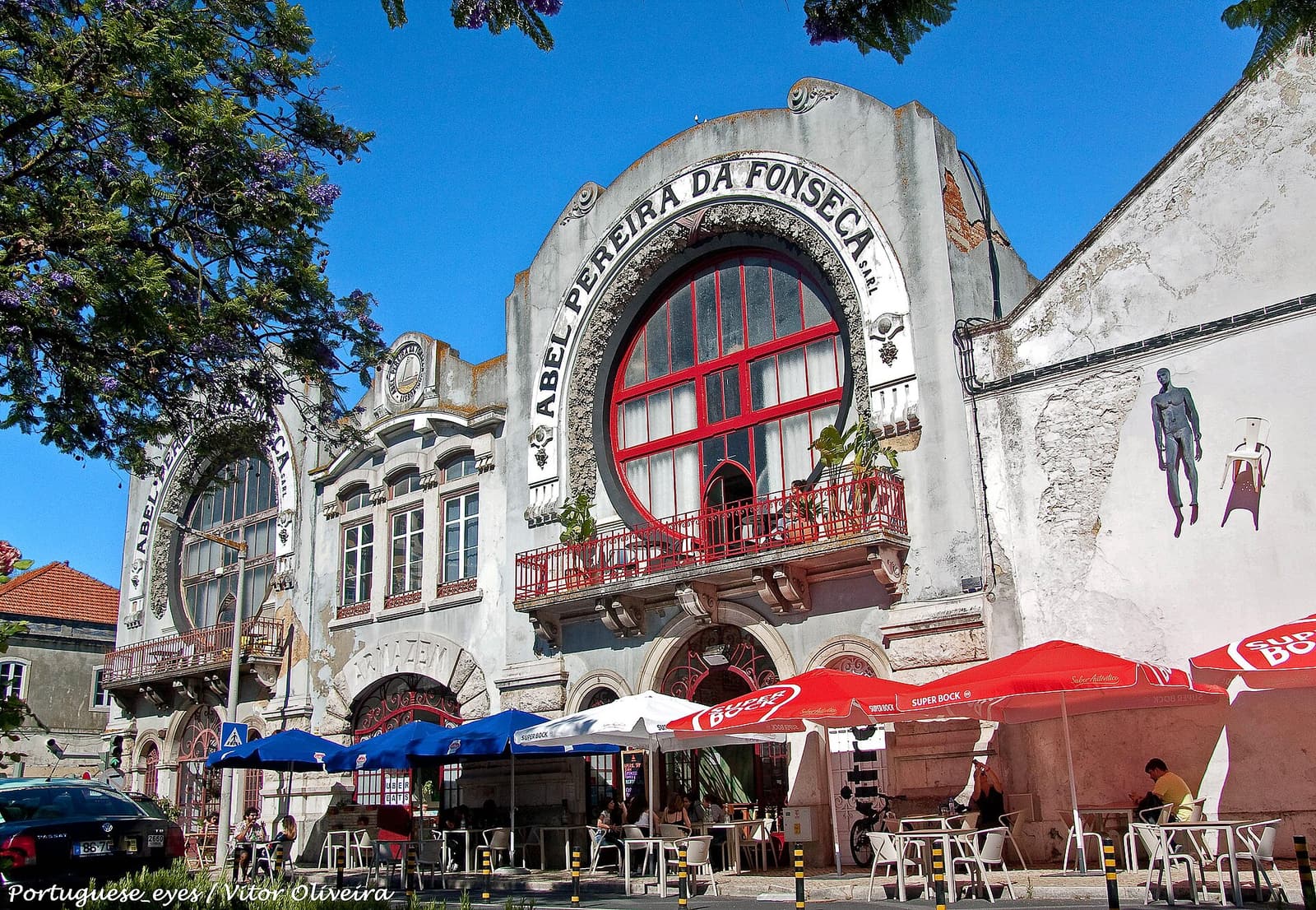
Urban palaces represent one of the most expressive typologies of Portuguese civil architecture: ceremonial residences built within cities, serving the nobility and later the ascending bourgeoisie. They differ from rural manor houses by their integration into consolidated urban fabric—aligned with streets, constrained by plot size and height limits, often lacking the vast landholdings characteristic of the landed manor house. Their history unfolds in the tension between representation and residence, between prestigious facades and domestic comfort.
From Noble Palace to Bourgeois Mansion
The terminology itself is revealing. Paço, palace, and mansion denote not just different scales but distinct social moments. The noble palace, still rooted in the Ancien Régime, was constructed by members of great houses as symbols of lineage and power, featuring extensive layouts, private chapels, and ample service quarters. From the Pombaline period onward, and especially throughout the 19th century, the mansion gained ground: smaller in scale and more graceful in design, primarily residential in purpose.
The more restrained dimensions of mansions reflect not impoverishment but a shift in mindset: the home ceases to be primarily a manifesto of power and becomes, above all, a place to live with distinction.
This transformation accompanies the rise of a bourgeois elite of major merchants, bankers, industrialists, and high-ranking state officials—fortunes often quickly made, who sought in carved stone the social recognition denied them by birth. Porto, the city of labor and commerce, is the paradigmatic example of this phenomenon, where the names of trading houses stood in for noble titles.
The City as Stage
In Lisbon, 19th-century mansions spread through neighborhoods like Lapa and Janelas Verdes before intensifying in Avenidas Novas. The expansion plan drafted in the late 19th century by engineer Frederico Ressano Garcia (1847-1911) extended the city from Rossio to Campo Grande, defining an orthogonal grid articulated by roundabouts. Here, two logics intersected: that of the rental building, intended for real estate investment, and that of the freestanding mansion with a garden, commissioned by owners seeking dignified residences.
In an era of eclectic architecture, the relative absence of regulations on plot size and building height created great heterogeneity. Thus, bold-design mansions coexist with high-end apartment buildings and more modest dwellings. The quality of the finest was recognized by the Valmor Prize, established in 1902 by Lisbon City Council to honor architectural excellence in new buildings.
Languages and Heritage Interpretation
Stylistically, urban palaces traverse all major grammars of Portuguese erudite architecture. Examples range from Pombaline designs of sober restraint to Neoclassical, Neo-Manueline, eclectic facades, and, in the 20th century, Art Nouveau and Art Deco. The Palácio Foz in Praça dos Restauradores exemplifies grand classical opulence; in Porto, the Palácio da Bolsa, erected by the Commercial Association, demonstrates how the mercantile bourgeoisie monumentalized its collective representation spaces.
For heritage study, urban palaces present unique challenges. Many have lost their original residential function, repurposed as embassies, museums, hotels, or public services—uses that ensure their conservation but require careful safeguarding of interiors, murals, stuccowork, and tiles that constitute much of their value. Reading these houses today means reconstructing, facade by facade, the social geography of Portuguese cities and the ambition of the elites who shaped them.
Frequently asked questions
- What is the difference between an urban palace and a mansion?
- Both refer to aristocratic or bourgeois residences in urban settings. The mansion is distinguished primarily by its smaller size and predominantly residential purpose, emerging alongside the rise of the upper bourgeoisie, whereas the noble-rooted palace also asserted the power and lineage of its owners.
- Where are urban palaces and mansions concentrated in Portugal?
- The most numerous examples are found in Lisbon—particularly in Lapa, Janelas Verdes, and Avenidas Novas—and in Porto, the quintessential bourgeois city, but significant clusters exist in nearly all the country's historic centers.
- What is the Valmor Prize?
- It is a municipal distinction in Lisbon awarded since 1902 for architectural excellence in new buildings, which honored several mansions built in Avenidas Novas in the early 20th century.