Intangible Heritage
The Adufe and the Music of the Beira Baixa
The adufe, a square frame drum played by the adufeiras of the Beira Baixa, and the ritual songs of Idanha-a-Nova and Monsanto, in the district of Castelo Branco.
- Location
- Idanha-a-Nova, Castelo Branco
The adufe is a square frame drum, a percussion instrument that distils, in a single object, centuries of the musical tradition of the Beira Baixa. Technically it is a double-headed membranophone: a square wooden frame — about 45 cm on each side — covered on both faces with sewn skin, with seeds or small loose pieces inside that jingle to the rhythm of the percussion. The side seams are concealed by coloured ribbons, and the corners are likewise adorned with ribbons, making the adufe both an instrument and a small object of folk art. Its most living presence is concentrated today in the municipalities of Idanha-a-Nova, Castelo Branco, Penamacor and Belmonte, in the district of Castelo Branco.
An instrument of women
In the Beira Baixa, the adufe belongs to the female world. It is the adufeiras who build it, play it and sing to its beat, holding it by the thumbs and the index finger of the right hand so as to leave the other fingers free. Two ways of striking produce distinct timbres: the open palm yields low sounds, while the drumming of the fingers on the skin gives rise to high notes. From this alternation arise fixed rhythmic formulas — such as the ritmo de passo (step rhythm) and the ritmo de roda (wheel rhythm) — that structure song and dance.
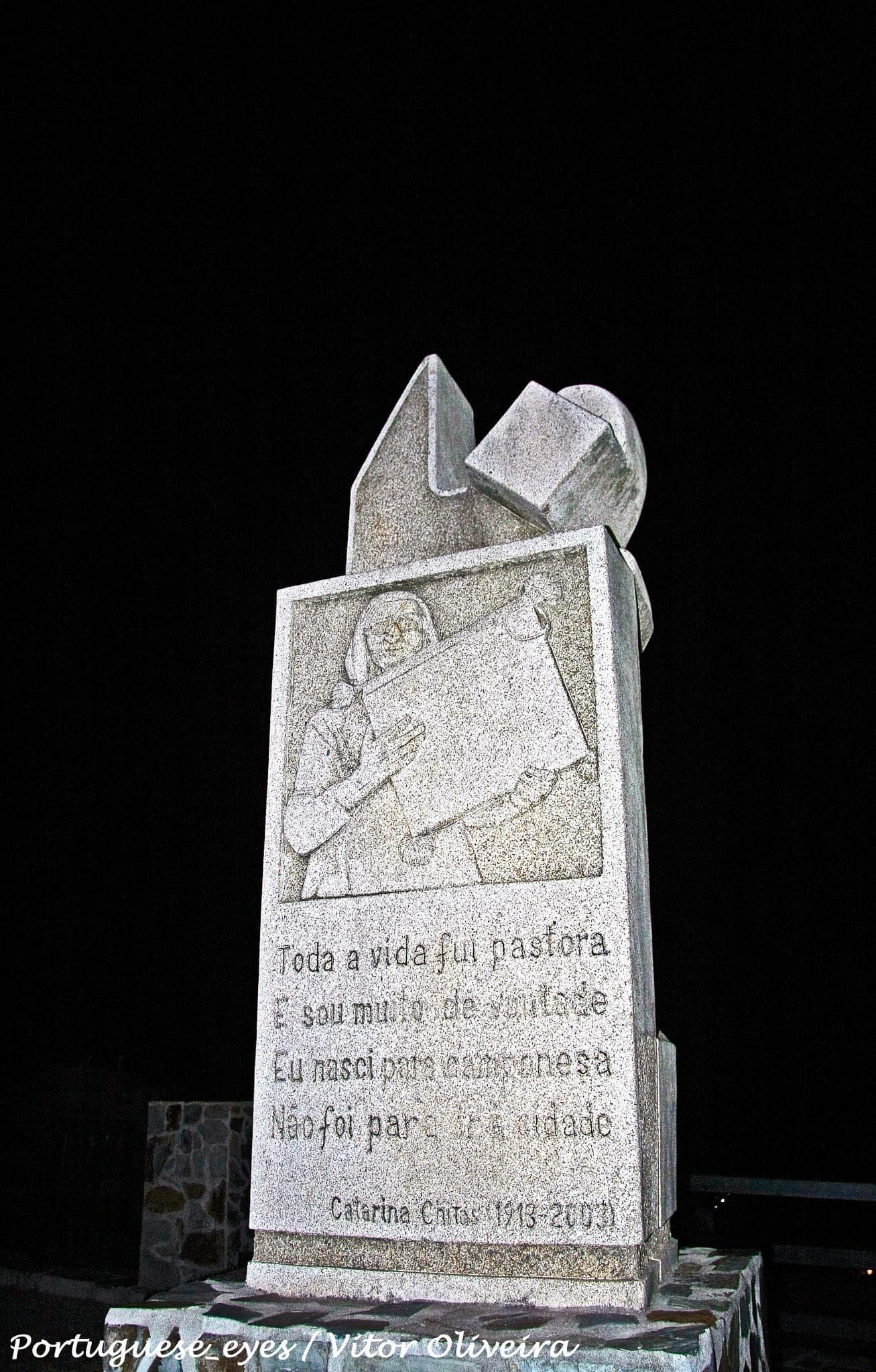
The knowledge is passed on orally, from mothers to daughters, tied to the calendar of festivals and to the cycle of agricultural work. Figures such as Catarina Chitas, an adufeira and singer of the region, have become symbols of the preservation of this heritage. This collective and generational dimension brings the adufe close to other expressions of Portuguese intangible cultural heritage, in which knowledge lives in the practice and memory of communities, and not in scores.
Arab roots, Christian repertoire
The name betrays the origin: adufe comes from medieval Arabic ad-duff, the name of a frame drum widespread in the Middle East and introduced into the Iberian Peninsula during Islamic rule. The instrument survived the Reconquest and was absorbed into Christian rural culture, going on to accompany precisely the most significant religious moments of the year: the Easter alvíssaras (tidings of good news), the songs of Saint John, the pilgrimage songs and the processions.
The adufe is a rare case of cultural continuity: an object of Islamic root that, instead of disappearing, became the voice of the Christian devotions of the interior, spanning almost a millennium in the hands of the women of the borderland.
This survival is particularly notable in historic villages such as Monsanto, where the playing of the adufe remains tied to the local festivals, and throughout the surrounding territory of the ancient Egitânia, in Idanha-a-Velha, the Roman and Visigothic cradle of the region.
Idanha-a-Nova, city of music
The vitality of this tradition earned Idanha-a-Nova international recognition: in 2015 the municipality joined the UNESCO Creative Cities Network in the category of Music, becoming the first Portuguese municipality to obtain this distinction. The adufe is the emblem of that bid, the fruit of a long effort of inventorying, teaching and promoting the local musical heritage.
Beyond the adufe, the music of the Beira Baixa encompasses a vast repertoire of songs, dances and instruments that converse with other families of traditional Portuguese sound, from traditional chordophones to the forms of collective singing of the south, such as the Cante Alentejano. Together, they trace a sound map of the interior in which the voice of communities, and not industry, continues to guard the memory of the territory.
Frequently asked questions
- What is the adufe?
- It is a square frame drum, a double-headed membranophone: a square wooden frame, usually about 45 cm on each side, covered on both faces with skin and containing seeds or small loose pieces inside, which jingle when the instrument is struck.
- Why is the adufe played by women?
- In the Beira Baixa the adufe traditionally belongs to the female world. It is the adufeiras who build, play and sing to it, passing down from generation to generation the repertoire tied to religious festivals, pilgrimages and the agricultural cycle; men play it only occasionally, outside these ritual contexts.
- Where does the word adufe come from?
- From medieval Arabic ad-duff, the name of a frame drum widespread in the Middle East and brought to the Iberian Peninsula during the Islamic period, between the 8th and 12th centuries.