Archaeology
Idanha-a-Velha (Egitânia)
Idanha-a-Velha, the ancient Egitânia, in Castelo Branco: a Roman city and Visigothic see with a town wall, basilica, baptistery and a remarkable epigraphic…
- Location
- Idanha-a-Velha, Castelo Branco
- Built
- Século I a.C. – período medieval
- Style
- Romano, paleocristão e visigótico
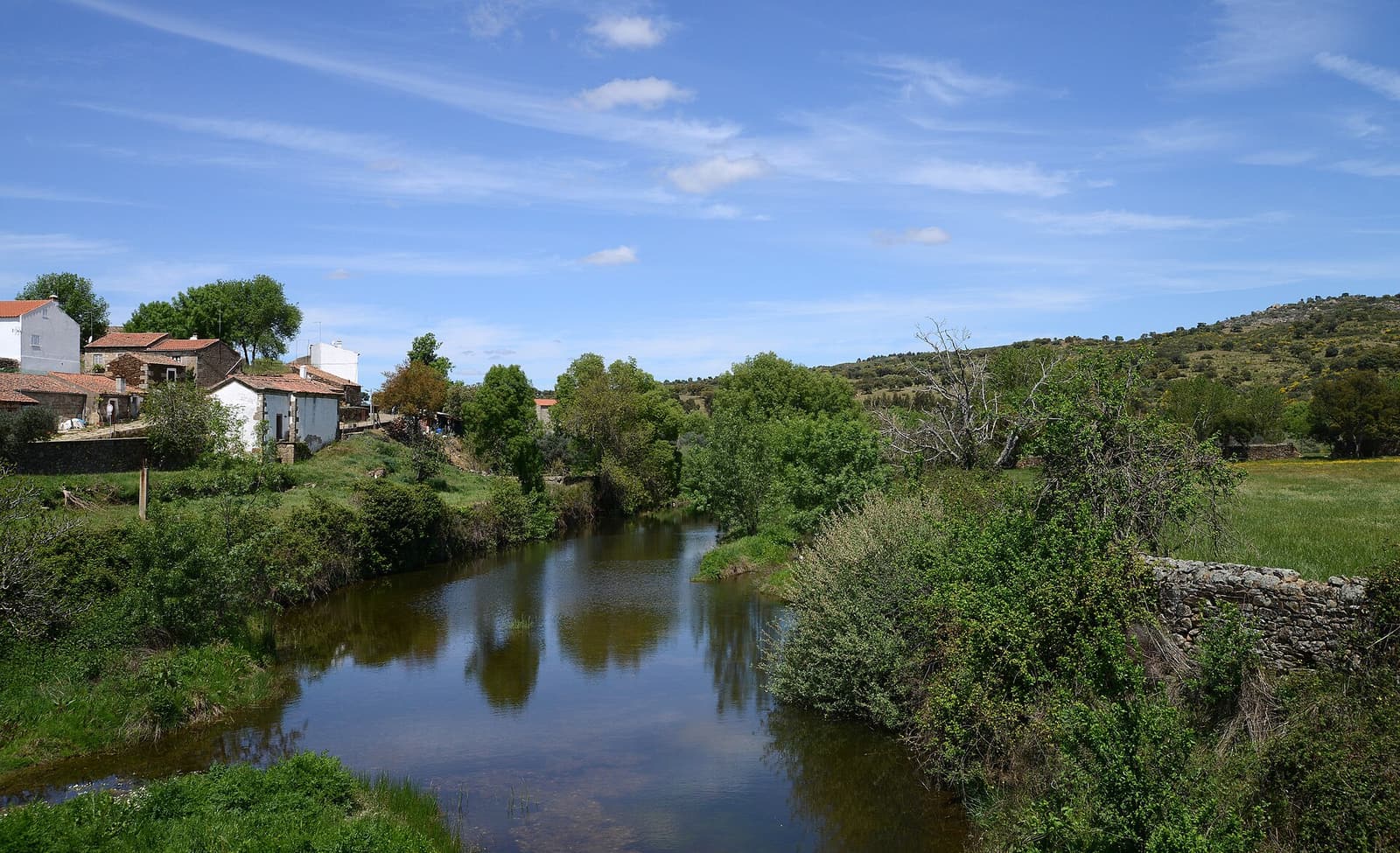
Idanha-a-Velha is a small village in the Beira Baixa that conceals, beneath its houses, vegetable gardens and granite streets, one of the densest archaeological palimpsests in Portugal. Within the same enclosure are superimposed the Roman city of Civitas Igaeditanorum, the Suebi-Visigothic Egitânia and the medieval and modern village, in an unbroken continuum of occupation lasting more than two thousand years on the right bank of the river Ponsul.
From Civitas Igaeditanorum to Egitânia
The Roman foundation dates back to the end of the 1st century BC, in the context of the Augustan reorganisation of the province of Lusitania. The earliest testimony to the existence of the urban centre is an inscription dedicated by Quintus Tallius, a citizen of Emerita Augusta (Mérida), who offered a sundial to the Igaeditani, dated to around 16 BC. The city occupied a strategic position on the road network linking Mérida to Bracara Augusta (Braga) and the Lusitanian north, which favoured its growth.
With the disintegration of the Roman world, the settlement retained its importance. In the Suebi-Visigothic period it became the seat of a diocese, Egitania, already attested by the late 6th century. This status as a religious and administrative centre left a lasting mark: to this day the bishop of Guarda, to which the see was transferred in 1199, preserves in his title the memory of ancient Egitânia. In 713 the city was taken by the Muslim armies, opening a new chapter in its long history.
The strength of Idanha-a-Velha lies not in a single monument, but in the density of its stratigraphy: the medieval keep rises over the podium of a Roman temple, and the former cathedral rests on Early Christian structures — each age reused and rewrote the one before.
Town wall, cathedral and baptistery
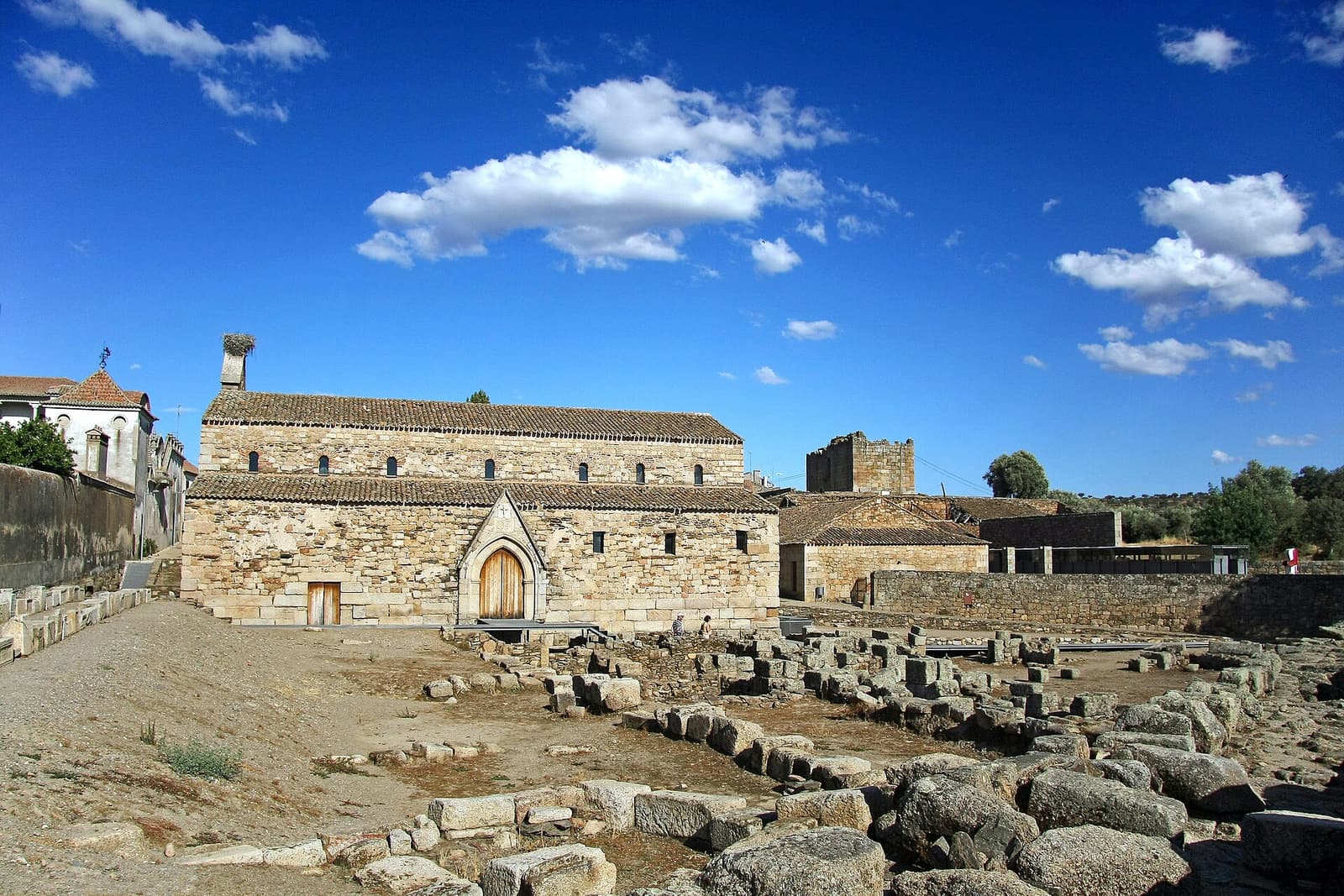
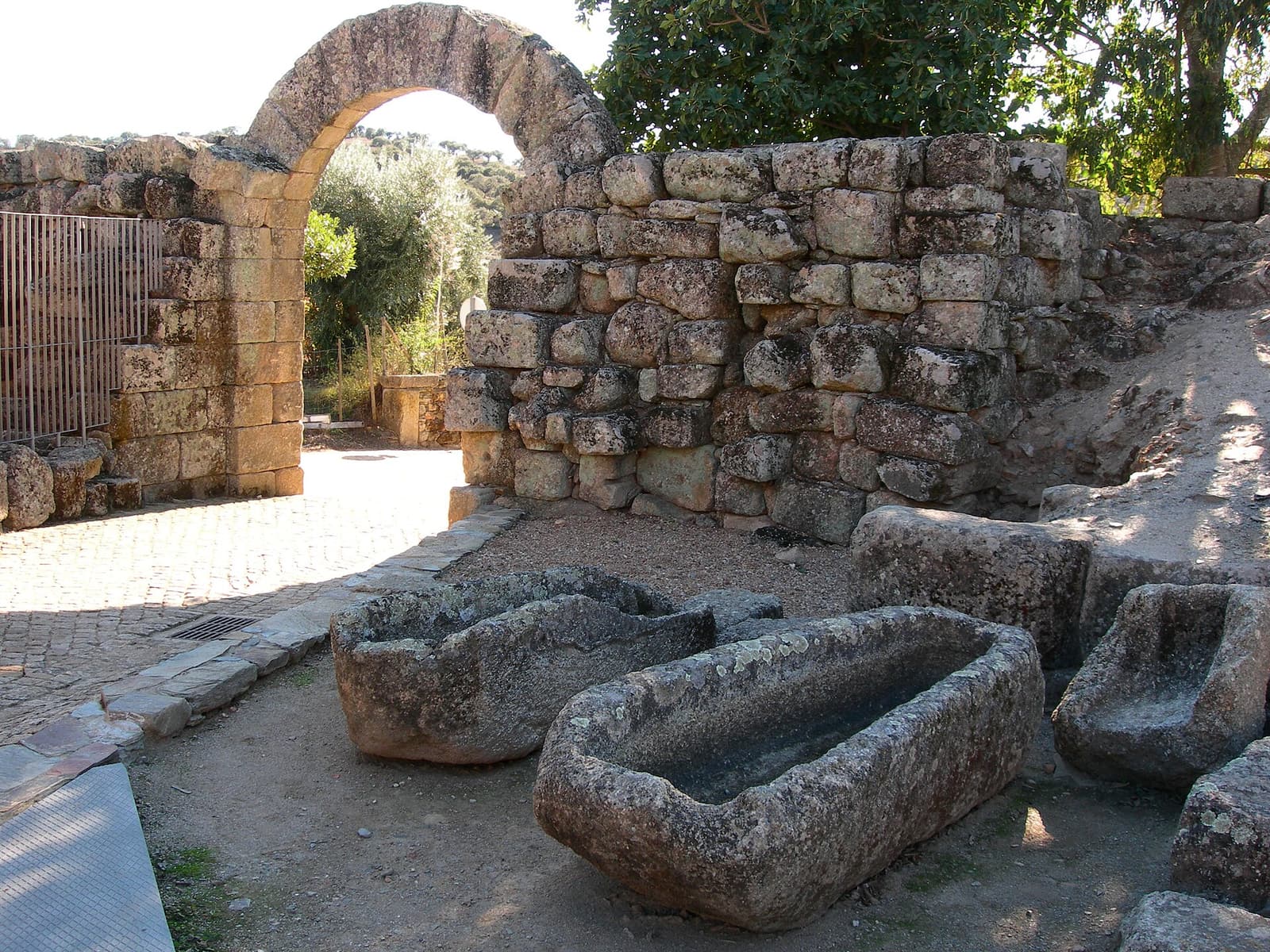
The fortified perimeter, some 700 metres long and with semicylindrical towers, combines Roman foundations with medieval rebuilding and is one of the most legible elements of the complex. Within it survives the former cathedral (or basilica), a building of Early Christian origin profoundly remodelled in the Visigothic period, which ranks among the most important testimonies of Visigothic art in Portugal. Beside one of the gates a baptistery with a baptismal font survives, a vestige of the city’s Christianisation between the Suebi and Visigothic periods.
The quadrangular tower that dominates the enclosure — commonly known as the keep — rests on the remains of a Roman temple, an eloquent illustration of the reuse of structures that characterises the whole site. Outside the walls lie the five-arched Roman bridge over the Ponsul, as well as stretches of roads and gates of the ancient city.
The largest epigraphic collection in the territory
Idanha-a-Velha stands out above all for its collection of inscriptions. The site brings together one of the most extensive assemblages of Roman epigraphy in the Iberian Peninsula — votive altars, funerary stelae, boundary markers and dedications — now largely displayed in the Egitanense Museum, housed within the cathedral itself. These pieces document the religious, social and administrative life of the Civitas Igaeditanorum and make Idanha-a-Velha a privileged laboratory for the study of the provincial Roman world.
Systematic excavations began in 1955, under the direction of Fernando de Almeida, and continued with campaigns that revealed the basilica, the baptistery and bathhouse structures. The complex has been classified as a National Monument since 1997 and forms part of the network of the Historical Villages of Portugal. Those who walk through it find, side by side, the memory of the Roman city, the Visigothic faith and the rural life that never abandoned this place — an itinerary that converses with other centres of the archaeology of Roman Portugal and with the cathedral of Idanha-a-Velha.
Frequently asked questions
- Where is Idanha-a-Velha?
- Idanha-a-Velha lies in the municipality of Idanha-a-Nova, in the district of Castelo Branco, in the Beira Baixa, on the right bank of the river Ponsul. It belongs to the parish of Monsanto e Idanha-a-Velha.
- What was Egitânia?
- Egitânia was the name of the city that succeeded the Roman Civitas Igaeditanorum. Capital of the Igaeditani, it rose to the rank of episcopal see in the Suebi-Visigothic period, before the Muslim conquest in 713.
- Why is the epigraphic collection of Idanha-a-Velha important?
- The site preserves one of the largest assemblages of Roman inscriptions in the Iberian Peninsula, now largely gathered in the Egitanense Museum, housed within the former cathedral.
Sources
Keep exploring
Heritage nearby
More places to discover from here. Approximate straight-line distances, within 50 km.