Archaeology
Roman Mines of Tresminas
The Roman Mines of Tresminas in Vila Pouca de Aguiar constitute Portugal's largest Roman gold-mining complex, featuring open pits, galleries, and aqueducts.
- Location
- Tresminas, Vila Pouca de Aguiar, Vila Real
- Built
- séc. I a.C. – séc. III d.C.
On the granite slopes of Serra da Padrela, in the heart of Trás-os-Montes, lie the most extensive scars left by Roman mining on Portuguese soil. The Roman Mines of Tresminas, in the namesake parish of Vila Pouca de Aguiar municipality, form the largest and best-preserved gold-extraction complex from the Roman era in Portugal, and one of the most remarkable in the entire western Empire. For nearly a century and a half, this site witnessed one of antiquity’s greatest feats of mining engineering.
A colossus of gold extraction
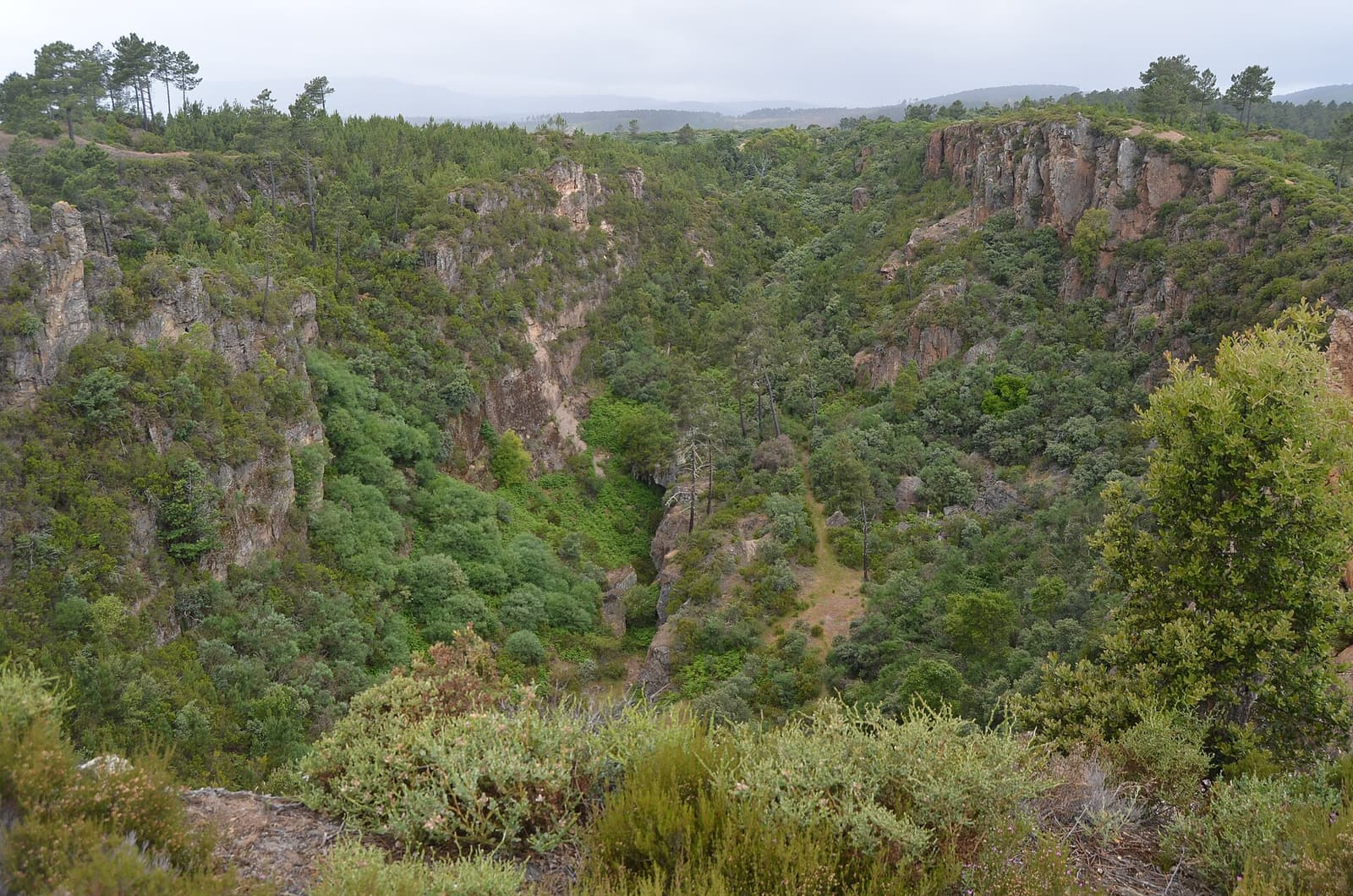
Mining operations began around 20 BCE following Augustus’ pacification of the northwestern peninsula, continuing until the late 2nd or early 3rd century CE under Septimius Severus. The dominant method was open-cast mining, which carved three immense pits following mineralized veins: the Corta de Covas (approximately 430 meters long), the Corta da Ribeirinha (exceeding 100 meters in depth), and the more modest Corta dos Laginhos. These connect to an underground network of galleries—including the 300-meter-long Galeria do Pilar—dug into outcrops to reach richer veins.
Gold was the primary target, though the ore also contained silver and lead, recovered as byproducts during rock processing. Production estimates suggest several thousand kilograms of gold were extracted over the mine’s lifespan, underscoring these operations’ strategic importance to the imperial economy.
Engineering water and ore
More than excavating mountains, Roman engineers mastered water—without it, neither rock would yield nor gold separate.
Operations relied on a sophisticated hydraulic system. Aqueducts, dams, and reservoirs supplied water essential for quarrying and, crucially, washing crushed ore. Surrounding the pits are identified processing areas with four-pillar mills, residential zones yielding early 1st-century CE ceramics and coins, and even remains interpreted as a small amphitheater. The presence of Legio VII Gemina confirms Rome’s direct military control over this precious resource.
This state-run, large-scale exploitation model aligns Tresminas with other major mining districts of the Empire. The approach fits within the tradition of Roman mining archaeology, equally exemplified by the copper mines of Aljustrel and its Vipasca status in Alentejo, whose bronze tablets preserve legal mining regulations.
Archaeological legacy and recognition
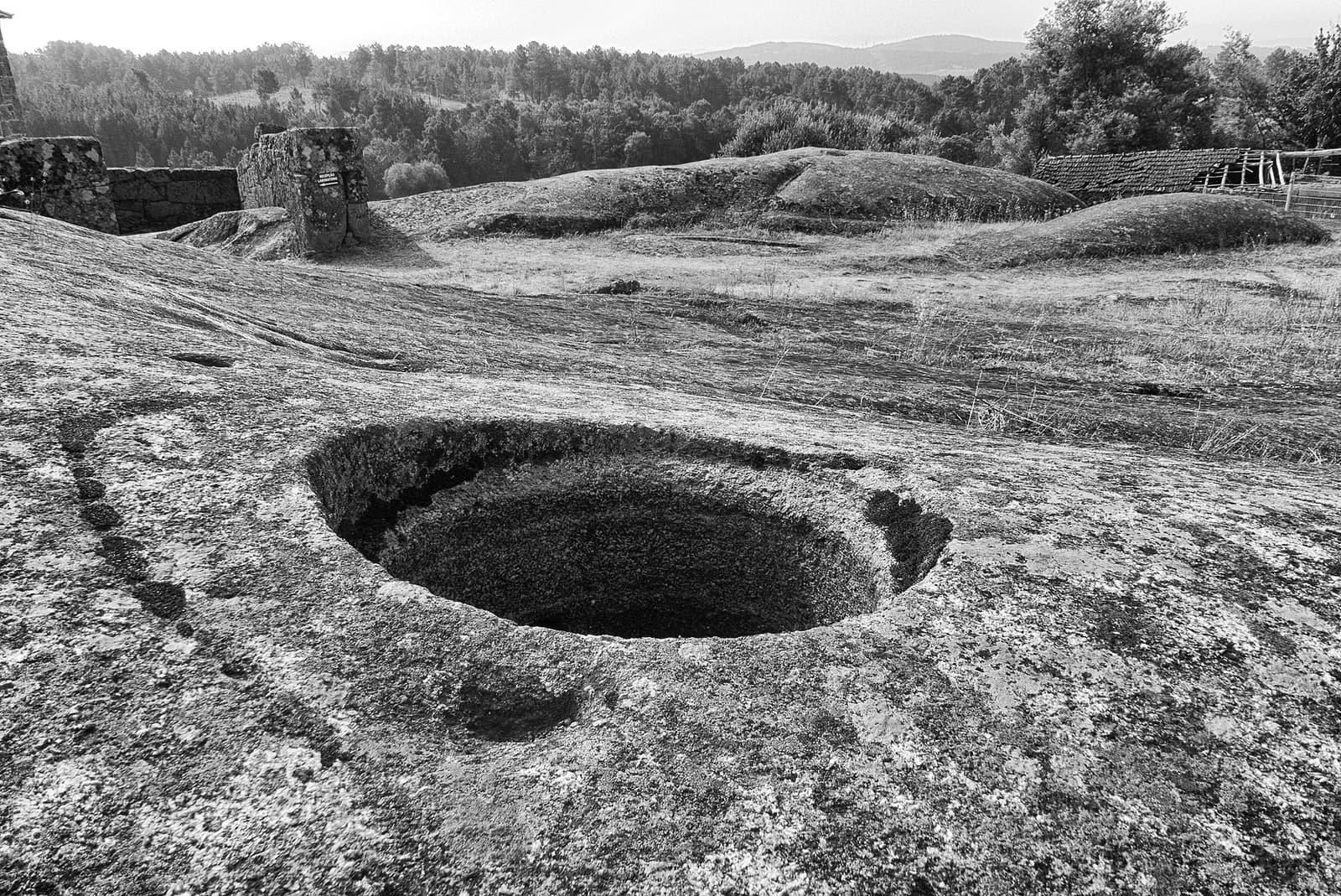
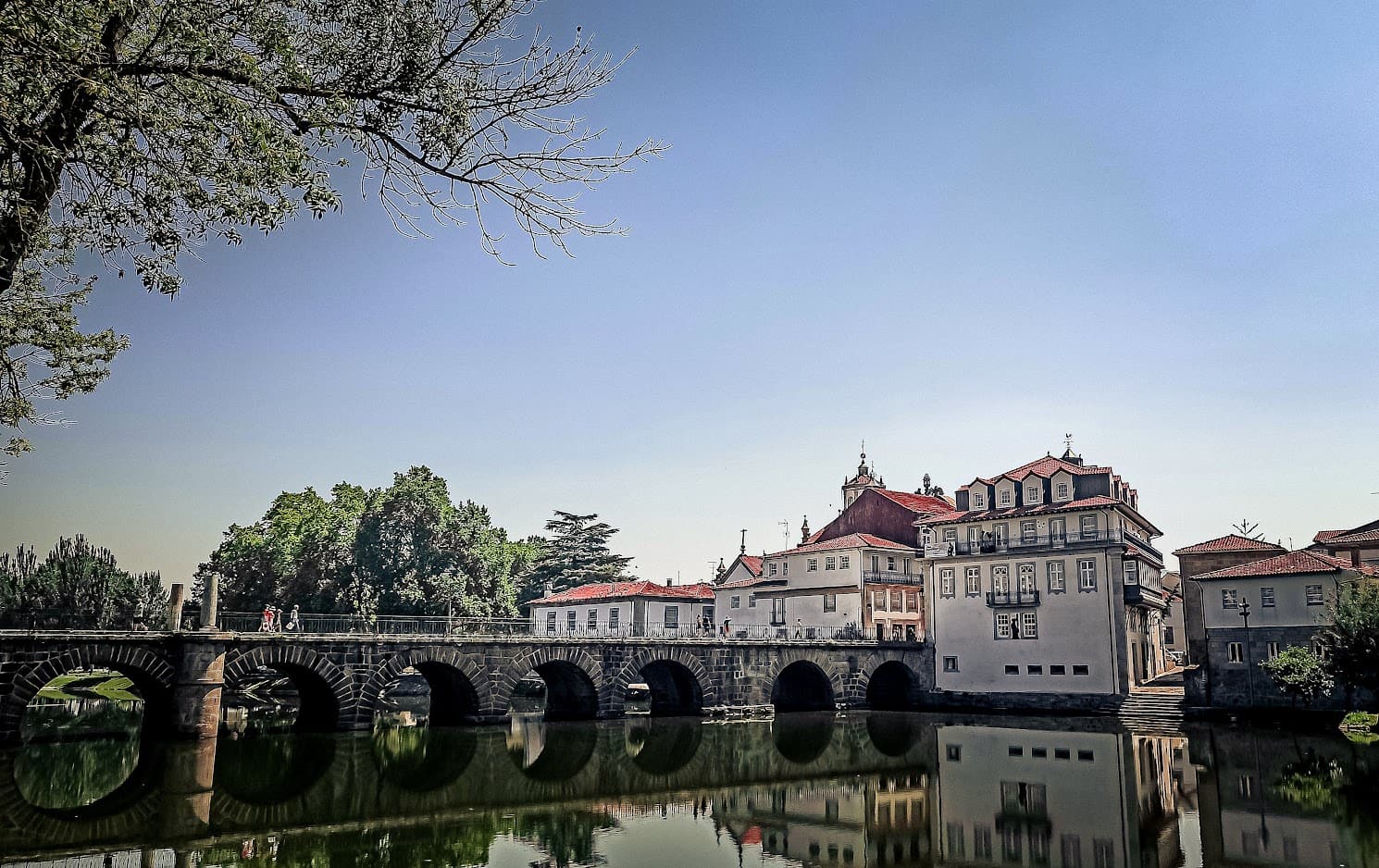
Tresminas remained virtually untouched since ancient operations ceased, making it an exceptional witness to Roman mining technology. Since the 1980s, systematic campaigns—including surveys and recent non-invasive 3D laser scans of terrain and galleries—have studied the site. Now museumized with visitor trails, the complex shares this landscape with nearby Roman landmarks like the unique rock sanctuary of Panóias and monumental Roman bridge of Chaves.
Designated a Public Interest Site in 1997, the mines were elevated to National Monument status in 2024—a recognition of their preeminence in Portuguese Roman archaeology. More than an archaeological site, Tresminas is an entire landscape shaped by Rome’s ambition and the gleam of gold it extracted.
Frequently asked questions
- Where are the Tresminas Mines located?
- They are situated in the parish of Tresminas, municipality of Vila Pouca de Aguiar, Vila Real district, within the Serra da Padrela in northern Portugal.
- What was extracted at Tresminas?
- Primarily gold, though the ore also contained silver and lead, recovered as byproducts during the processing of gold-bearing rock.
- When were the mines operational?
- Intensive exploitation occurred between approximately 20 BCE, following the Augustan conquest, and the late 2nd or early 3rd century CE during the reign of Septimius Severus.
Sources
Keep exploring
Heritage nearby
More places to discover from here. Approximate straight-line distances, within 50 km.