Places
Caminha
Caminha, a historic town at the mouth of the River Minho (district of Viana do Castelo): discover the medieval centre, the Clock Tower and the Manueline parish…
- Location
- Caminha, Viana do Castelo
- Built
- 1284 (foral)
Caminha stretches along a spit of land at the mouth of the River Minho, at the point where it meets the River Coura before flowing into the Atlantic. Across from Caminha, on the right bank of the Minho, lies Galicia; the town looks out at once towards the river, the sea and the border, a triple geographical condition that has shaped its entire history. The place name itself is often linked to Caput Minii — “head of the Minho” — a reading that underlines this position as a hinge between Portugal and north-western Spain.
A border town
The settlement took shape amid the effort to settle and defend the far north-west of the kingdom, promoted by the first monarchs. On 24 July 1284, King Dinis granted Caminha a charter, integrating it into the network of strongholds that guarded the Minho frontier. Over the centuries, and above all after the Restoration of 1640, the castle of Caminha formed, together with the fortifications of Viana do Castelo, Valença and Monção, a defensive line facing Castile. Later, King Manuel I granted it a new charter in 1512, as part of the charter reform that marked his reign.
Of that military vocation there remains today the fortified ensemble: stretches of the medieval and sixteenth-century wall, bastions and, above all, the Clock Tower. Originally raised as the keep of the castle, it is the only tower to have survived in reasonable integrity. In 1673 it received at its top the clock that would give it its name, and since 1951 it has been listed as a National Monument. Its vaulted passage remains the gateway to the historic core, today also home to a small museum. These structures belong to the long tradition of Portuguese urban walls, testimony to the defensive organisation of medieval towns.
Few places in Portugal so clearly distil the idea of a border: in Caminha, the country’s limit is literally a line of water that you cross by boat to reach Spain.
The historic centre and the parish church
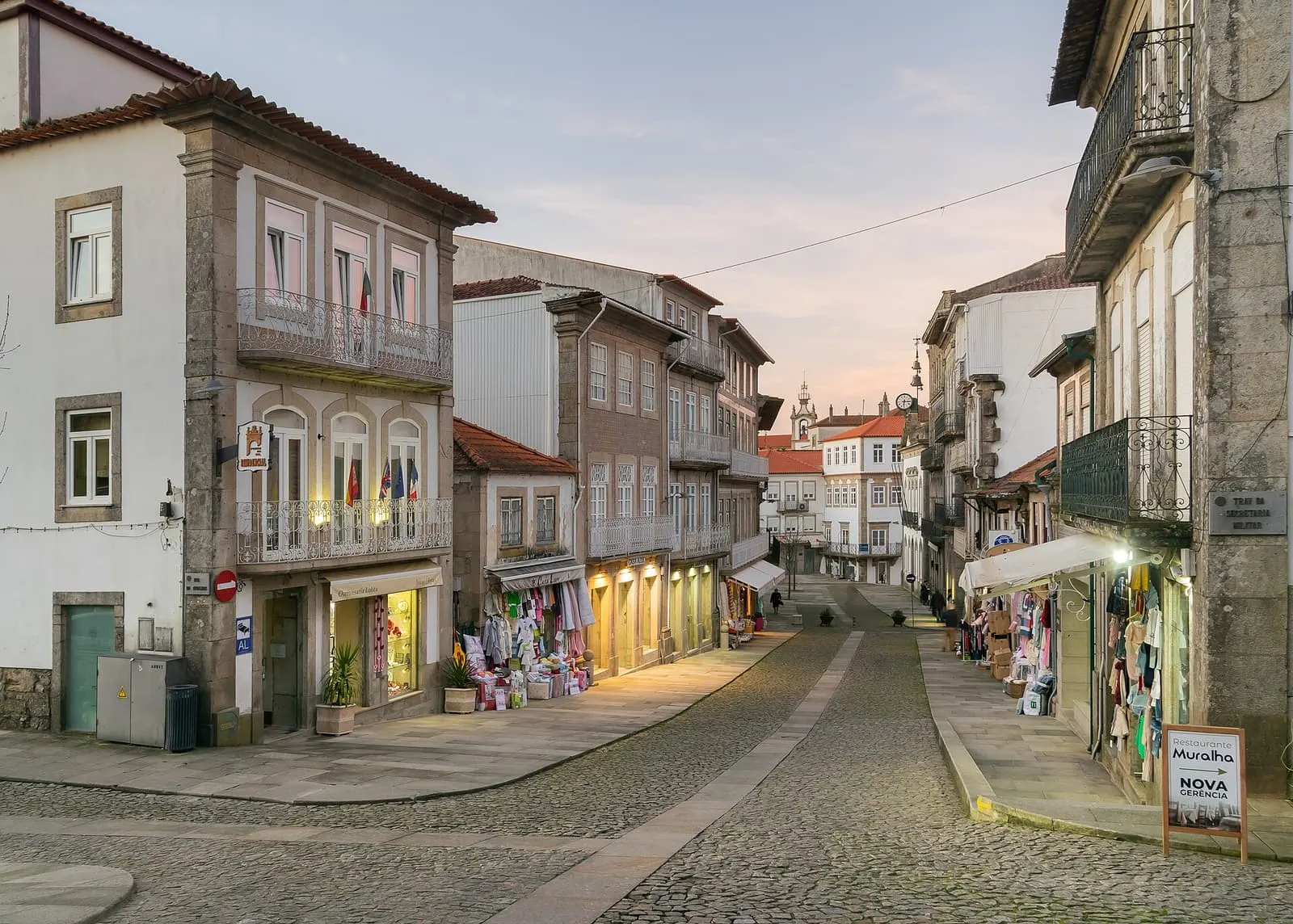
The heart of the town is a web of narrow streets that converges on the town-hall square, lined with armorial houses, the sixteenth-century town hall and a Renaissance fountain fed by water brought from afar. Among the manor houses, the Casa dos Pitas stands out, an example of the seigneurial architecture that flourished when Caminha was a thriving port of trade and fishing.
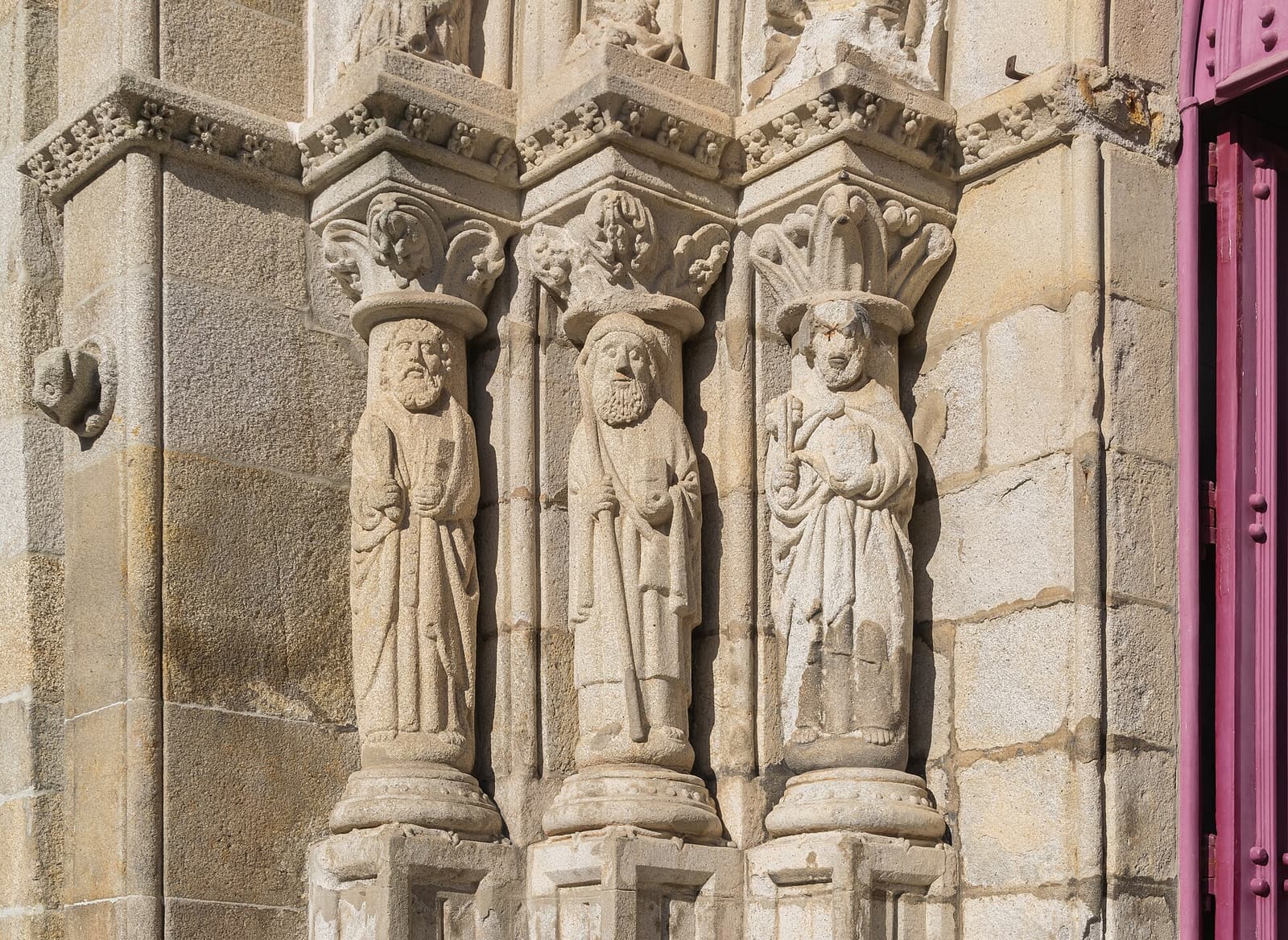
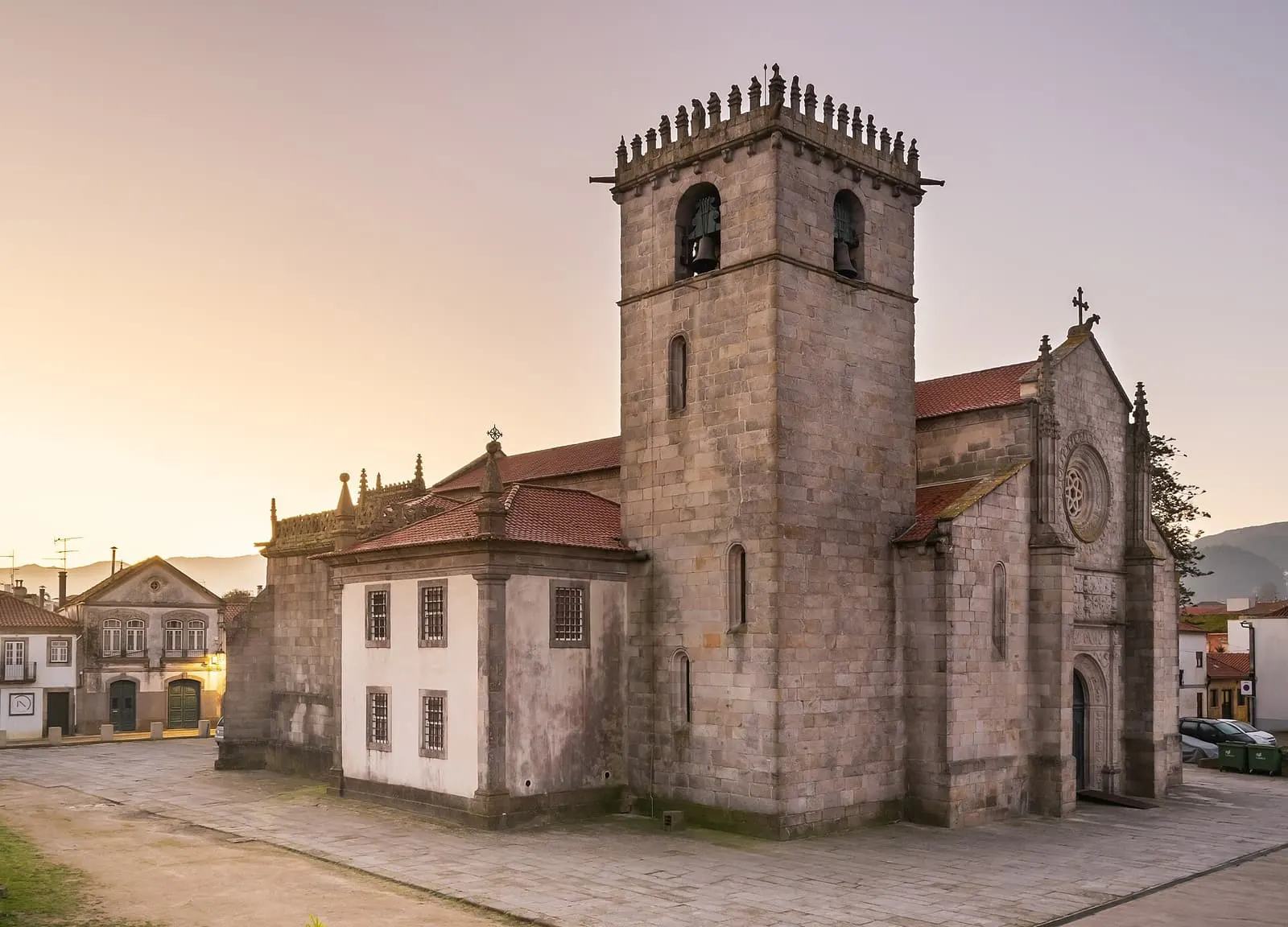
The greatest monument, however, is the parish church, dedicated to Our Lady of the Assumption and set against the wall. Built between 1488 and 1556, over almost seventy years, it reflects the transition from Gothic to the Renaissance, with a strong imprint of the Manueline style in the stonework of the portals and the chancel. Its interior preserves a Mudéjar-influenced wooden ceiling, dated to the mid-sixteenth century, generally cited as one of the finest works of artistic carpentry in the country. Its façade, with its carved portal, made the parish church of Caminha one of the most remarkable churches of the North.
River, sea and pilgrim way
Caminha’s relationship with water does not end with defence. The Minho estuary, with its sandbanks and the ebb and flow of the tides, sustained fishing and shipbuilding for centuries, and still earns the town the nickname of “bela marinheira” (the fair seafaring town). Offshore, on an islet, rises the Fort of Ínsua, a former fortress and convent that watched over the river bar.
The town is also a stage on the pilgrims’ route: through here runs one of the variants of the Portuguese Ways of St James, the so-called Coastal Way, which crosses the Minho to enter Galicia on the way to Compostela. This confluence of river, sea, border and pilgrimage makes Caminha one of the most singular places in the Norte region, where military and maritime memory overlap in a single, compact historic centre.
Frequently asked questions
- Where is Caminha?
- Caminha lies in the far north-west of Portugal, in the district of Viana do Castelo, at the mouth of the River Minho on the border with Galicia. It belongs to the Norte region and to the Alto Minho.
- What is Caminha's most emblematic monument?
- The Clock Tower, the former keep of the medieval castle, is the town's signature landmark. Listed as a National Monument since 1951, it gives access to the walled historic centre.
- What style is the parish church of Caminha?
- The parish church, dedicated to Our Lady of the Assumption, was built between 1488 and 1556 and combines Gothic roots, Manueline elements and a Mudéjar-influenced wooden ceiling, regarded as a masterpiece of Portuguese artistic carpentry.
Sources
Keep exploring
Heritage nearby
More places to discover from here. Approximate straight-line distances, within 50 km.