Typologies
Wayside Crosses and Soul Shrines
Wayside crosses, calvaries and soul shrines: a typology of Portugal's roadside religious monuments, landmarks of popular piety and the cult of the souls.
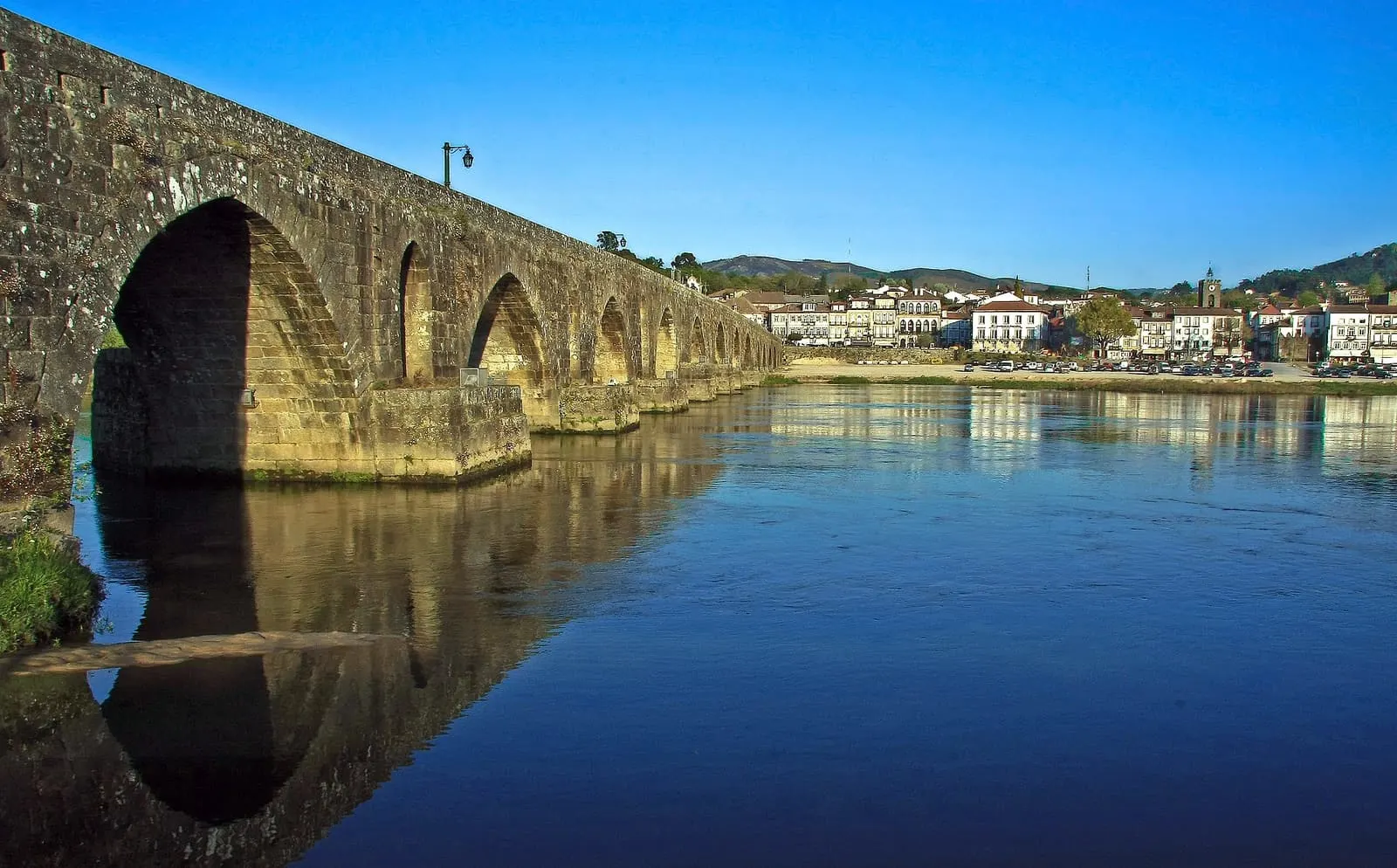
Wayside crosses and soul shrines are the two great families of roadside religious heritage in Portugal: modest monuments, raised in the open air, that mark crossroads, bridges, churchyards and the edges of settlements. They belong less to learned architecture than to the everyday devotion of communities, and for this reason they form one of the most living testimonies to the sacred art and popular piety of the territory. Although distinct in form and function, they share a common ground — the boundary between the village and the road — and the same root in the Christian culture of the north and centre of the country.
The wayside cross: the monumental cross of public space
The wayside cross is a cross of monumental character, usually carved in granite and set in public space, associated with the Crucifixion of Christ. When the composition includes the figures of the two thieves or a group of characters from the Passion, it is called a calvary. Its structure, of Galician-Portuguese tradition, articulates a platform of steps, a pedestal — sometimes bearing inscriptions or reliefs —, a decorated shaft, a capital and the crowning cross or sculptural group.
The antiquity of the cross should not be confused with that of the wayside cross as a monument: the latter probably appeared in the Late Middle Ages, first in wood, a perishable material. Its spread in stone intensified between the sixteenth and eighteenth centuries, in the context of the Counter-Reformation and the work of the religious orders, especially the Franciscans, in keeping with the directives of the Council of Trent (1545–1563), which valued the image as an instrument of catechesis.
Wayside crosses also performed functions that went beyond devotion. They marked out the territory of a parish, chapel or hermitage, fixed jurisdictional boundaries, signalled epidemics or historical moments and served as landmarks in the churchyards of churches and chapels. They are a habitual presence on pilgrimage routes and at sanctuaries and pilgrimage sites, where they punctuate the pilgrim’s path.
Soul shrines: the cult of the souls by the wayside
The soul shrine is a small monument of artless character — niche, little chapel or panel surmounted by a cross — that depicts the souls of Purgatory, generally wreathed in flames, imploring prayers and alms from those who pass so that they may reach Heaven. They are made in the most varied materials: stone, tile, wood or, later, cement. They are set precisely at places of passage and boundary: verges, forks, crossroads, bridges and the entrances to settlements.
Soul shrines are considered a genuinely Portuguese creation: the depiction of the souls of Purgatory asking the living to remember them has no known parallel outside the national territory, though it finds an echo in the petos de ánimas of neighbouring Galicia.
The cult spread in the wake of the Council of Trent, which established the doctrine of Purgatory, and is particularly rooted north of the river Mondego, growing rare further south. In the regions of the Minho and Trás-os-Montes, where isolation limited access to churches, soul shrines functioned as ritual spaces of mediation with the beyond, often maintained by confraternities of the souls. Many preserve tile panels and iron grilles that protect the niche.
A typology of the devotional landscape
Unlike the wayside cross, which may take on the role of a landmark or cross of the dead, the soul shrine concentrates exclusively on the intercession for the souls. But both define one and the same symbolic geography: that of the threshold, where the traveller greets the sacred before setting out or upon returning. As manifestations of folk art, they engage with Portugal’s vast religious heritage and form, by full right, part of the typologies of built heritage. Scattered and discreet, they survive by the thousand along the old roads, rarely listed yet deeply identitary — small works of stone that continue to structure the reading of the rural landscape.
Frequently asked questions
- What is the difference between a wayside cross and a soul shrine?
- The wayside cross (cruzeiro) is a monumental stone cross, usually raised in a churchyard, at a crossroads or at the edge of a settlement, evoking the Crucifixion. The soul shrine (alminha) is a niche or small roadside panel depicting the souls of Purgatory and asking passers-by for prayers.
- What are the soul shrines of Purgatory?
- They are small folk monuments, in stone, tile or wood, showing souls wreathed in flames imploring prayers and intercessions. They spread after the Council of Trent, above all north of the Mondego, and are considered a genuinely Portuguese creation.
- When did wayside crosses appear in Portugal?
- Although the cross itself is very ancient, the monumental wayside cross probably appeared in the Late Middle Ages, first in wood. Its great spread in granite occurred between the sixteenth and eighteenth centuries, linked to the Counter-Reformation and the work of the religious orders, especially the Franciscans.