Typologies
Sanctuaries and Pilgrimage Sites
Typology of Marian sanctuaries and pilgrimage sites in Portugal: Baroque stairways, Stations of the Cross, and devotional complexes from the north to the…
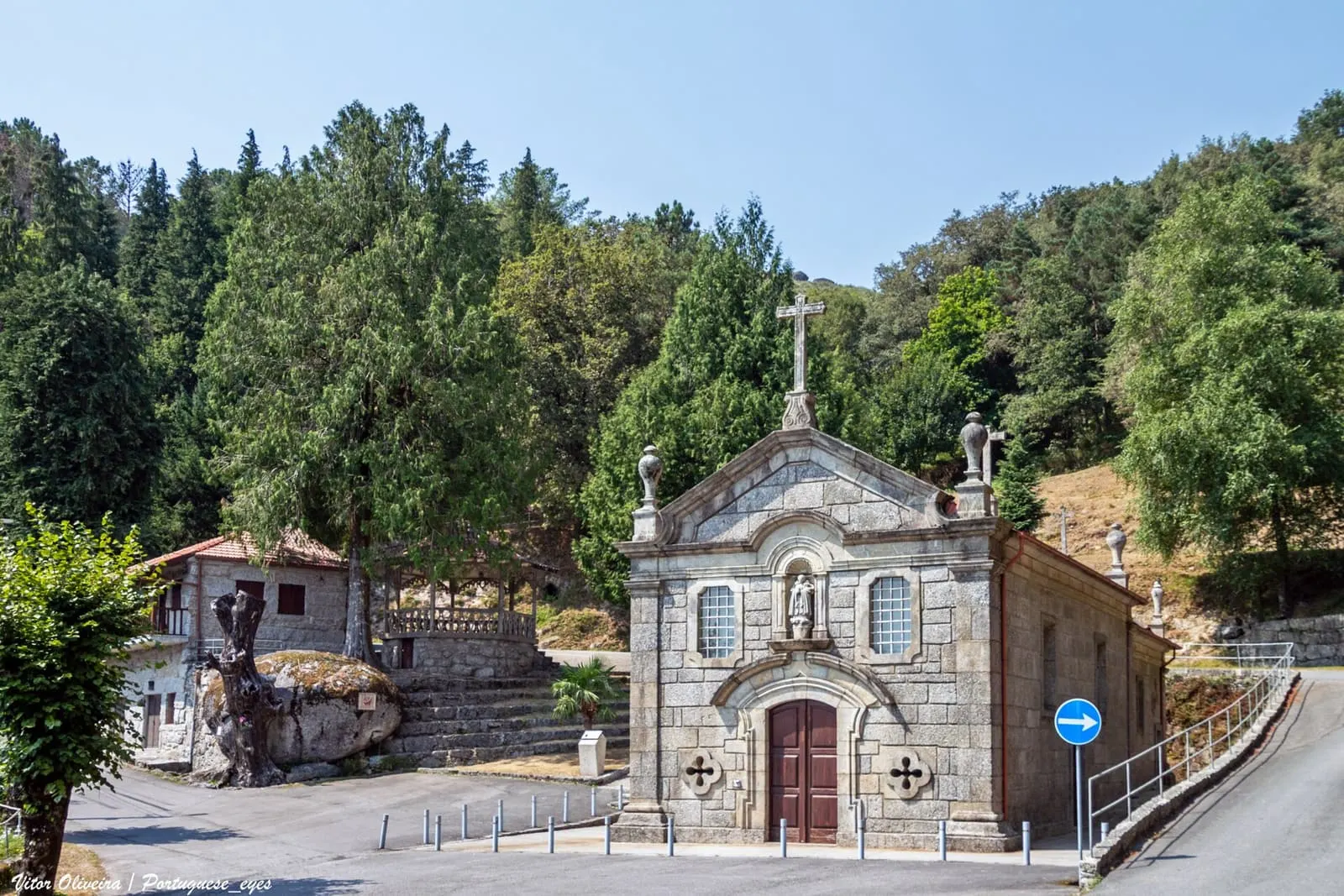
Among the typologies of Portugal’s built heritage, sanctuaries and pilgrimage sites occupy a singular place: they are not merely places of worship but entire devotional landscapes designed to host crowds of pilgrims on specific dates in the calendar. They differ from parish churches, the center of sacramental life for a local community, by exerting an appeal that far exceeds parish boundaries, drawing believers from an entire region—and, in major cases, from across the country.
A Typology of Landscape, Not Just Buildings
The Portuguese sanctuary stands out primarily for its territorial scale. Around the main temple, a complex may include stairways, Stations of the Cross, chapels of the Passion, fountains, shelters for pilgrims, festival grounds, and later, wooded parks and lodgings. Devotion materializes along a journey: the pilgrim does not simply arrive at a door but ascends, pauses, contemplates, and prays along a carefully choreographed route.
This model finds its most elaborate expression in the Sacro Monte—the “sacred mountain” promoted by the Catholic Church after the Council of Trent as a response to the Protestant Reformation, replicating the sites of Christ’s Passion in Jerusalem on European soil. Portugal embraced this idea with particular scenographic genius during the 18th century, merging architecture, sculpture, and gardens into a single total work of art.
In hilltop sanctuaries, the ascent itself is liturgy: each flight of stairs, each fountain, and each chapel transforms the pilgrim’s physical effort into an exercise in spiritual meditation.
The Baroque Stairway as a National Signature
The most unmistakable element of this typology is the stairway, the monumental staircase leading from the base to the temple. The greatest example is the Sanctuary of Bom Jesus do Monte in Braga, whose complex unfolds along the slopes of Monte Espinho with a Via Sacra connecting chapels depicting scenes of the Passion, allegorical fountains of the five senses and virtues, statuary, and formal gardens. The grand redesign of the complex was conceived from 1722 onward under the so-called Portuguese Baroque architecture and culminated in a basilica that ranks among the country’s earliest experiments with Neoclassicism. Designated a UNESCO World Heritage Site in 2019, Bom Jesus is recognized as an outstanding example of the European Sacro Monte.
A similar model is repeated at the Sanctuary of Our Lady of Remedies in Lamego, whose 18th-century staircase, with around six hundred tiled steps and adorned with ornamental landings, zigzags up the slope to the church. The Sanctuary of Sameiro, also in Braga, and the Sanctuary of Our Lady of Peneda in Alto Minho extend this formula into the 19th and 20th centuries, proof of the longevity of this architectural language.
The Pilgrimage: Sacred Time and Popular Festival
The raison d’être of the sanctuary is the pilgrimage—the collective journey that, on fixed dates, transforms the site into a hub of devotion and festivity. Pilgrimages blend religious vows, processions, and thanksgiving for answered prayers with a full-fledged culture of fairs, music, and gastronomy. The Pilgrimage of Our Lady of Agony, in Viana do Castelo, is perhaps the most famous example of this festive dimension, where the sacred and the secular intertwine inseparably.
Many of these complexes also include chapels and hermitages scattered across the surrounding landscape, small stations marking the pilgrim’s path—a typology detailed in the chapels and hermitages of the country. Taken as a whole, sanctuaries and pilgrimage sites constitute one of the richest legacies of Portuguese popular religiosity, where the erudite architecture of the Baroque was placed at the service of a piety lived in motion, outdoors, and in community.
Frequently asked questions
- What distinguishes a sanctuary from a parish church?
- A sanctuary is a place of worship that attracts pilgrims from beyond its local community, typically associated with a specific devotion, saint, apparition, or miracle, and equipped with structures to accommodate pilgrimage, unlike a parish church, which is tied to the sacramental life of a parish.
- What is an escadório?
- It is the monumental staircase that, in hilltop sanctuaries, leads pilgrims from the base to the temple at the summit. Portuguese Baroque stairways, like those at Bom Jesus do Monte, integrate chapels, fountains, statuary, and symbolic landings along the ascent.
- What is the most famous pilgrimage sanctuary in Portugal?
- The Sanctuary of Our Lady of Fátima is the country's largest pilgrimage center, but the Baroque tradition of hilltop sanctuaries finds its greatest example in Bom Jesus do Monte in Braga, designated a World Heritage Site in 2019.