Themes
Religious heritage
Cathedrals, monasteries and churches: the backbone of Portugal's built heritage and the record of a thousand years of spiritual and artistic life.
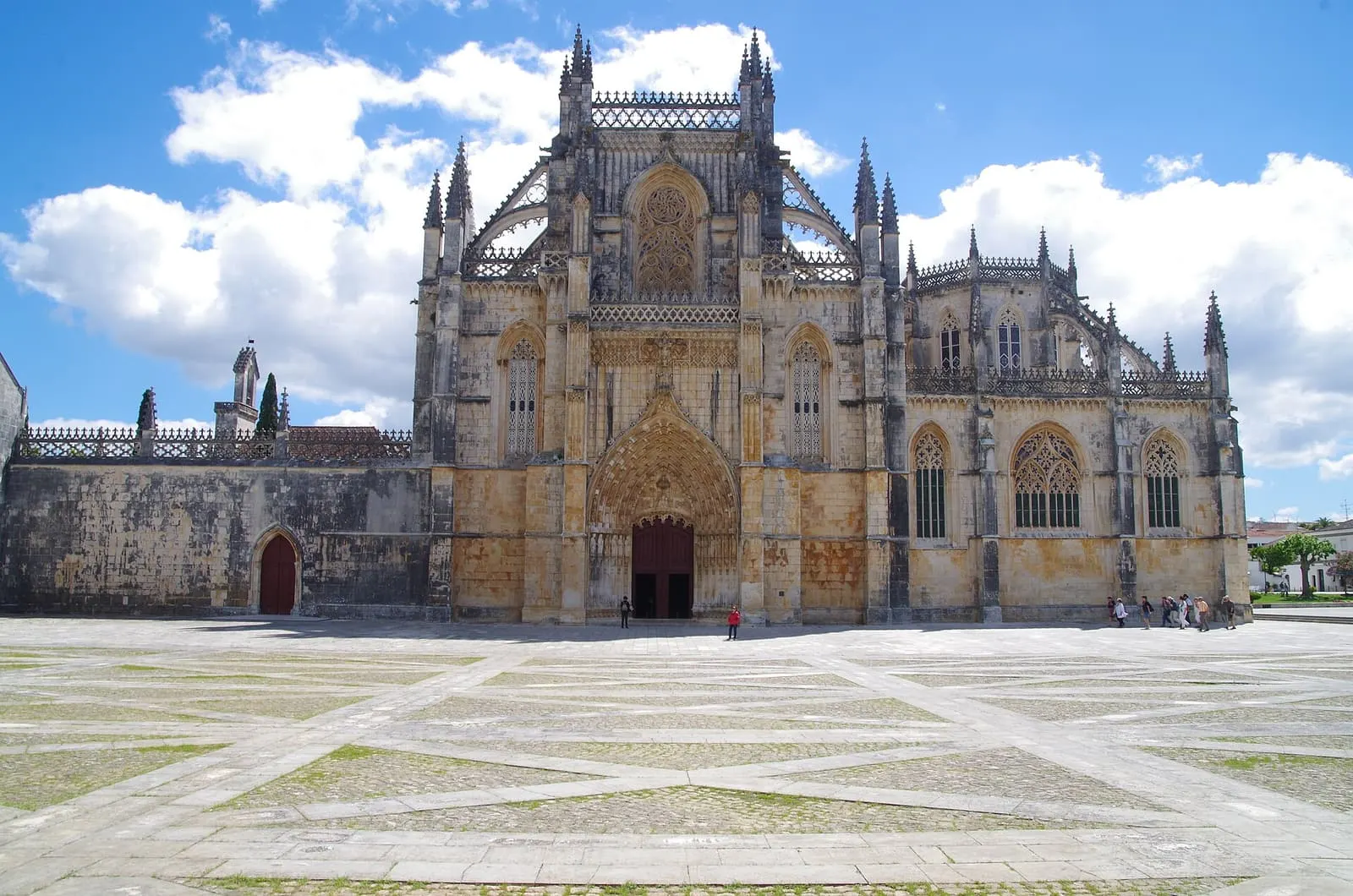
For almost a thousand years, the Church was the chief artistic patron of Portugal. That is why religious heritage is not one chapter among others: it is, to a large extent, the very backbone of the national built heritage — the place where the greatest ambitions of each age are concentrated.
The cathedrals and the Reconquista
The cathedrals — the sés — accompany the advance of the Christian frontier. Coimbra, Braga, Lisbon, Évora: each conquest of an important city was sealed by the building or reconsecration of its cathedral, frequently over an earlier mosque. The cathedral is thus monument and political statement at the same time.
The great monasteries
If the cathedrals express episcopal power, the monasteries express the monastic — and give Portugal three of its greatest monuments. Alcobaça, Cistercian, with its nave of an almost abstract purity; Batalha, Gothic-Manueline, a monument to the victory of Aljubarrota and to the Discoveries; and Tomar, seat of the Order of Christ, where the Romanesque, the Gothic and the Manueline are superimposed within a single enclosure. All three figure on the World Heritage List.
A monastery is not merely a church: it is a system — cloisters, dormitories, refectory, kitchen, guest-house — that organised an entire community. To read it is to reconstruct a way of life.
The art of the interior
It is inside the churches that the Portuguese Baroque gives of its best. Gilded carved-work (talha dourada) covers entire chancels with carved and gilded wood; the azulejo narrates the lives of the saints along the walls of the naves. Church after church, the Counter-Reformation transformed the sacred space into a total experience, addressed to the senses.
Conserving what has changed its use
Religious heritage faces today a specific challenge: many of these buildings have lost the community that sustained them. To conserve them obliges us to think of new uses — cultural, museological — without betraying their reason for being. It is one of the most delicate fields of contemporary heritage-making.