Typologies
Chapels and Hermitages
Chapels, hermitages and oratories in Portugal: small devotional temples, rural and urban, from their medieval origins to their role in pilgrimages and the…
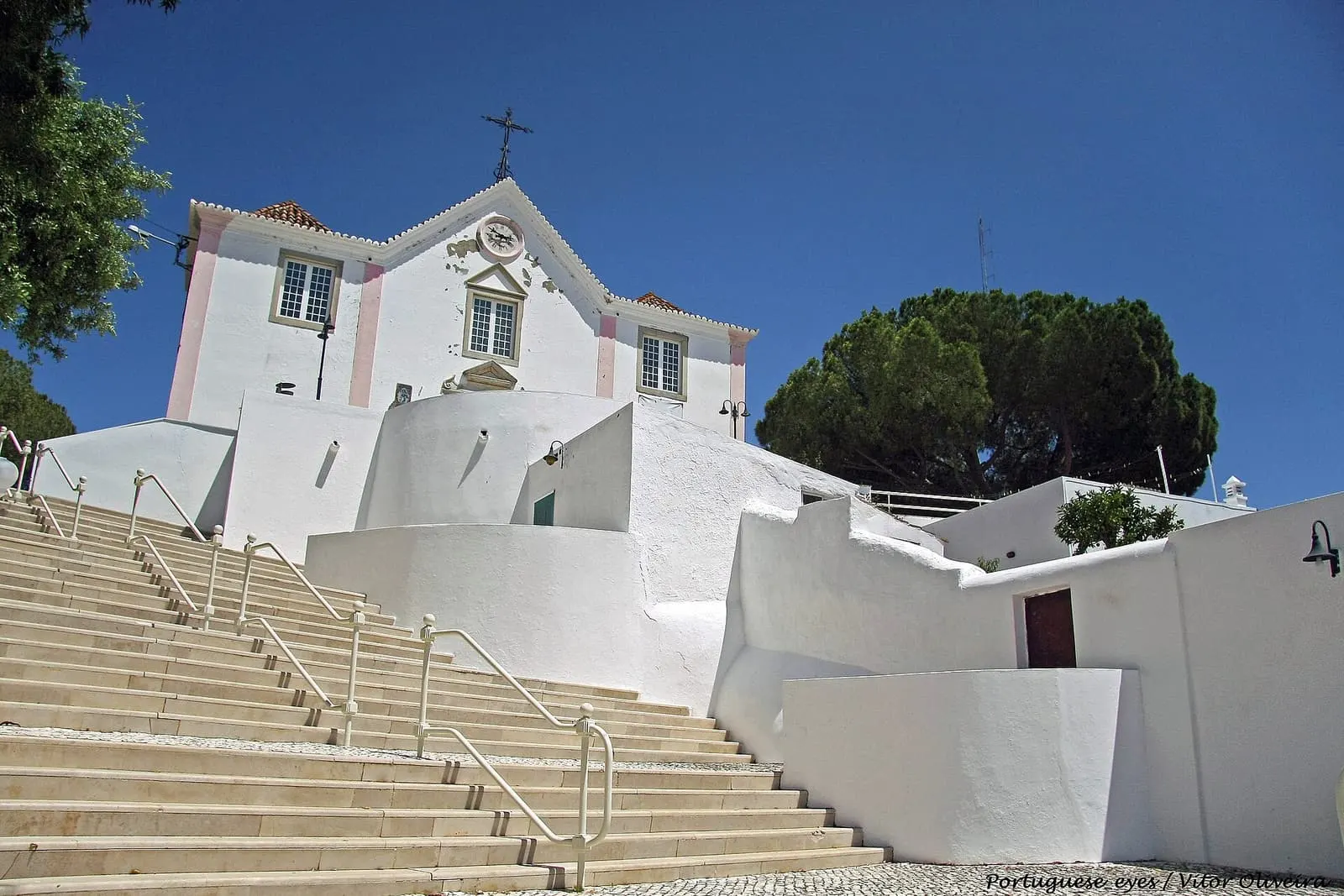
Among the smaller-scale temples of Portuguese religious heritage, chapels and hermitages form a family of modest yet omnipresent constructions, scattered across village churchyards, crossroads, hilltops and country estates. Lacking the status of a parish church and the monumentality of a monastery or convent, they nonetheless constitute one of the densest records of popular devotion and of the occupation of the land over the centuries.
Definition and the hierarchy of temples
In Catholic usage, the chapel is a secondary temple, without full parochial rights, dedicated to the worship of a specific community or group — an estate, a convent, a castle, a confraternity or a family. It is thus distinguished from the parish church, seat of the regular worship of a parish, and from the cathedral or see, head of a diocese. The very word goes back to the cappella, the small cloak of Saint Martin of Tours kept as a relic by the Frankish kings: the sanctuary that housed it gave its name to a whole category of small places of worship.
The hermitage shares this condition of a lesser temple, but adds to it a topographical mark. The term derives from the Greek eremítes, “one who dwells in the desert”, by way of the Latin eremīta. A hermitage is, by definition, the chapel raised in a remote spot — set apart from settlements, frequently on high ground with an open horizon. The oratory, for its part, designates a space of private and domestic devotion, proper to manor houses and palaces, without public function.
The geography of these temples is itself a document: wherever an isolated hermitage rises, one can almost always read an ancient pilgrimage, a boundary of land, a vow fulfilled or a site invested with sacred memory.
Forms, materials and ornamentation
The architecture of these constructions tends towards economy of means. The plan is, for the most part, a single rectangular nave, sometimes with a distinct chancel and, in the pilgrimage examples, preceded by a porch — an open portico that sheltered the faithful gathered in the churchyard. Associated with these temples are the outdoor pulpit, the wayside cross and the stone benches, devices conceived for open-air worship when the cramped interior did not suffice.
Despite the modesty of their volumes, the interior could concentrate artistic work of quality: altarpieces of gilded woodwork, azulejo panels, mural painting and votive imagery accumulated over generations. For a largely illiterate population, many of these small temples were a true visual catechism.
Devotional function and territory
The greatest density of Portuguese hermitages dates from the fifteenth and sixteenth centuries, although many have medieval origins and successive Baroque refoundations. Their reason for being was bound to the agricultural interests and the religiosity of rural communities: they were raised in honour of a saint who protected the harvest, the rain or against disease, and became the focus of regional pilgrimage, where the inhabitants of neighbouring villages converged in procession. This vocation brings them close to the sanctuaries and places of pilgrimage, of which they often constitute the primitive cell, prior to Baroque monumentalisation.
Through their dispersion and their domestic scale, chapels and hermitages are, among the typologies of the built heritage, among the most exposed to abandonment and ruin. Many have lost regular worship; others survive only through the vigilance of local confraternities. To document their architecture, their dedications and the festive calendar they sustained is therefore an essential part of reading the Portuguese religious landscape — a fine, capillary fabric that the history of the great monuments tends to leave in shadow.
Frequently asked questions
- What is the difference between a chapel and a hermitage?
- Both are small secondary temples without full parochial rights. The distinction is chiefly one of location: the hermitage stands in a remote spot, isolated from settlements, often on high ground; the chapel is frequently found within the built fabric, beside houses, estates, convents or institutions.
- What is an oratory?
- It is a small space of private, domestic devotion, installed in palaces, manor houses and private residences. It differs from the chapel and the hermitage in that, as a rule, it has no public function.
- Why are many hermitages located in isolated, elevated places?
- Their foundation was bound up with rural religiosity and the protection of the harvest. Isolation and a commanding position reinforced their character as places of pilgrimage: the people would climb in procession to honour the patron saint and pray for healing or a good agricultural year.