Typologies
Espigueiros and Canastros: Traditional Granaries
Espigueiros, canastros and cabaceiros: the traditional granaries of northern Portugal, in granite and wood, for drying and storing maize.
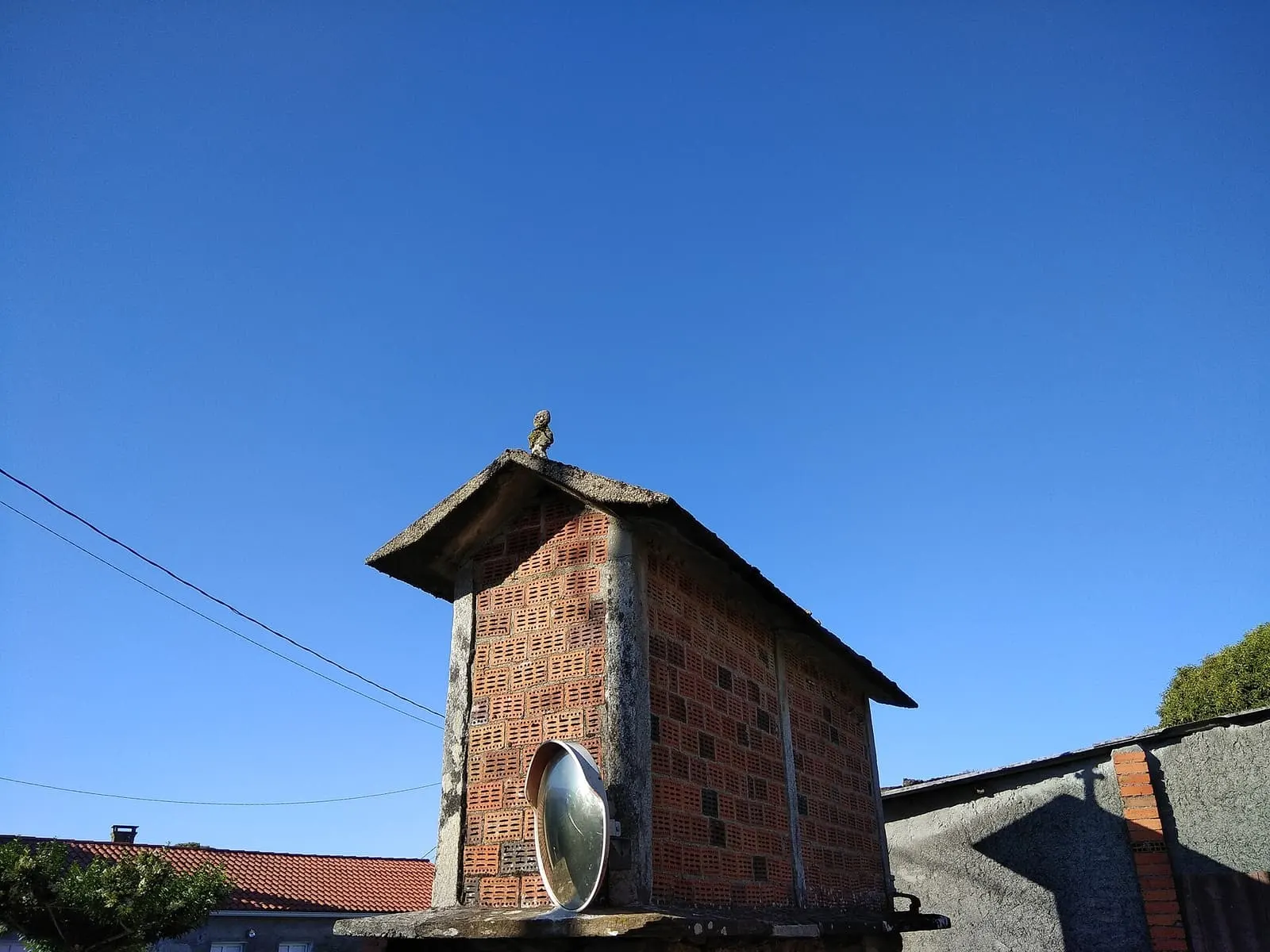
Few buildings convey so clearly the relationship between the agrarian landscape of northern Portugal and the life of its communities as the espigueiro. Raised on stone piers, with open-work walls and a gabled roof crowned by pinnacles and crosses, it is at once an ingenious agricultural instrument and an object of remarkable architectural dignity. Its function is simple and essential: to dry and store the ear of maize, a cereal which, from its introduction in the sixteenth century, profoundly transformed the economy and diet of the north-west of the Iberian Peninsula.
Form and function
The espigueiro is, above all, a machine for preservation. Raised off the ground on pillars — the esteios —, frequently topped by projecting slabs called mós or tornarratos, it prevents rodents from reaching the grain. The walls, built of spaced granite or wooden battens, or of wicker and straw in the lighter versions, allow the circulation of air that slowly dries out the ear and prevents rotting. The plan is narrow and elongated, maximising the area of ventilation in relation to the volume. This constructive logic belongs to the broader tradition of Portuguese vernacular architecture, in which every element responds to climate, available materials and use, without gratuitous ornament.
The wayside cross that crowns many espigueiros is not merely devotion: it links the protection of the grain to divine protection, fusing agricultural technique and popular religiosity in a single gesture.
Espigueiros and canastros: names and materials
The name varies according to geography and raw material. In the Minho, land of granite, the dressed-stone espigueiro predominates, solid and durable, a close relative of the granite houses of the Minho. Further south and in the interior, the terms canastro, caniço or cabaceiro designate above all the versions made of timber, planks, woven wicker or straw, lighter and more perishable. Despite their differences, they share the same principle and belong to the vast Iberian family that includes the Galician and Asturian hórreo. It is a cross-border typology whose distribution follows the maize-growing lands of the humid north-west.
The great groups of the North
The most widely known image of the espigueiro is owed to the communal groups of the Peneda-Gerês National Park. At Soajo, twenty-four granite espigueiros are aligned upon a rock outcrop, arranged in parallel rows; the oldest dates from 1782 and the group took shape between the eighteenth and nineteenth centuries. At Lindoso, beside the medieval castle that dominates the Lima valley, more than fifty examples are gathered on a shared threshing floor — the largest group on the Iberian Peninsula. Built of dry dressed stone, without mortar, with overlapping scale-like roofing slabs, these clusters have been classified for their heritage value and have become one of the emblems of northern Portugal.
A living heritage
Although maize is now rarely stored in this way, the espigueiro endures as an identity landmark of the mountain villages. Its persistence in the landscape — in granite that withstands the centuries — has made it a recognised cultural symbol, integrated into rural tourism itineraries and studied as a foremost example of popular constructive ingenuity. As a typology, it holds a place of its own among the forms of traditional built heritage, reminding us that the humblest architecture can also be the most perfectly adapted to its function.
Frequently asked questions
- What is an espigueiro used for?
- It is used to dry and store the ear of maize, sheltering it from damp, rodents and birds. The open-work walls ensure the ventilation that preserves the grain, while raising the structure on stone piers protects it from the damp ground and from animals.
- What is the difference between an espigueiro and a canastro?
- They are essentially the same construction, the name varying according to region and material. Espigueiro is the most common term in the Minho and for granite examples; canastro, caniço or cabaceiro often designate the versions made of wood, wicker or straw found on the coast and in the interior.
- Where are the most remarkable groups of espigueiros to be found?
- The groups at Soajo and Lindoso, in the Peneda-Gerês National Park, are the most famous, with dozens of granite espigueiros gathered on a communal threshing floor. Lindoso has the largest group on the Iberian Peninsula.